
[Skip Header and Navigation] [Jump to Main Content]

  • Membrane protein targeting
  • Secondary multidrug transport
  • Intra-membrane proteolysis
  • Members
  • Publications
  • Photo Gallery

Intra-membrane proteolysis and membrane quality control

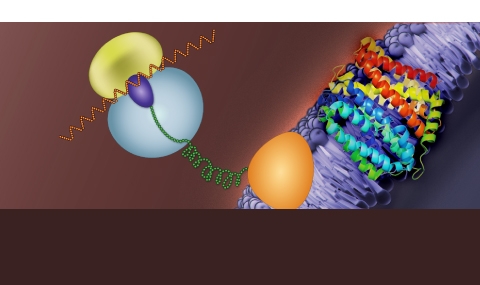
We were attracted by the relatively recent discovery of proteolytic enzymes, which catalyze cleavage of integral membrane proteins inside the lipid environment (Erez et al, 2009). This activity is crucial for many biological and pathological processes. One group of such proteases includes Rhomboids, which are evolutionarily widespread intra-membrane serine proteases that cleave integral membrane substrates inside their single trans-membrane helix.  We utilize the E. coli expression system to study two rhomboids. The E. coli rhomboid GlpG (of unknown function and substrate, see Erez and Bibi, 2009) and the well-characterized D. melanogaster rhomboid-substrate pair Rho1 and Spitz. The crystal structure of GlpG revealed a novel mechanism to enable water-dependent catalysis at the depth of the hydrophobic milieu of the membrane (Ben-Shem et al, 2007). However, how does an intramembrane protease interact with its transmembrane substrate helix is not yet fully understood. We approach this problem by expressing the rhomboid-substrate pairs in E. coli.


Crystal structure of the E. coli rhomboid, GlpG.

GlpG is an intra-membrane serine protease. Shown are side views of the protease with the active site catalytic residues Ser201 (yellow) and His254 (red). The depth of the active site in the membrane is approximately 11Å.

Site Last Updated:20-01-2013

Contact Us

[Jump to Top] [Jump to Main Content]