
[Skip Header and Navigation] [Jump to Main Content]

  • Membrane protein targeting
  • Secondary multidrug transport
  • Intra-membrane proteolysis
  • Members
  • Publications
  • Photo Gallery

Membrane protein biogenesis: Surprises in vivo

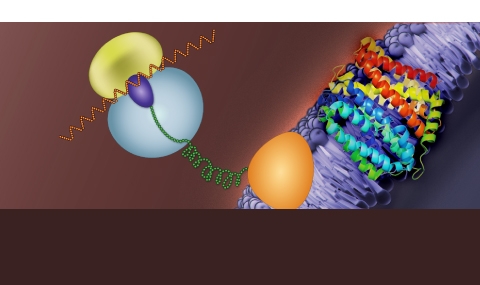
All living cells utilize conserved systems responsible for membrane protein biogenesis, including the signal recognition particle (SRP), its receptor, and the translocon. The SRP system contains an SRP protein-RNA complex, which recognizes nascent hydrophobic peptides in the process of translation, and a membrane-bound SRP-receptor. Since the SRP pathway has been elucidated mainly through a remarkable series of in vitro studies, we were attracted by the findings that E. coli utilizes a similar pathway and by the possibility of studying the targeting pathway in vivo. Our initial results were both surprising and unpredicted (Herskovits et al, 2000). All together, through in vivo studies of the system we obtained results that support an alternative order of events in the E. coli system, compared to the current SRP model (Bibi, 2011a). Our model predicts that mRNAs of membrane proteins might be targeted independently of translation and that the SRP functions downstream of the SRP-receptor (Bibi, 2011b). This hypothesis is currently investigated in our lab.


SRP-receptor-mediated ribosome targeting (SR-MRT) model.

1. FtsY is targeted to the membrane co-translationally and assembles on membrane lipids and/or on an unknown integral membrane protein (indicated by a question mark in the figure). After targeting, the ribosome or its large ribosomal subunit remains membrane-bound. 2. The IMP-encoding mRNA is targeted to the membrane-bound ribosome, forming a new translation initiation complex. 3. The emerging nascent hydrophobic polypeptide is recognized by SRP. The SRP binds the polypeptide, the ribosome and the SRP receptor. As in the classical, SRP-mediated ribosome targeting (S-MRT) model, the RNC is then transferred to, and assembles on, the SecYEG translocon.

Site Last Updated:20-01-2013

Contact Us

[Jump to Top] [Jump to Main Content]