Controlling Molecular Rotations by Ultrashort Lasers Pulses


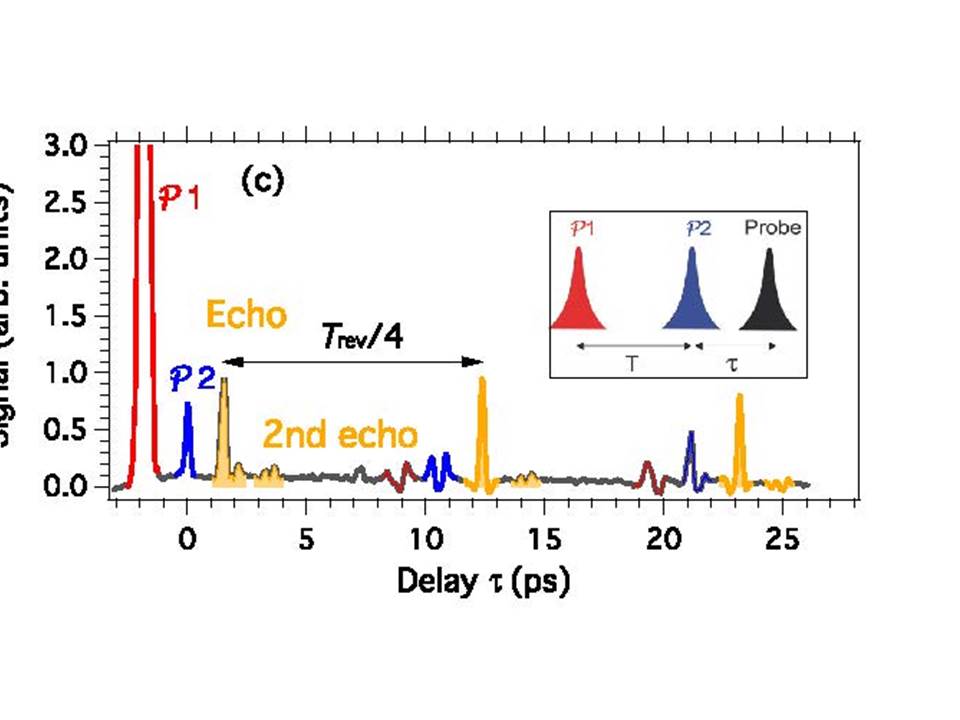
 A single pulse applied to the molecular sample, results in coherent rotational motion manifested by periodic modifications of the molecular angular distribution as explained above. By applying another pulse to the rotation molecules we can enhance or decrease the molecular rotation, depending on the delay between the two pulses.

 Classically, if the pulse is applied at molecule which has passed the anti-aligned state and heading for alignment, the torque delivered by the second pulse enhances the molecular rotation, giving rise to higher alignment and anti-alignment peaks (figure a). But if the second pulse is applied at the time where the molecule has passed the aligned state and is heading towards anti-alignment, then the torque will oppose the molecular motion and stop it from further rotating (figure b).

 The relevant delay times are Full Trev for the first case and Half Trev for the second case.


 Home Research Publications People Contact Us