Laser Induced Molecular Alignment and Control of Molecular Rotation


 As scientists, we all know how and where to find relevant physical properties of specific molecular samples. When these physical properties are measured in a liquid or gas samples, they reflect values that are averaged over all of the molecular angular positions, since the molecular angular distribution is isotropic for all samples with the exception of crystals. However, if the molecules are forced to specific angular distributions, these properties can be substantially different from the isotropic distribution case.
The bilateral relations between the light and the molecules suggest that in addition to the response of the molecules to the light, the light can be manipulated by the light induced-anisotropic molecular sample (temporal birefringence, changes of refractive index, optical activity, absorption etc…).

 • Ultrafast light gating
 • High harmonics generation
 • Molecular phase modulators
 • Control of molecular ionization probabilities
 • Selective rotational manipulations of close molecular species

 The list above points just a few examples to research fields in which molecular alignment plays a key role.

 Our interest in the field is focused towards designing excitation schemes for control and manipulation of molecular alignment for different applications, as well as the understanding of the basics of the related phenomena such as:
 • Laser induced molecular alignment
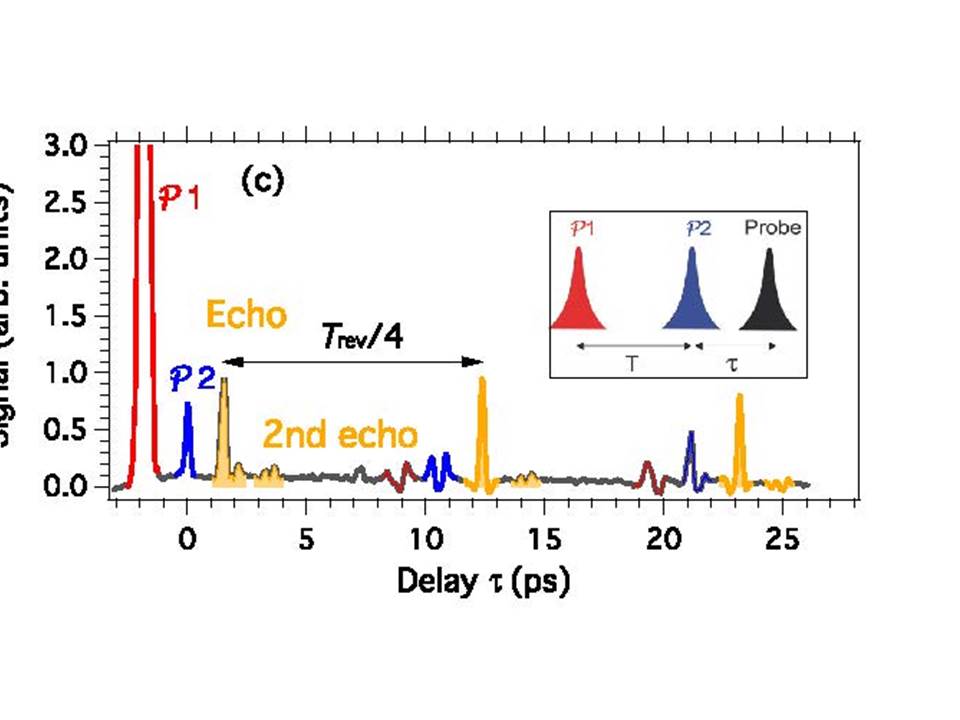
 • Quantum rotational revivals  
 • Controlling molecular rotations by ultrashort pulses
 • Selective control of molecular rotation in mixtures:
      Molecular isotopes
      Molecular nuclear spin isomers
 • Laser induced field free molecular rotation

 We use the nonlinear Four Wave Mixing technique as well as the polarization gating technique, both analyzed in the time and frequency domains for controlling and measuring the time dependent molecular rotational evolution.
We conduct a close collaboration with the theoretical group of Prof. Ilya. Sh. Averbukh from our department.

Relevant publications can be found in the links to the above projects.


 Home Research Publications People Contact Us