Recent and Ongoing Research Projects:


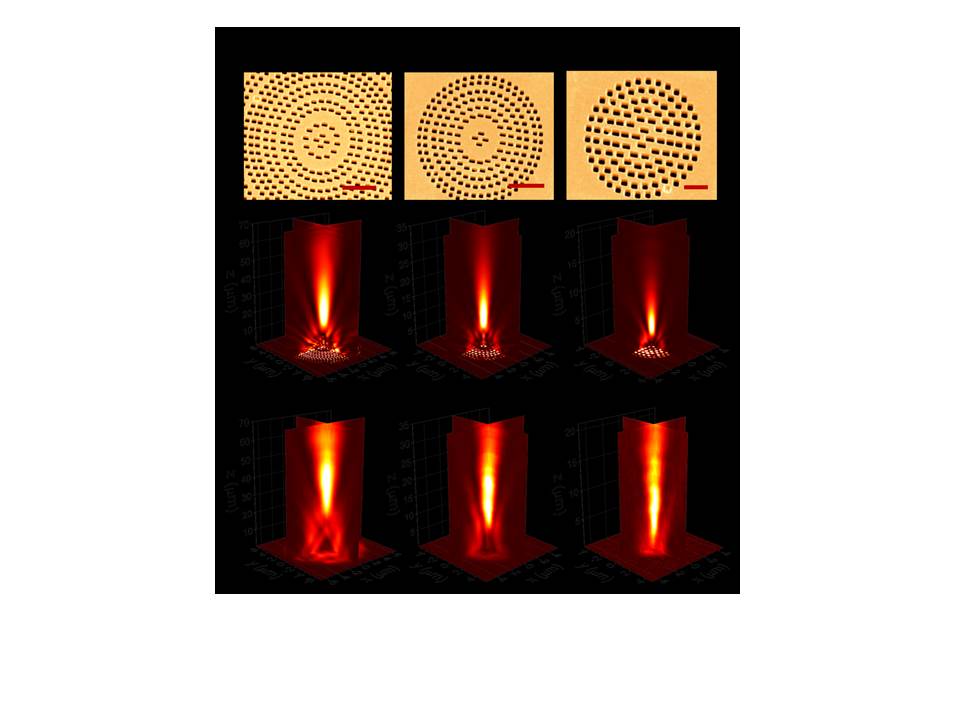
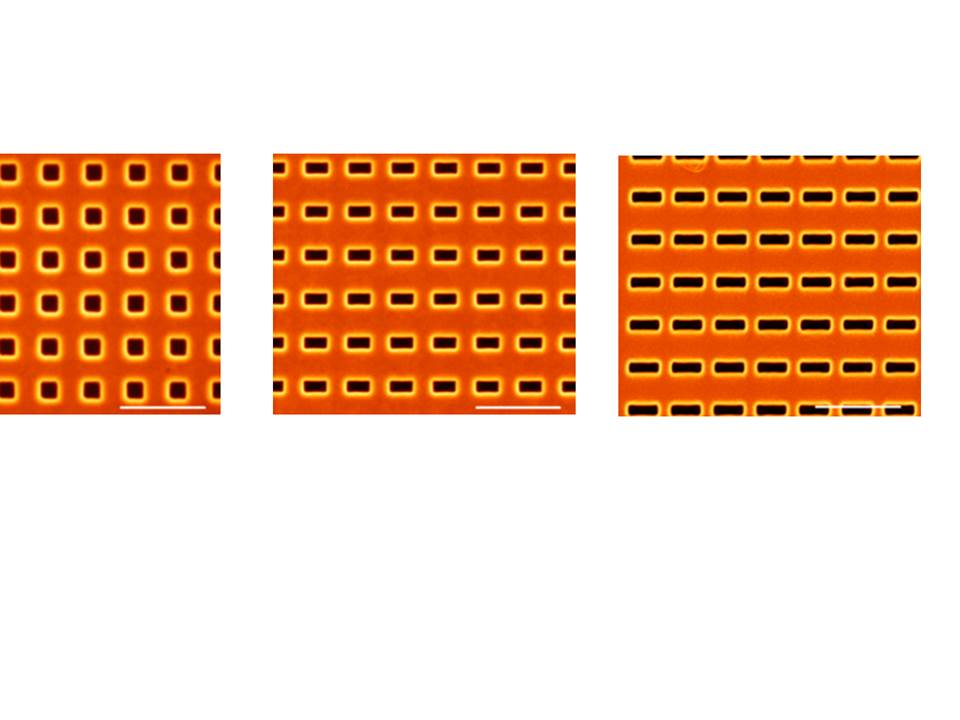
Specially modified Atomic Force Microscope and femtosecond pulse Laser, combined in one instrument “ANSOM”, open great possibilities in such promising fields as Nano-Lithography, Tip-Enhanced Nano-Microscopy and -Spectroscopy, material processing on the nano-meter scale etc. In our laboratory we run different investigations which are both challenging for the modern and future applications and exciting from the scientific point of view. It is also the place for those who would like to try one’s strength in the technical creative work.


Control of Molecular Alignment

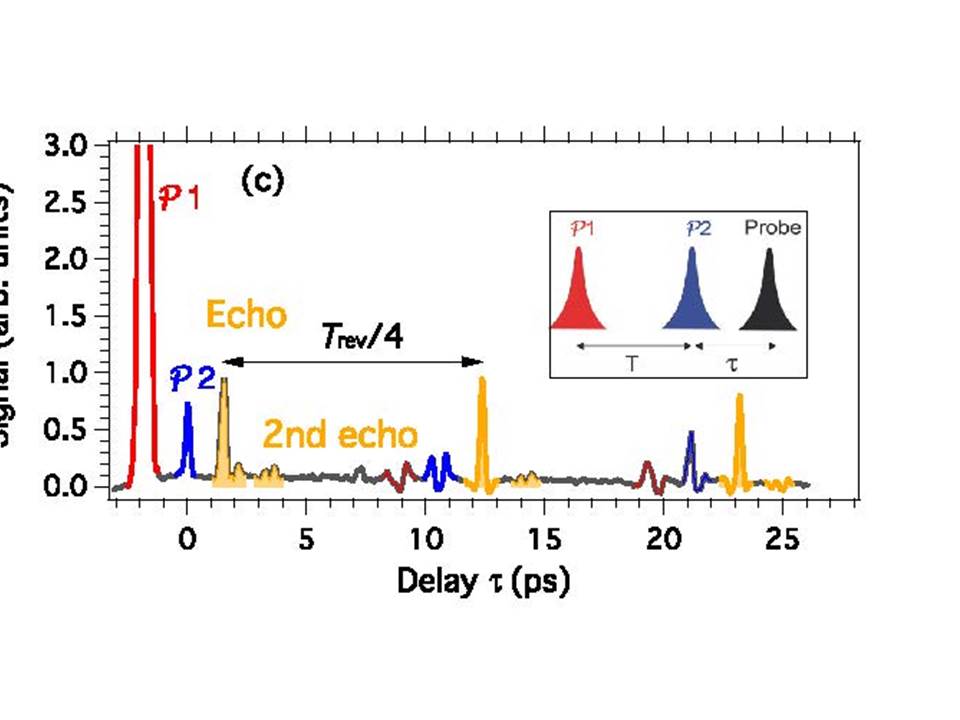
We induce coherent rotational motion in molecules by applying ultrashort laser pulses to molecules in gas phase and monitor their quantum molecular rotational dynamics. By designing our pulses properly we are able to selectively excite different molecular species in mixtures and selectively control the degree shape and sense of the molecular rotational motion.  


Time Resolved Spectroscopy

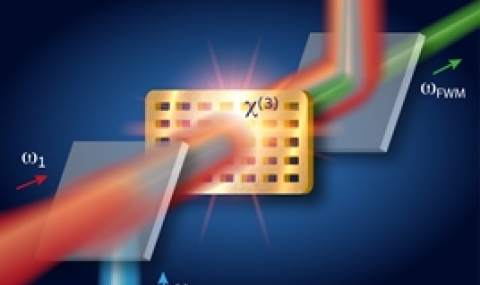
In order to retrieve an adequate spectroscopic  information from the measured time resolved signals in degenerate four wave mixing experiments (DFWM)   the signal   should be linearized  by means of external or internal  auxiliary  field (heterodyne detection) or spread to an additional frequency dimension (time-frequency detection).  Combination of time frequency detection technique with recently developed method that allows to retrieve multidimensional dynamical information on the molecular degrees of freedom with  single  laser  pulse  (single shot)  allows  to   reduce  dramatically  time consumption  of  the  experiment  down  to  a  several  pulses  limit (single shot TFD).


Femtosecond Pulse Laser Induced Ablation in Thin Metal Films

We investigate the complex interaction between ultra-short laser pulse and a thin layer (hundreds of nm) of metal. Laser ablation is induced and both the sample surface patterns and the light emitted from it are characterized.


 Home Research Publications People Contact Us