Going cerebral
Dr. Roey Schurr constructs models of human cognition to uncover how the brain’s architecture shapes each person’s unique cognitive style
New scientists
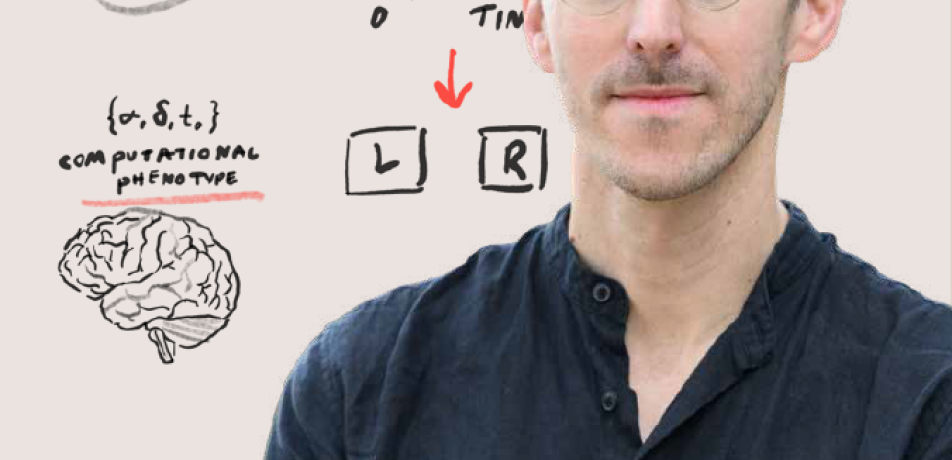
Some scientists begin their careers with a single defining passion. For Dr. Roey Schurr, the path has always been shaped by a steady curiosity about how people differ, how they learn, and how their inner worlds take form. His journey through multiple disciplines, from physics to computational modeling, equipped him with the intellectual tools he now applies to a central question in neuroscience: what determines the differences between individual minds?
Born in Jerusalem in 1986, Dr. Schurr is the middle child in a family of five siblings, including an identical twin who is pursuing a PhD in linguistics. He grew up in an environment where learning felt expansive rather than prescribed, and attended Givat Gonen High School, which placed a strong emphasis on both the sciences and the humanities, where he gravitated toward mathematics. He imagined this would be his life’s work and even enrolled in university-level mathematics courses while still in high school. But something was missing.
“Pure math felt too detached from the physical world,” he recalls. “I wanted my work to stay connected to more tangible experiences.”
After serving in a Military Intelligence linguistic unit, he enrolled at the Hebrew University of Jerusalem to study physics and cognitive sciences. It was there that he began to formulate the questions that had lingered since his youth: how the brain encodes experience, how cognition varies from one person to another, and how structure and function shape each other across time.
A bridge from physics to the mind
As part of the direct PhD program at Hebrew University’s Edmond and Lily Safra Center for Brain Sciences, Dr. Schurr joined Prof. Aviv Mezer’s group, drawn to his approach to studying the human brain at different scales and to the promise of a young, exploratory lab. He recalls the atmosphere as open and understanding, the kind of place where unexpected results were viewed as opportunities. That spirit shaped his PhD, which centered on method development in MRI, while also making room for a curiosity-led histology study that was published in Science in 2021.
During his PhD, Dr. Schurr also met Prof. Yuval Hart in the Department of Psychology, who introduced him to computational models of cognition—the bridge he had long been looking for between physics and the mind.
Seeking to delve deeper into this field, Dr. Schurr then joined Harvard University as a postdoctoral fellow, working in the group of Prof. Samuel Gershman in the Department of Psychology and Center for Brain Science—an environment he describes as “remarkably creative.”
There, he encountered new ways of thinking about behavior, deepened his work in computational modeling, and immersed himself in a research culture that valued bold questions as much as technical rigor. The experience, he says, expanded both his toolkit and his sense of what cognitive science could be.
A brain for teaching and doing
Dr. Schurr returned to Israel in September of 2023, driven by the pull of family and a desire to return to the Israeli research ecosystem. Once back, he resumed his postdoctoral training with Prof. Hart at Hebrew University.
In addition to his own studies, teaching has been a constant draw for Dr. Schurr—one he sees as a calling rather than a duty. He has taught linear algebra to graduate students, volunteered in programs introducing young people to brain science, and spent two years teaching Hebrew to asylum seekers in south Tel Aviv.
“Teaching is a gratifying experience for me,” he says, “I see it as an opportunity to learn, and I enjoy the immediate reward of helping others reach that ‘Aha!’ moment.” Near the end of his PhD, he even considered a combined teacher–researcher track, a reflection of how central education and instruction are to him.
“Alongside my research, I view teaching and education as an integral part of my contribution to the Institute and its scientific community,” he explains.
Dr. Schurr joined the Department of Brain Sciences at the Weizmann Institute in January 2026. His new lab will explore diversity in human cognition—how individuals differ, how cognitive strategies unfold across time, and how these differences are reflected in the brain’s
architecture. He hopes to build a group defined by openness, curiosity, and intellectual diversity.
“I want students who think differently from me in my group,” he emphasizes. “People who will push us in new and exciting directions.”
EDUCATION AND SELECT AWARDS
• BSc, summa cum laude (2013), MSc (2016), and PhD (2021), Hebrew University of Jerusalem (2010‑2013)
• Postdoctoral Fellow, Harvard University (2021‑2024) and Hebrew University (2023‑2025)
• Human Frontier Science Program Postdoctoral Fellowship (2022), Zuckerman Israeli Postdoctoral Scholars Program (2021‑2022), Jerusalem Brain Community (JBC) Gold PhD Fellowship (2020), JBC Student-Initiated Workshop Award (2019), Summa Cum Laude Merit Award from the International Society for Magnetic Resonance in Medicine (2017), Rector’s Prize for MSc degree, Hebrew University (2014), Amirim Interdisciplinary Honors Program, Hebrew University (2010-2013)