





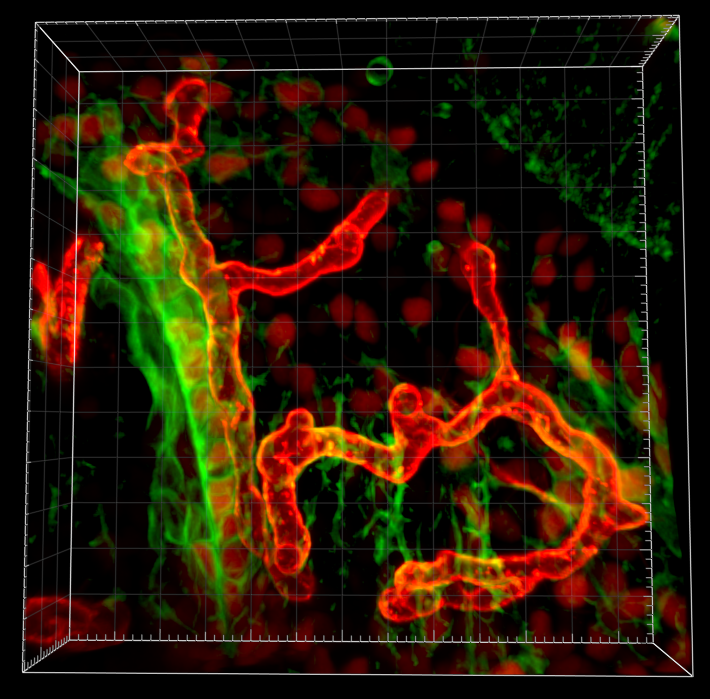
Early lymphatic development
|
In our lab we take advantage of the transparency and genetic amenability of the zebrafish embryo to uncover the mechanisms controlling specification of lymphatic endothelial cells and assembly of lymphatic vessels (Yaniv, 2006). Recently, we have revealed the existence of a novel niche of specialized progenitors, which gives rise to the lymphatic system, and have identified the first “lymphatic-inducing” signal. Moreover, using this factor we have been able to induce lymphatic differentiation of human embryonic stem cells, allowing for the first time the generation of human lymphatic endothelial cells in culture (Nicenboim, 2015).
Current projects in the lab involve further understanding of lymphatic formation in the zebrafish embryo, as well as characterization of organ-specific lymphatic vessels. In particular, we are interested in understanding how do lymphatic vessels in the heart form, what are their origins, and what is their putative role during cardiac pathologies. Finally, since the lymphatic system represents the main route for dissemination of metastatic cells, we aim to understand the mechanisms underlying tumor-induced lymphangiogenesis (the formation of new lymphatic vessels), and whether or not they relate to the circuits controlling lymphatic formation during embryonic development. |
Specialized angioblasts in the floor of the Cardinal Vein give rise to the lymphatic system |