Research Projects

All intracellular proteins and many extracellular proteins are continually "turning over;" i.e., they are being hydrolyzed to their constituent amino acids and replaced by new synthesis. Defective proteins that are misfolded or damaged must be disposed of quickly to eliminate their accumulation and allow normal cell function and viability. Similarly, proteins involved in signaling and cell regulation should rapidly be destroyed, to switch on or off the biological process they are engaged in.

The cell’s main degradation machinery is the proteasome complex. It is a large multisubunit protease that degrades proteins tagged with a poly-ubiquitin chain. The ubiquitin-proteasome proteolysis pathway is a highly selective and precisely regulated process. It is essential for many fundamental processes such as cell cycle, apoptosis, signal transduction, antigen presentation, DNA repair, regulation of transcription and DNA replication.

In our lab we apply a unique and novel structural biology approach to understand the function of the proteasome complex as well as other related molecular machines at the level of individual proteins.

In particular, our research focuses on the following:


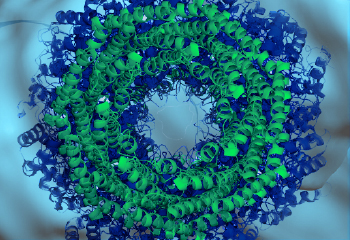
  20S proteasome
catalytic particle

20S proteasome catalytic particle

  19S proteasome
regulatory particle

19S proteasome regulatory particle

  Signalosome complex

signalosome complex

Active collaborations:

  1. Prof. Irit Sagi, Weizmann Institute of Science
  2. Prof. Wolfgang Dubiel, Charité Universitätsmedizin, Berlin Germany