


-
Cancer Immunotherapy
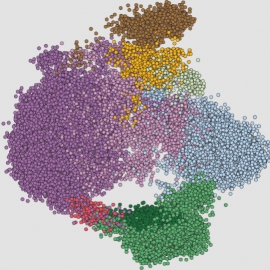
Studying the relationship between cancer and the immune system led to development of immunotherapies, including targeted checkpoint molecules and CAR-T therapies, that have revolutionized cancer treatment. However, their success is eclipsed by several grand challenges, including low response rate in most tumour types, intrinsic/acquired resistance and adverse side effects. One of the overarching goals of the lab is to tackle the most challenging problems in tumor immunology by utilizing advanced single cell genomics with the ultimate aim to develop more effective and precise immunotherapies toward human cancers.
We develop diverse single-cell genomic technologies to dissect immunological aspect of cancer biology in human and mice models in a genome-wide and spatially resolved manner, to trace the clonal histories and unveil the regulatory circuits and pathways involved. We are specifically interested in deciphering immune composition and relevant pathways and checkpoints in human tumors, and decoding the role of immune cells in establishment of metastatic niches. We are confident that these efforts will lead to the identification of novel immune modulatory pathways and optimization of immune cell-based cancer therapies.
Publications on Cancer Immunotherapy -

Development
We aim to decipher immune-mechanisms that contribute to development and aging of tissues. By using state of the art single cell genomic technologies, we study circuits, hierarchy and interactions between various cell populations in tissues along development, such as the lung, thymus, liver and brain, as well as the process of hematopoiesis. Among the pioneering questions, we are interested in are: How do immune and non-immune cells interact in the crucial steps of development during embryogenesis? Which are the cardinal interactions that signal for resident cell differentiation, maturation and aging. What are the molecular regulations of hematopoiesis, the process in which the whole repertoire of immune and red blood cells develop from a hematopoietic stem cell? How do long-lived cells, such as the microglia, mature and acquire their exclusive molecular signature, resulting from the milieu they reside in, such as the brain and what signals are detrimental during aging. How does the maternal immune system change and form a unique niche during pregnancy in order to allow the healthy development of the semi-foreign fetus?
Understanding different aspects of development will shed light on aberrant signaling related to developmental pathologies, and tissue regeneration in adulthood.
Publications on Development -

Brain
We investigate everything immunological in the brain. We strive to understand how the immune cells and mechanisms contribute to brain function across evolution, in the process of brain development, under conditions of psychological stress and in aging and neurodegenerative diseases, such as Alzheimer's disease (AD), multiple sclerosis (MS) and amyotrophic lateral sclerosis (ALS). Using novel single cell genomic technologies, we study cell subtypes, signaling pathways, genes, regulatory modules and interactions that control microglia, astrocytes and other cells in health and disease. Our research discovered how microglia roles change along brain development and led to a discovery of a novel type of CNS protective immune cells - Disease Associated Microglia (“DAM”), which are unique microglia type present in areas of neurodegeneration within the central nervous system. We further found that DAM are critical players in protecting from neurodegeneration by sensing neuronal damage via TREM2 and other signaling pathways. Ultimately, our goal is to deepen the scientific knowledge that will enable harnessing the brain’s own immune mechanisms to fight neurodegeneration and use this knowledge for developing next generation disease-modifying immunotherapy for Alzheimer’s and other neurodegeneration diseases.
Publications on Brain -
Metabolism
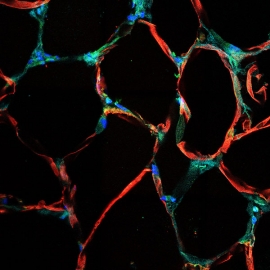
Metabolic processes fuel cellular functions during health and disease. Alterations in the metabolism largely impact immune function and are the causes and consequences of deviations from homeostatic conditions. We address these needs by single cell genomic studies of the metabolism and related disease. We explore the role of the immune system and its relevant pathways through human interventions and within defined mouse models; for example, in the context of drug-induced injury of the liver, and during diet-induced as well as diet-independent obesity. Additionally, we investigate how metabolic disorders impact diverse immune processes such as brain development and neurodegeneration, immune activity through various immune cell types, including macrophages and innate lymphoid cells.
Publications on Metabolism -
Autoimmunity
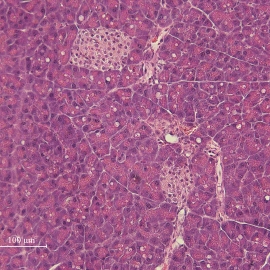
We aim to stratify and characterize autoimmune diseases at cellular and molecular levels, studying human tissue samples to understand the disease mechanisms, and provide novel prognostic biomarkers and immunotherapy targets. Our goal is to provide personalized treatment for autoimmune diseases tailored to the genetic, molecular and cellular characteristics of each patient. Autoimmune diseases are aberrant immune responses of the immune system of our body against its own healthy cells and tissues. Type 1 diabetes, rheumatoid arthritis (RA), and psoriatic arthritis (PsA) are among the common autoimmune diseases, but even for these, the treatments are currently prescribed without biomarker-based stratification of patients resulting in poor outcomes. In addition, our understanding of these diseases such as the diversity of immune and stromal cells (dys)function within the disease sites, and the genes and pathways leading to the pathogenesis is still poorly understood. Thus, there is an urgent need to understand and develop novel biomarkers and novel immunotherapy’s for autoimmune diseases. The emerging single cell genomic techniques we are developing provide us a great opportunity to systematically study these complex diseases, that will ultimately lead to use the right treatments on the right patients at the right time.
Publications on Autoimmunity -

Technology
Since the 19th century, with efforts pioneered by Ilya Mechnikov, a major focus of immunology has been the characterization of immune cells into distinct types. Technological advances, such as improved microscopy, monoclonal antibodies, new fluorophores, FACS, next generation sequencing technologies, and mass spectrometry, dramatically accelerated immunology research by allowing the association of immune cell types with specific molecular markers, spatial organization, and relationship to cohabiting cells within tissue. However, recent findings reveal that commonly used markers do not fully describe the functional diversity of immune types that differ in their gene expression, protein repertoires, chromatin landscapes, developmental histories, clonality, their microenvironment and time of exposure to it. To understand the vast heterogeneity of immune cell types, their relevant pathways, functions and regulation in health and disease we must continuously develop better single cell genomic tools for characterization and perturbations.
We are world leaders in developing technologies for simultaneous profiling of immune cells in single-cell resolution. Our lab pioneered a diverse single-cell RNA sequencing technologies, capturing multiple cellular modalities, including MARS-seq: a state-of-the-art technology for detecting protein and gene expression in single cells. CRISP-seq, combining scRNA-seq with advanced CRISPR gene editing to understand gene-regulation in the immune system at single cell resolution. We introduced spatial scRNA-seq technologies (NICHE-seq and more), characterizing the cellular composition of spatial niches and sub-structures in complex tissues. Our lab designed highly sensitive assays for chromatin landscapes in rare immune populations. We currently apply advanced multiplexed imaging techniques for gene expression and proteomics, and continue to develop new single cell genomic technologies targeting cellular interactions and signaling.
Publications on Technology
The ripening of single cell immuno-genomics leads us toward the ambitious goal of measuring and recording all the determinants of cell state, history and function. Better understanding of these factors will uncover new disease mechanisms, resulting in novel candidates for manipulation and development of better (immuno)therapeutics.