Sculpting the mature nervous system: Molecular mechanisms of neuronal remodeling

Oren Schuldiner
Dr. Oren Schuldiner
Incumbent of the Aser Rothstein Career Development Chair
Office: Wolfson 504
Tel: +972-8-934-2769
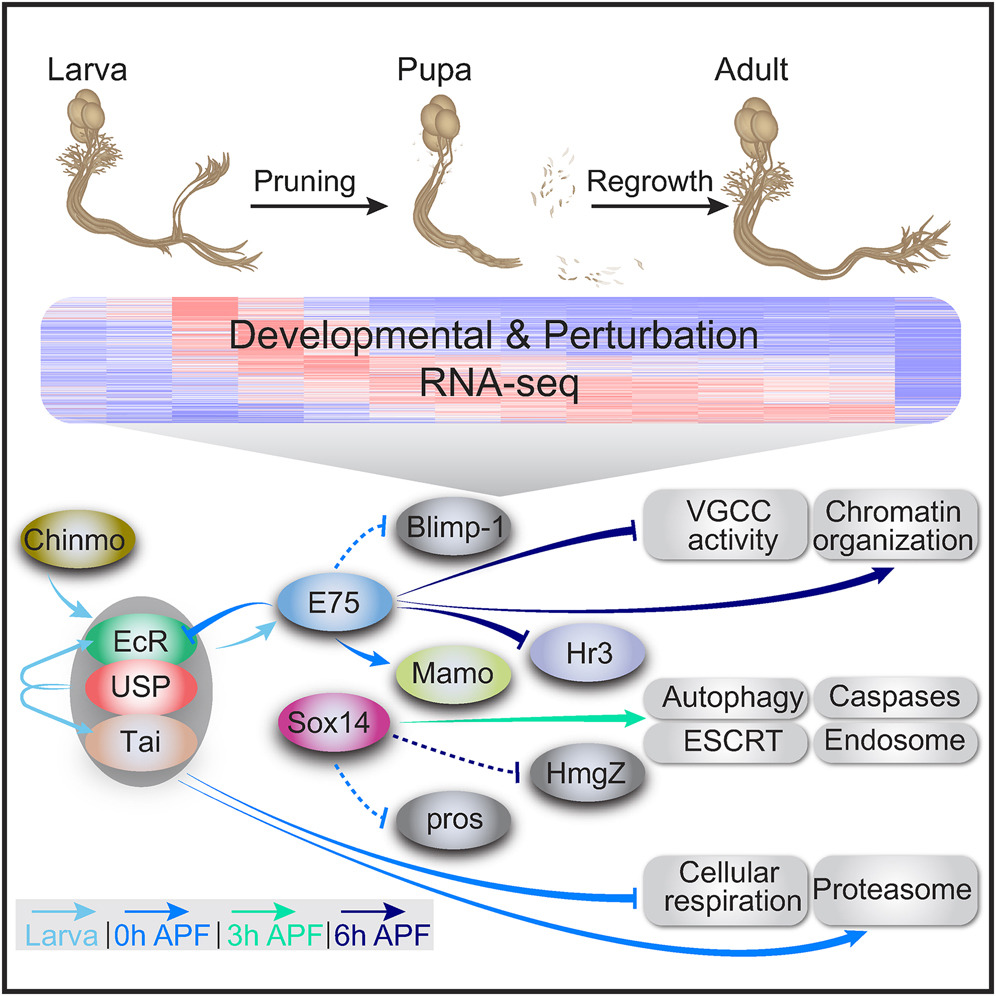
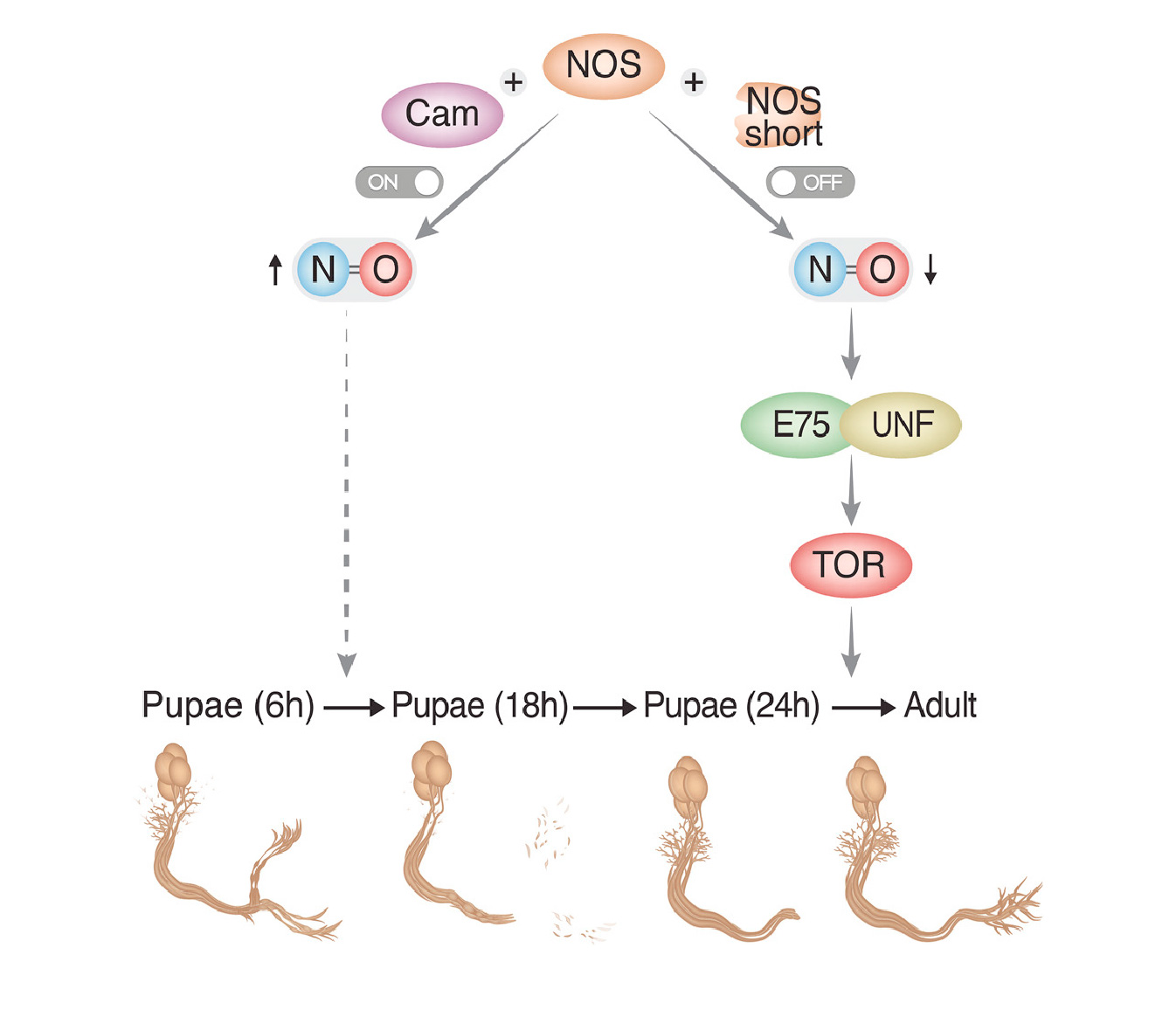
My group is interested in understanding the molecular mechanisms that govern neuronal remodeling events that are essential for sculpting the mature nervous systems of both vertebrates and invertebrates. One mechanism of neuronal remodeling is that of axon pruning that describes the removal of long stretches of unneeded axons followed by re-growth to form correct and final connections.

Understanding axon pruning can also help our understanding of neurodegenerative diseases and aid in creating solutions for axon regrowth following injury. This is because axon fragmentation during the pruning process shares similarities with axon degeneration.

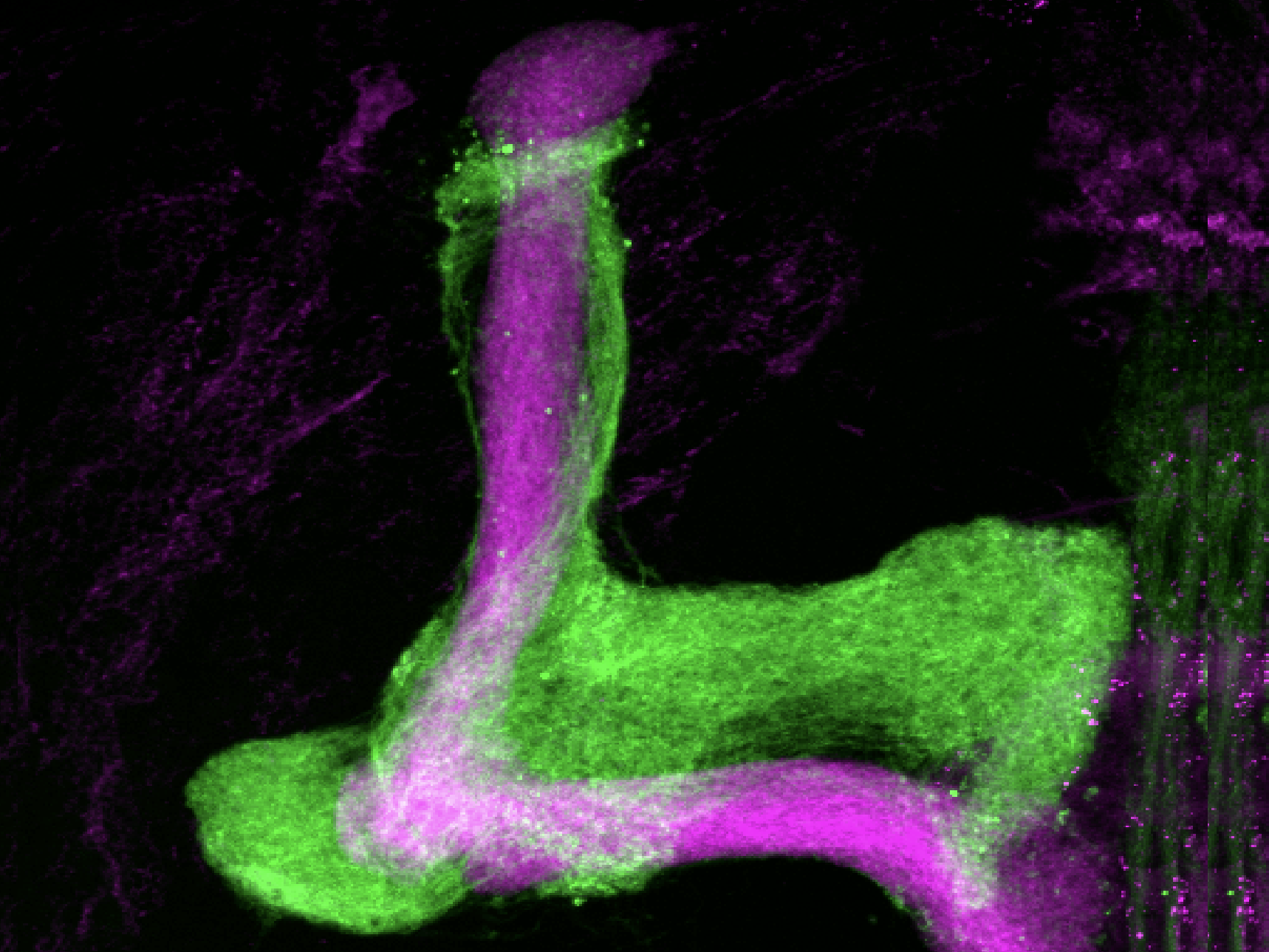
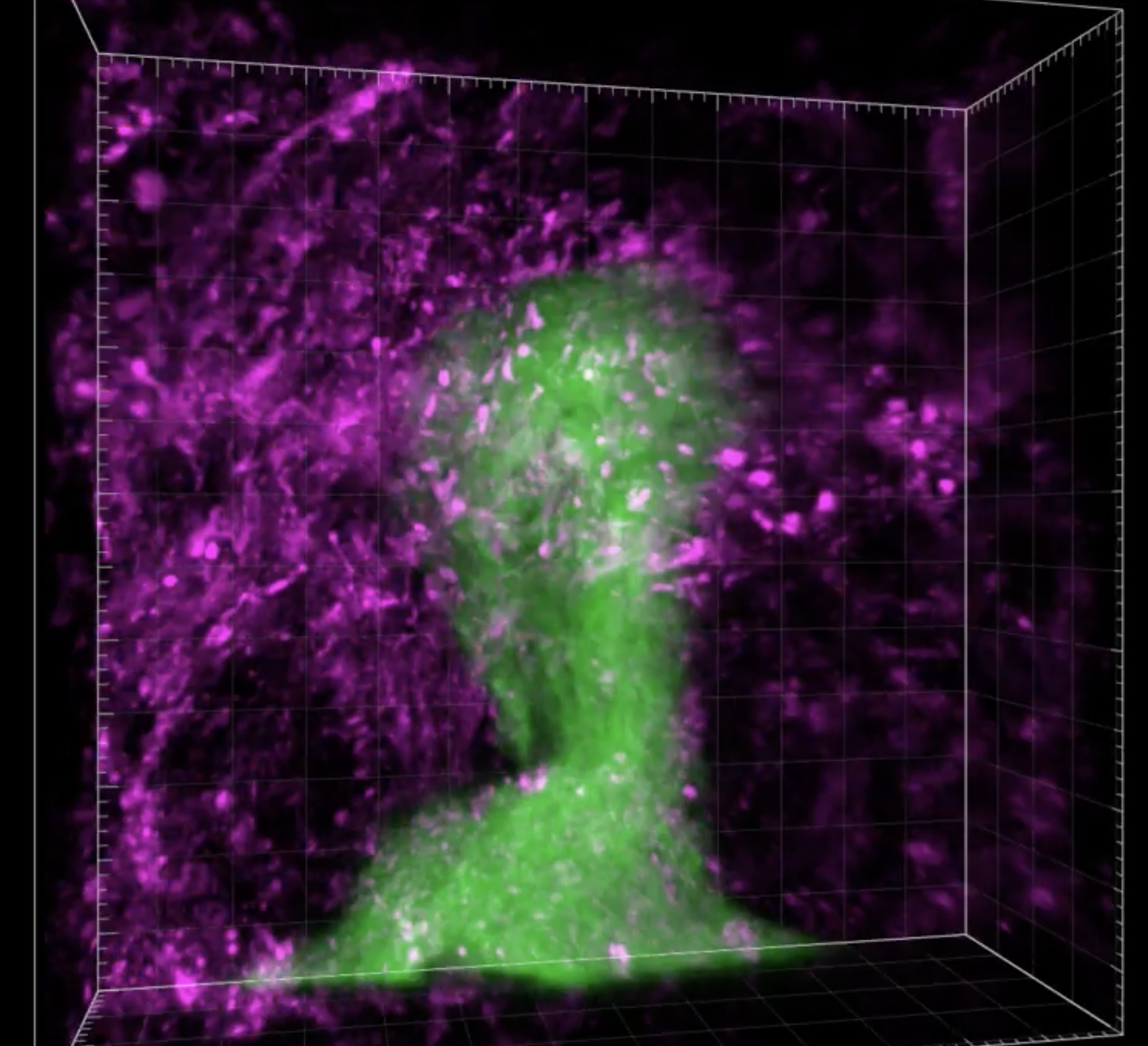
Developmental axon pruning of mushroom body (MB) γ neurons in the Drosophila fruit fly is a perfect model system to study neuronal remodeling: Not only can we harness the awesome genetic power of the fly and its short life cycle but we can also view the stereotypical neuronal remodeling as they occur in vivo during the larva to adult metamorphosis (see Figure 1).

In our research, we employ sophisticated state-of-the-art genetic techniques coupled with high-resolution confocal microscopy that enable us the visualization of single neurons within a whole brain. Moreover, we can make these specific neurons homozygous for a specific mutation, thus enabling the in vivo study of essential genes or those with pleiotropic roles in a cell autonomous manner (for more information, see the section about MARCM).

Pruning of Drosophila Mushroom Body Neurons
Figure 1: Pruning of Drosophila Mushroom Body (MB) γ Neurons. (A) Schematic summary of MB development, indicating the three types of neurons generated from a common neuroblast precursor at three developmental stages. γ (red), α’/β’ (green) and α/β (blue) neurons have distinct axonal projection patterns in the adult brain. NHL, newly hatched larvae; ALH, after larval hatching; APF, after puparium formation.(B) Schematic representation and (C-D) γ neuron single/two-cell MARCM clones at different stages during development. (B,C) Larval neurons project axons to both the dorsal (d) and medial (m) lobes. (B,D) At 18 hr APF, axons prune larval-specific dorsal and medial branches (dashed arrows indicate the absence of the larval branches). (B,E) Adult neurons re-extended only medial (solid vertical arrow) but not dorsal (dashed horizontal arrow) branches. den, dendrites; p, peduncle; Green in (C-E) represents MB γ neuron MARCM clones labeled with mCD8-GFP; magenta represents anti-FasII staining, which labels strongly α/β neurons, weakly γ neurons, and does not label α’/β’ neurons. Modified from Watts et al (2003).