Research Projects

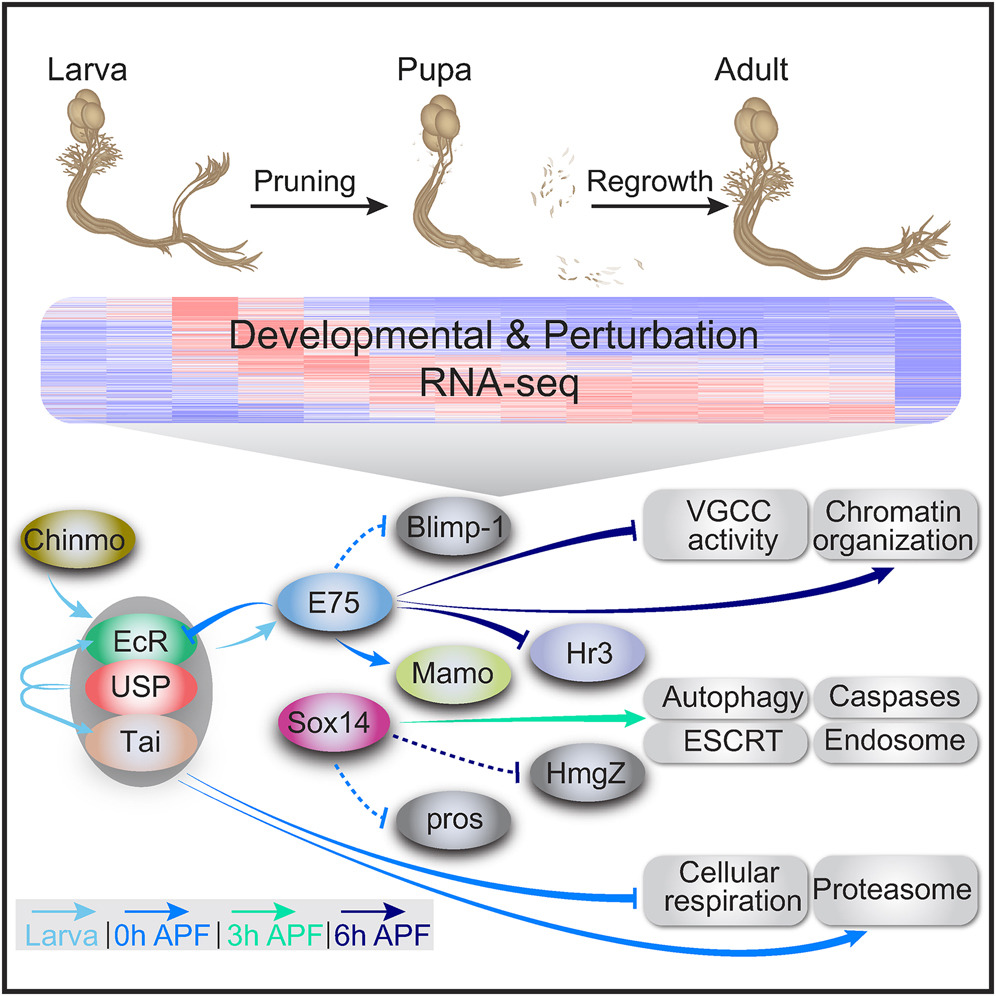
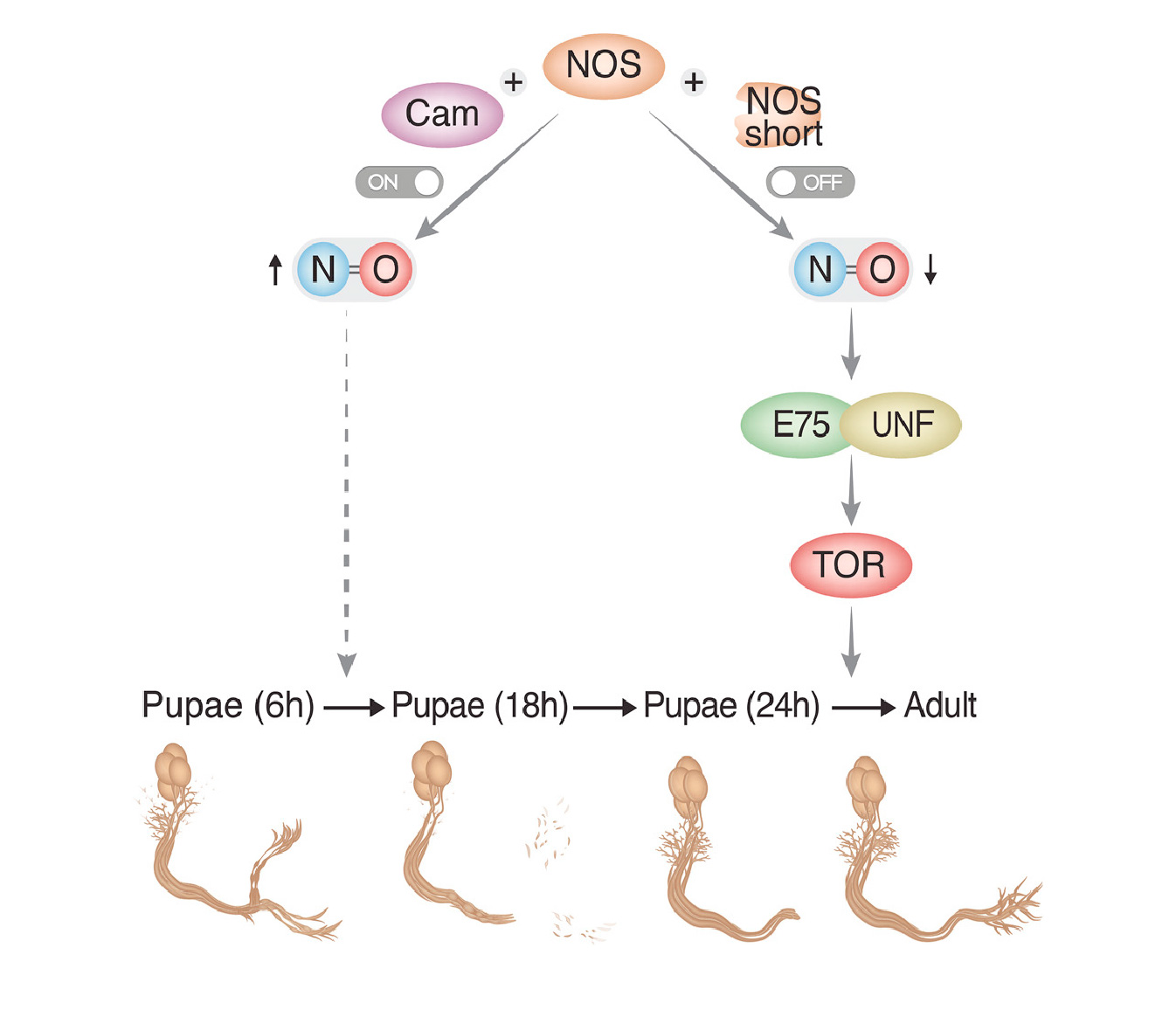
Regressive events during development are essential for sculpting the mature nervous system. Pruning of exuberant neuronal connections is one such mechanism utilized to refine neural circuits during the development of both vertebrate and invertebrate nervous systems (reviewed in Luo and O'Leary, 2005). Pruning describes a process in which neurons first extend excessive branches, and later prune away inappropriate branches with precise spatial and temporal control.

Mechanisms used for developmental pruning of axons and dendrites are most likely also utilized for structural plasticity of adult neurons in response to either learning or neuronal injury. Indeed, axon pruning shares some molecular and mechanistic similarities with axon degeneration after nerve injury and with the axon fragmentation that occurs in late stages of a wide variety of neurodegenerative diseases. Therefore, understanding the molecular mechanisms that regulate axon pruning should provide a more general insight regarding axon fragmentation during development and disease.

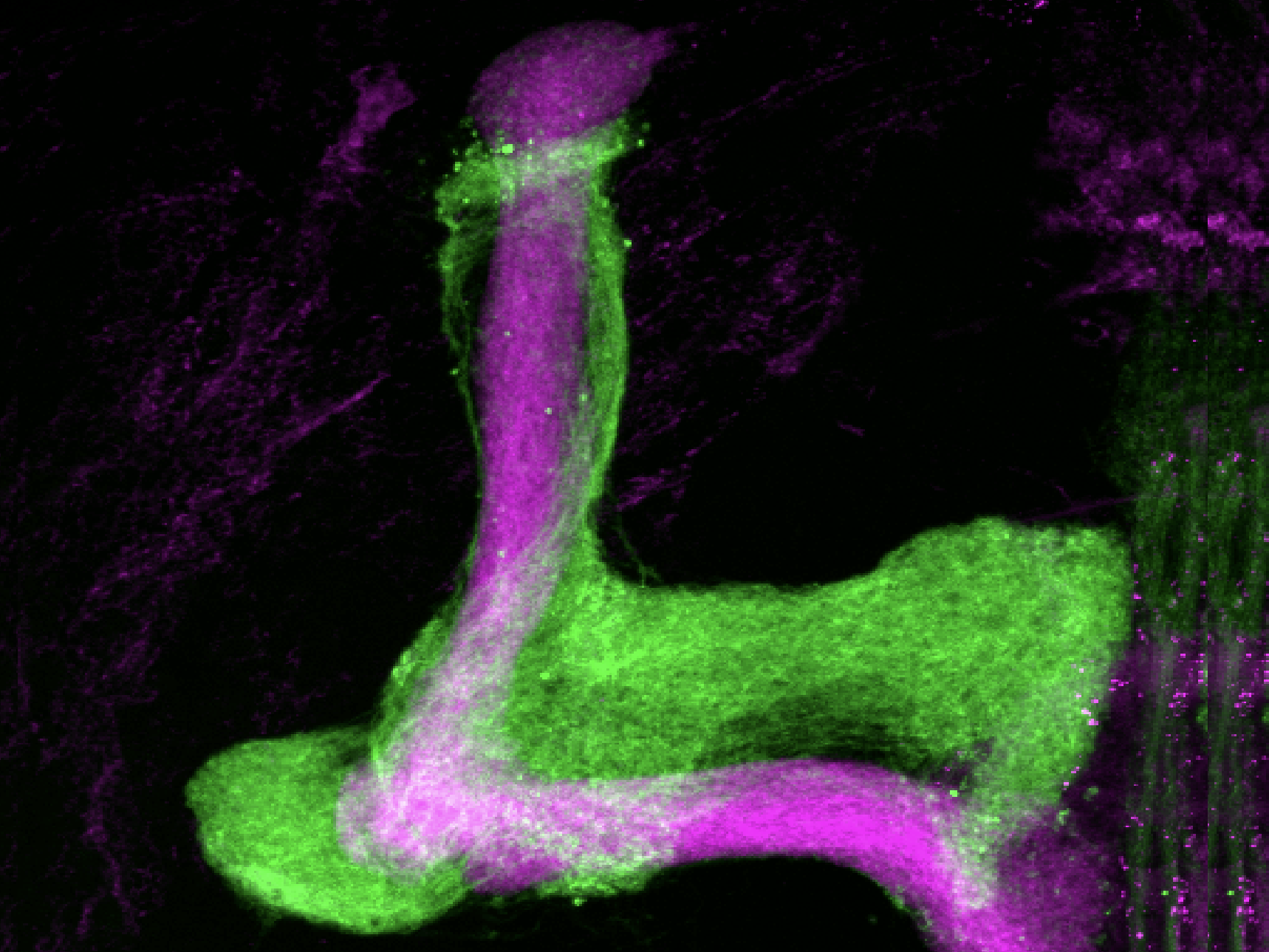
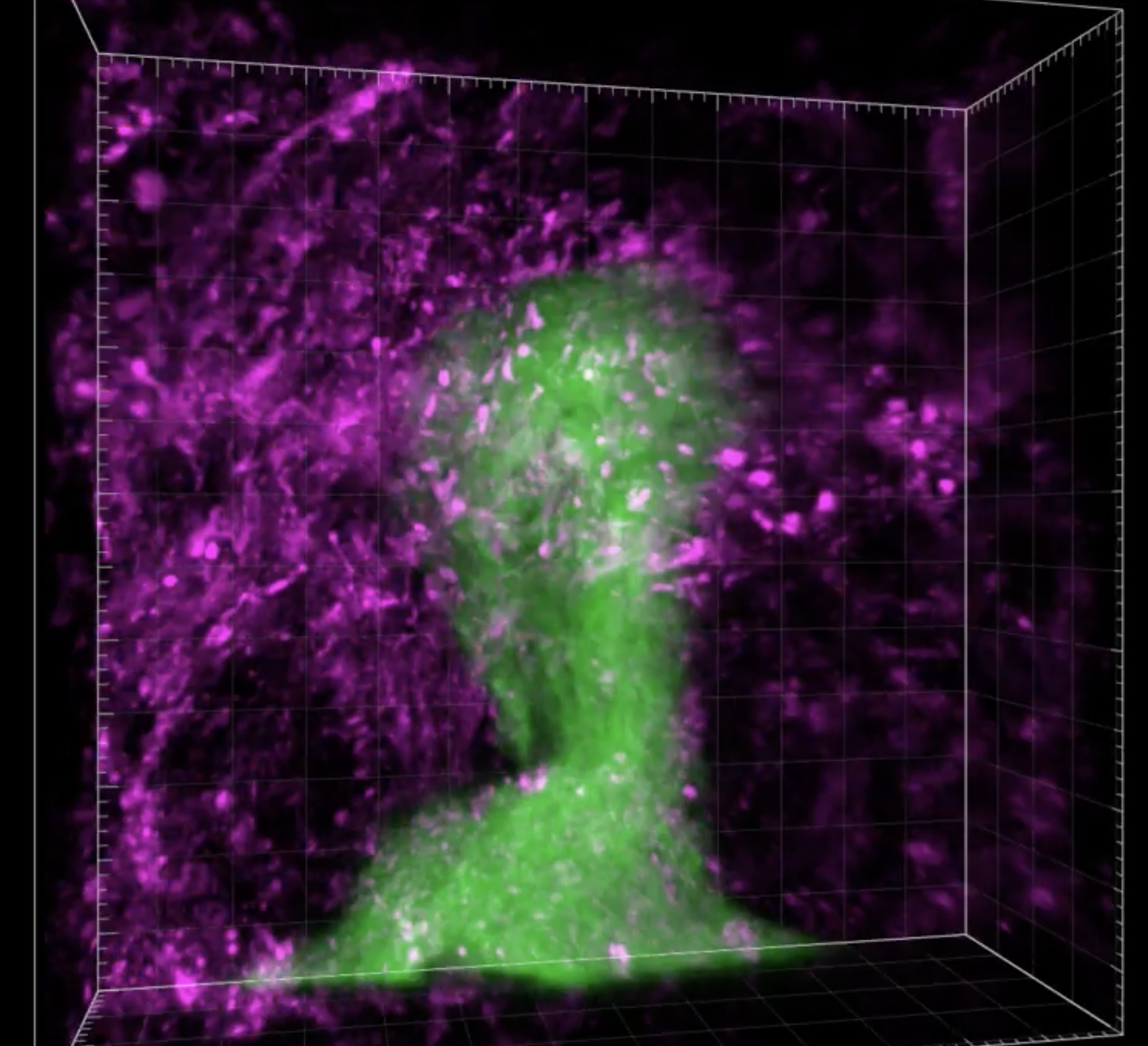
Developmental axon pruning of mushroom body (MB) γ neurons is an appealing model system to study the molecular mechanisms of axon pruning due to its stereotypic occurrence, and the plethora of genetic tools available, including MARCM (mosaic analysis with a repressible cell marker). Despite recent discoveries, our understanding of the molecular mechanisms of axon pruning is still limited. During my post-doctoral studies, I performed a large-scale mosaic forward genetic screen (Schuldiner et al, 2008), which identified, for the first time, a post mitotic function for the cohesin complex in regulating axon pruning. In addition, the screen identified several mutants exhibiting a strong pruning defect phenotype. These mutants will form the basis for the research in the lab. In general projects in the lab will focus on the following areas:

  1. the molecular mechanisms of cell-cell interactions that control axon pruning. In particular, the communication between glia and neurons will be investigated.
  2. the role of cargo trafficking inside the neuron in regulating axon pruning.
  3. the molecular machinery that executes axon self destruction
  4. the molecular signals and machinery that regulate axon re-growth after pruning

MARCM (Mosaic Analysis with a Repressible Cell Marker)

A complex biological process occurring late in development, such as axon pruning, most likely utilizes molecules that are also required in a wide variety of other developmental processes. Mosaic analyses, which can be used to study such questions, have until recently not been very useful in studying the nervous system where a single mutant axon needs to be visualized in the background of thousands of non-clonal axons. To solve this problem, the Luo laboratory developed the MARCM technique, which enables the creation of homozygous mutant clones (which can be as small as single cells), which are positively labeled (Figure 1). MARCM has broken new grounds for mosaic research of the nervous system and is widely used in research in my lab (Figure 2). For more details on MARCM, refer to Lee and Luo (1999) and Wu and Luo (2006).

 MARCM clones in Drosophila mushroom body neurons
Figure 1: MARCM clones in Drosophila mushroom body neurons: A mosaic fly brain containing mushroom body (MB) neuron neuroblast (left) and single cell (right) clones positively labeled. The three types of MB neurons (γ, α’/β’ and α/β) are morphologically distinct and specific lobes are shown (left). Note the fine resolution of the γ single cell clone (right). Green, GFP expression; Red, synaptic marker nc82. Image kindly provided by L.Luo.

 MARCM clones in Drosophila mushroom body neurons
Figure 2: Mosaic analysis with a repressible marker (MARCM): (A) Schematic representation of the MARCM system which requires: (i) Homologous chromosomes harbor FRT sequences at an identical and centromeric location; (ii) Gal80 (repressor of Gal4) located distally to FRT on one of the chromosomes; (iii) Flp recombinase encoded anywhere in the genome; (iv) Gal4 and UAS-reporter (such as GFP) encoded anywhere in the genome except distally to the FRT on the Gal80 chromosome; and optionally (v) a mutation distal to the FRT, in trans to the Gal80 chromosome. Site-specific mitotic recombination at FRT sites (arrows) gives rise to two daughter cells, each of which is homozygous for the distal portion of the chromosome harboring the FRT. The cell that aquired two copies of Gal80 is homozygous wt and unlabeled while the sister cell is homozygous for the mutation (orange *) and has lost Gal80 and thus labeled with UAS-GFP. Taken from Wu & Luo 2006. (B) Mitotic recombination occurring at different cell divisions in MB development can result in a positively labeled Single Cell Clone (Scc), Two Cell Clone (Tcc) or Neuroblast Clones (Nbc). NB, Neuroblast; GMC, ganglion mother cell; N, postmitotic neuron.