Acetylcholinesterase (AChE)

By rapid hydrolysis of the neurotransmitter, ACh, AChE terminates neurotransmission at cholinergic synapses. AChE is a very fast enzyme, especially for a serine hydrolase, functioning at a rate approaching that of a diffusion-controlled reaction. The powerful toxicity of organophosphorus (OP) poisons is attributed primarily to their potent AChE inhibitors. AChE inhibitors are utilized in the treatment of various neurological and are the only drugs approved so far by the FDA for management of Alzheimer's disease (AD). Many carbamates and OPs serve as potent insecticides, by selectively inhibiting insect AChE.

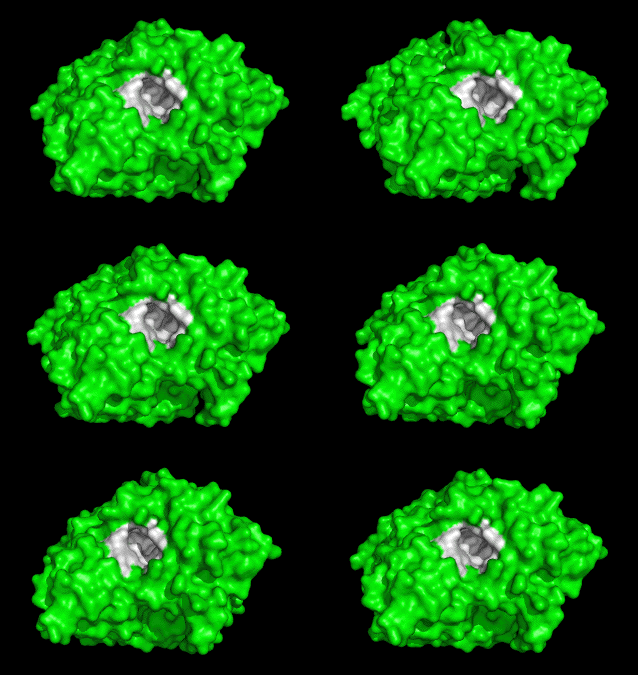
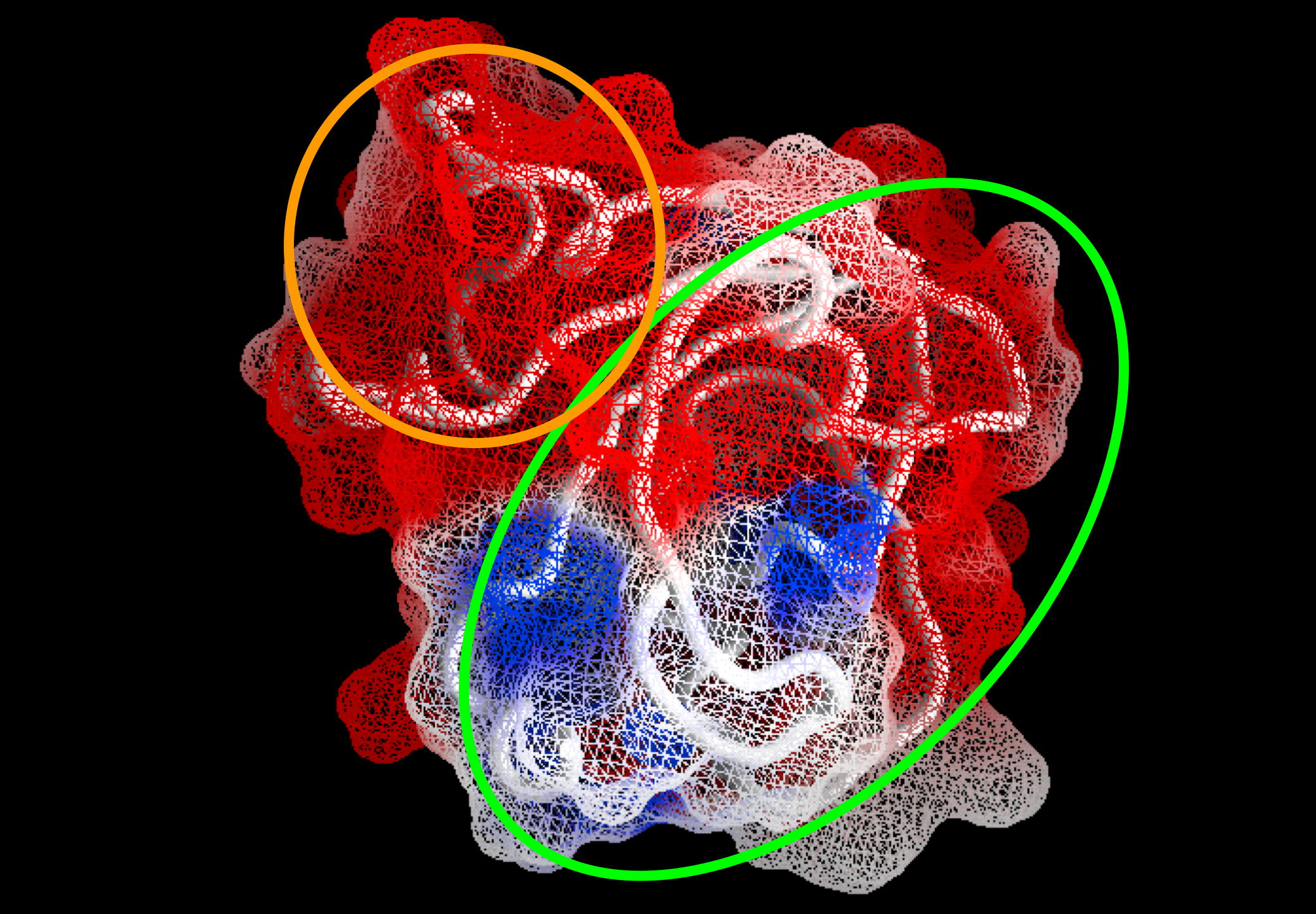
Working with Prof. Israel Silman we determined the 3D structure of AChE from Torpedo californica (TcAChE), permitteding visualization, for the first time, at atomic resolution, of a binding pocket for ACh. It also allowed identification of the active site of AChE, which, unexpectedly, is located at the bottom of a deep gorge lined largely by aromatic residues. This unusual structure permitted us to work out structure-function relationships for AChE. The so-called 'anionic' binding site for the quaternary moiety of ACh does not contain several negative charges, as earlier postulated. However, AChE shows a remarkable asymmetric charge distribution resulting in an unusually large dipole moment (~1,700 Debye) aligned along the active-site gorge. Modeling studies suggested that the quaternary group interacts primarily with the indole ring of the conserved tryptophan residue, W84, via cation-π interaction, as well as with F330. Crystallographic studies on several AChE-ligand complexes confirmed this. This was in agreement with labeling studies in solution and theoretical studies on the p-cation interaction. From the various inhibitor/AChE complexes we have studied, including most currently available and potential drugs for treatment of AD, we see that although many interact very tightly with AChE (binding constants ~10-10), interaction is mediated mostly via waters, and van der Waals interactions, with few direct interactions with the protein.

One of our most surprising findings was the breaking of the catalytic triad by modification with the nerve agent VX ('pro-aged'), followed by its reformation upon 'aging' (Fig. 1). On carbamylation with the Novartis AD drug ENA-713, H440 moved away from its hydrogen-bonded partner in the triad, E327, resulting in similar disruption. This movement may provide an explanation for the unusually slow kinetics of reactivation of the carbamyl enzyme.

Comparison of the native AChE and 'pro-aged' structures Comparison of the 'pro-aged' and 'aged' structures
Fig. 1. Reversible movement of TcAChE's active-site H440 upon inhibition by VX, as seen by X-ray crystallography (a) Comparison of the native AChE and 'pro-aged' structures (b) Comparison of the 'pro-aged' and 'aged' structures.

High sequence homology between human and Torpedo AChE suggested that their 3D structures would be very similar, as our X-ray data confirmed (Fig. 2). The 3D structure of Drosophila AChE (35% sequence identity to TcAChE) reveals overall similarity to the vertebrate AChEs, but substantial differences, especially in the surface loops and in the shape of the active-site gorge.

Human AChE complexed with FAS-II. hAChE
Fig. 2. Human AChE complexed with FAS-II. hAChE is shown as a solvent-accessible surface in gold and FAS-II is shown as a ribbon in green. The red area corresponds to points on the surface > 4Å from FAS-II and the inner surface of the active-site gorge is colored grey.

movie icon View our group's movies about this topic: