We are recruiting - Join Us! »
Proteins carry out most of the essential molecular processes of life. But before they can function, they must fold into the right structures, assemble with the right partners, and reach the right cellular location. This is a difficult process that often fails, and cells rely on dedicated chaperones and proteases to help proteins fold, detect failures, and remove damaged or misfolded proteins.
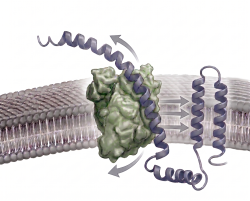
Our lab studies how this works for membrane proteins, a large and essential class of proteins that make up roughly a quarter of all proteomes. Because membrane proteins must fold and function within the complex environment of the lipid bilayer, they pose special challenges for the cell.
We ask how membrane protein sequences have evolved to cooperate with cellular biogenesis systems, how chaperones and proteases recognize problematic membrane proteins, and how mutations disrupt these processes in ways that can lead to loss of function and disease.
Using biochemical, genetic, proteomic, and data-driven approaches, we aim to uncover the basic rules that govern the biogenesis, folding, and degradation of membrane proteins across organisms.
If you are excited by molecular mechanisms and want to understand how cells build and protect their membrane proteome, our lab may be a good place for you.