Membranes
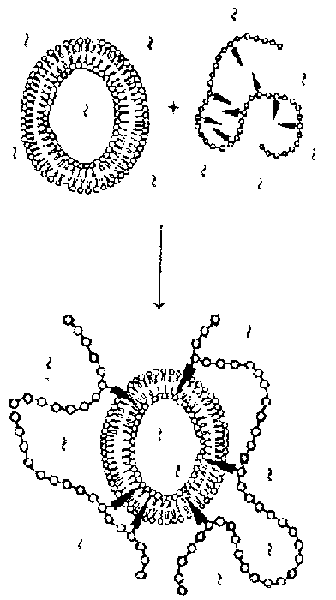
In an attempt to mimic the behavior of biological membranes, we are studying the interaction between artificial phospholipid membranes and hydrophilic polymers with hydrophobic anchor groups. The polymer inserts its hydrophobic side-groups into the membrane. The polymers induce spontaneous curvature resulting in morphological instabilities:
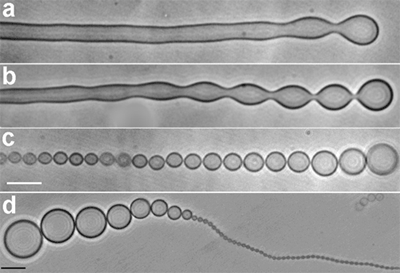
- Pearling of hollow tubular structures
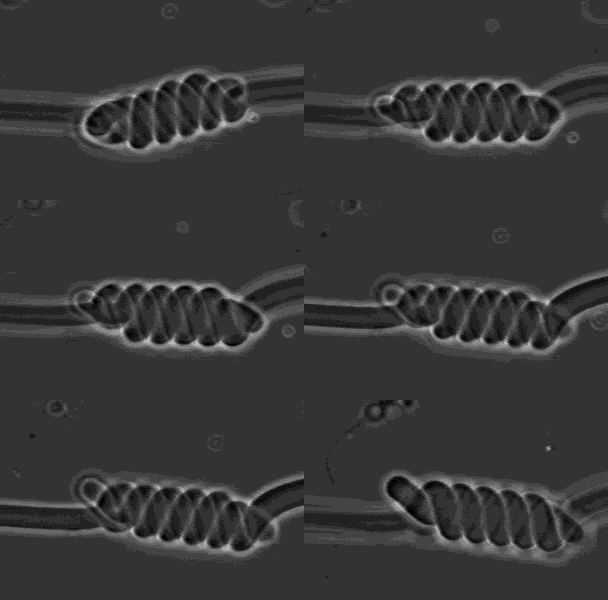
- Coiling of highly multilamellar tubes
- Formation of double-helices of multilamelar tubes
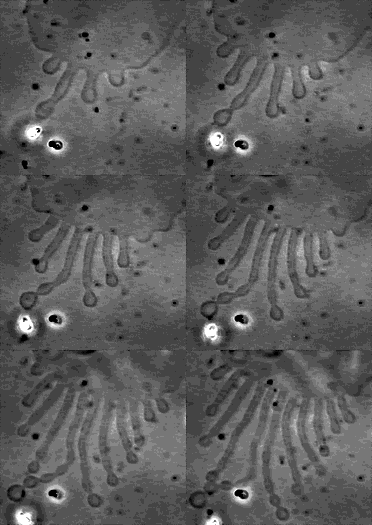
- Budding instability in oblate vesicles
Figure from H. Ringsdorf, B. Schlarb, and J. Venzmer, Angew. Chem. Int. Ed. Eng.,27(1988), 113-158.
Pearling
Snapshots of a multilamellar tubular vesicle of SOPC undergoing a pearling instability: (a) 0, (b) 70 sec. and (c) 150 sec. after the onset of pearling. (d) Image of an inhomogeneous pearled structure at late stages of the instability, 900 sec. after the onset of pearling. The polymer concentration is much larger than in (a-c). The scalebars represent 20 microns.
Budding
Fingering of a pancake due to polymer.
Cylindrical multilamellar tubes
The cylindrical multilamellar tubes, called myelin figures, consist of a large number of bilayers, reaching almost to the core. Adjacent bilayers are separated by thin hydration layers. These structures are spontaneously formed when lipids are hydrated with pure water.
Figure from I. Sakurai, T. Suzuki, S. Sakurai, Biochim. Biophys. Acta, 985(1989), 101-105.
What happens when they are hydrated with a solution containing an amphiphilic polymer?
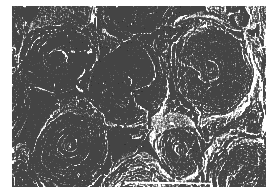
Cross section of a myelin figure
Single coils
Coiling of a myelin figure.
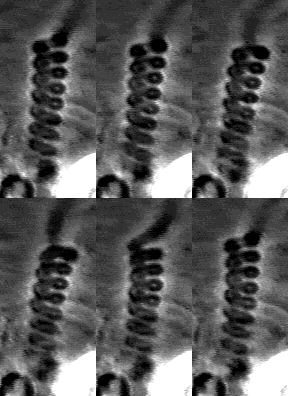
Double coils
A tubular membrane bends due to interaction with the polymer...
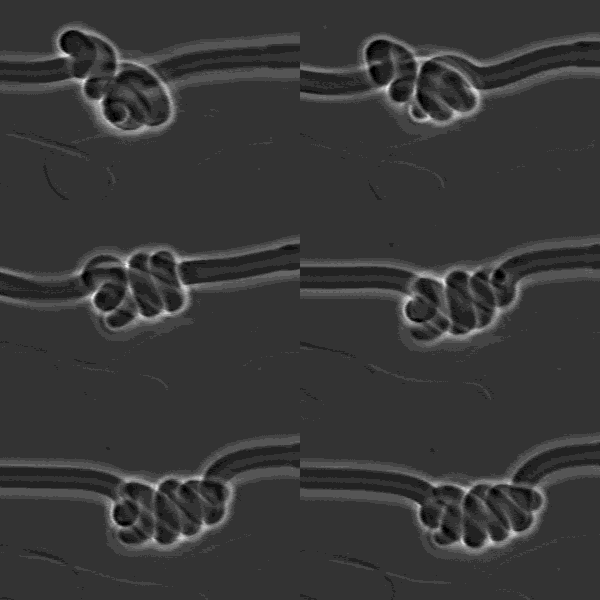
t molds itself into a double helix...
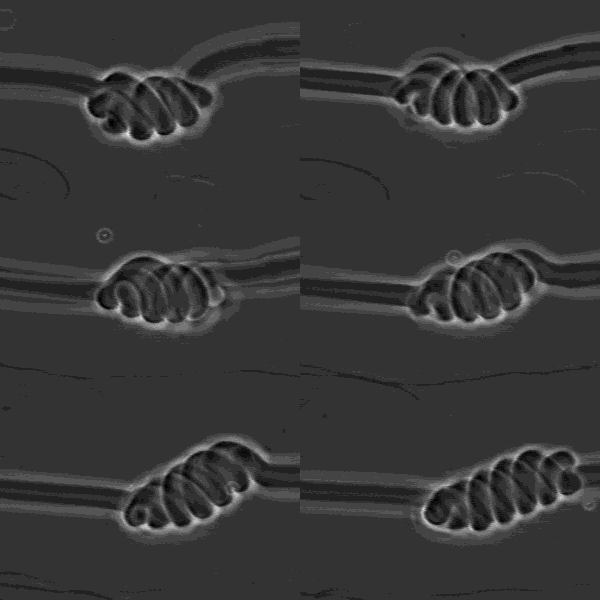
and proceeds to wind around itself.