Demographic noise-seeded patterns in space and time
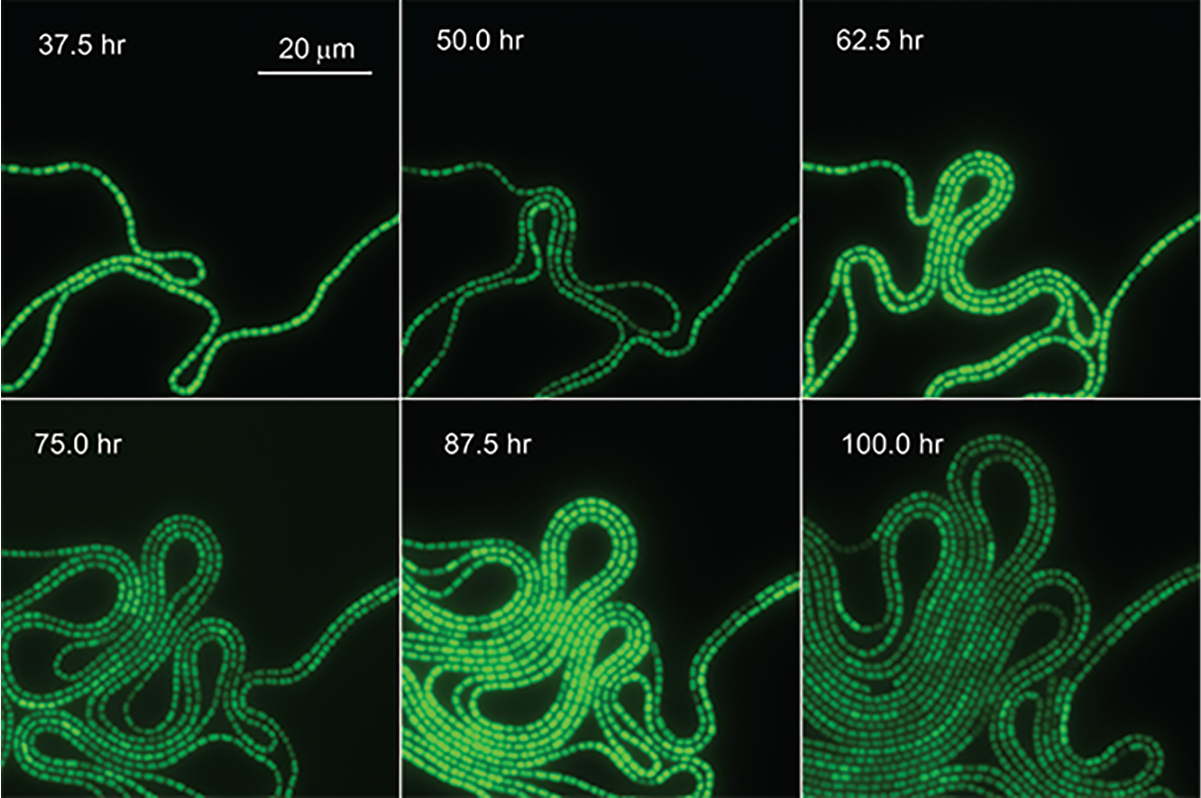
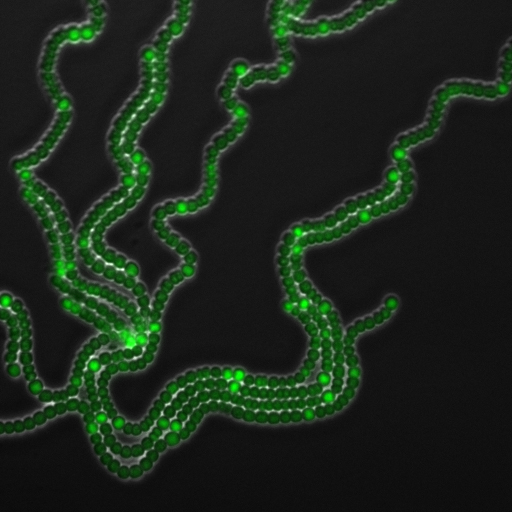
Patterns in space. Life at the level of single cells is subject to unavoidable fluctuations in gene expression, and cells having the same genome may behave rather differently. How can development of a multicellular organism with a precise blueprint take place and cell fates determined in the face of noisy behavior at the level of single cells? We study Anabaena, a cyanobacterial model system comprised of cells arranged in a one-dimensional filament, which forms a nearly-regular developmental pattern of two types of cells in nitrogen-poor environments, with a clear division of labor: one type carries out photosynthesis, while the other carries out nitrogen fixation. We interrogate each cell in the organism at all stages of development to study cellular decisions and understand how patterns are formed and maintained. We model theoretically morphogenesis in this organism by including demographic noise using stochastic Turing pattern ideas.
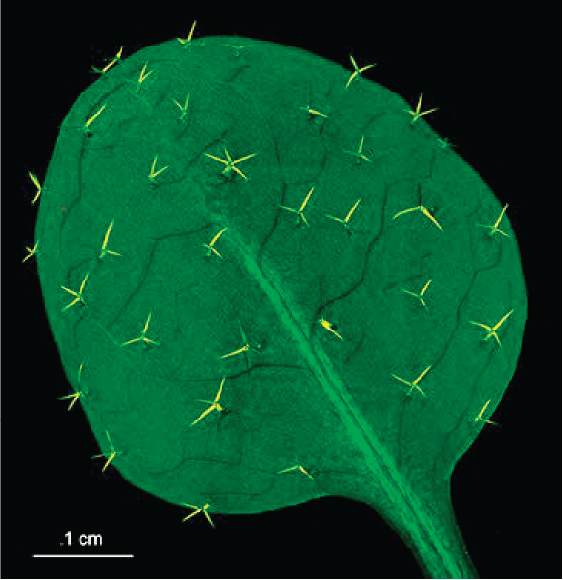
We also study the influence of demographic noise in the formation of patterns in the two-dimensional case of trichomes in Arabidopsis leaves.
Patterns in time. Being a photosynthetic organism, Anabaena coordinates its cellular physiology with diurnal light/darkness cycles on Earth with circadian clocks, one in each cell. We also study at the single cell level circadian clocks and the remarkable reliability they can display in Anabaena, probe the effects of cell-cell communication and clock coupling on clock synchrony and coherence, noisy fluctuations in protein copy numbers and phosphorylation states as well as the interplay between clocks and other processes in the cell, such as cell division and differentiation. We model these phenomena theoretically using stochastic approaches.