

Organ-Specific Vascular Functions in Health, Disease, and Repair
Lymphatic Vessels in Cardiac Regeneration
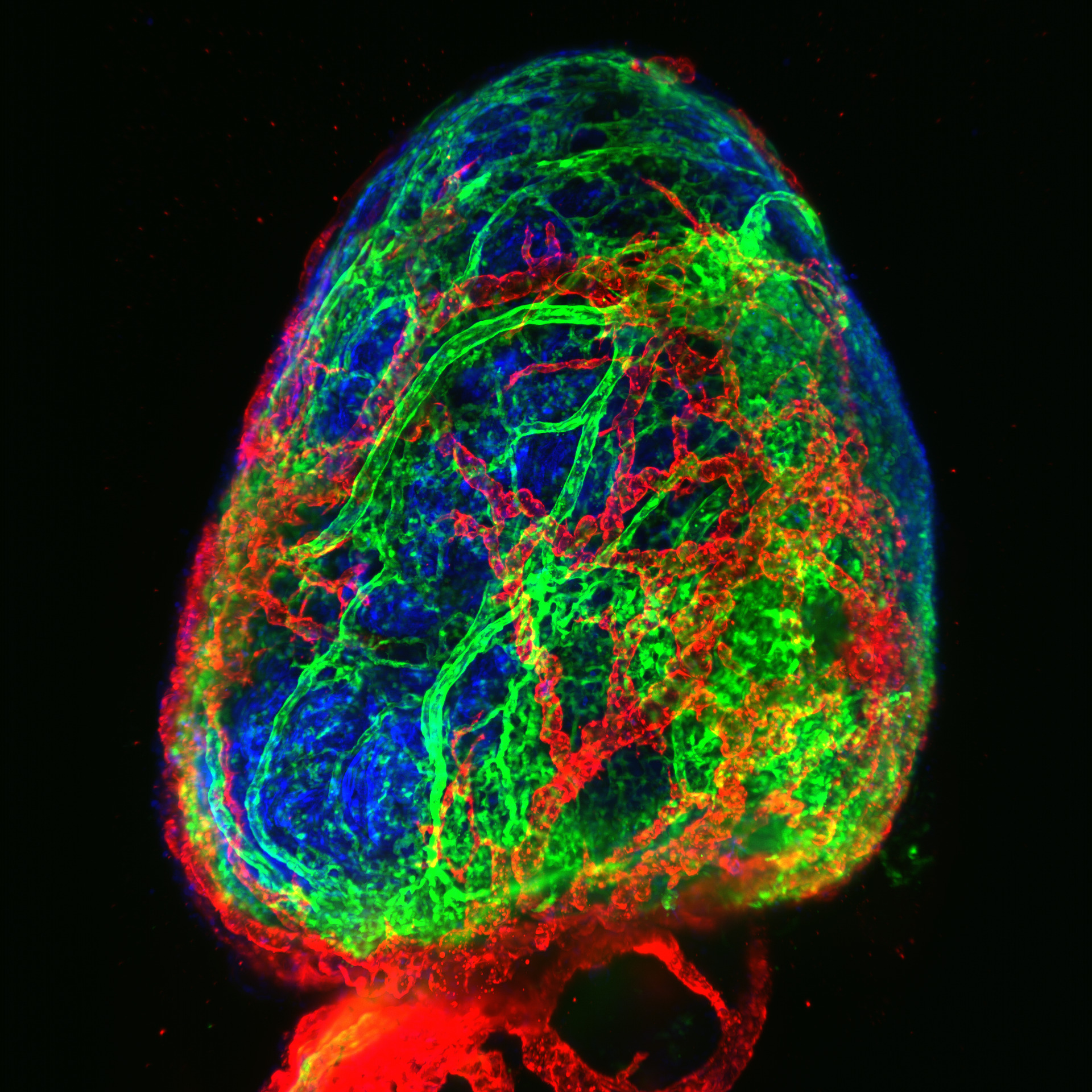
Unlike adult mammals, zebrafish can fully regenerate their heart after injury, offering a powerful model to uncover what successful cardiac repair looks like. We focus on the cardiac lymphatic vasculature and how lymphatic vessels support regeneration by clearing immune cells and inflammatory signals, maintaining fluid balance, and coordinating repair signals within the tissue. Using advanced microscopy and transcriptomic approaches, we study how lymphatics communicate with surrounding cells in the heart, including epicardial cells, fibroblasts, and immune cells, and why failures in lymphatic growth can derail efficient recovery. Our goal is to define lymphatic-dependent mechanisms that may guide the development of new strategies to promote cardiac repair.
Where blood is born: the vascular niches that shape hematopoietic stem cell fate

Hematopoietic stem cells reside in specialized vascular niches that support blood and immune cell production throughout life. In vertebrates, including humans, these niches are closely associated with sinusoidal endothelial cells in the bone marrow, which provide structural support and instructive signals that regulate stem cell maintenance, differentiation, and trafficking. This vascular organization is evolutionarily conserved, with comparable sinusoidal niches found in the zebrafish kidney marrow and the caudal hematopoietic tissue during development. In our lab, we study how these conserved vascular niches are formed, maintained, and remodeled, and how vessel identity and signaling control hematopoietic stem cell behavior in health and disease.