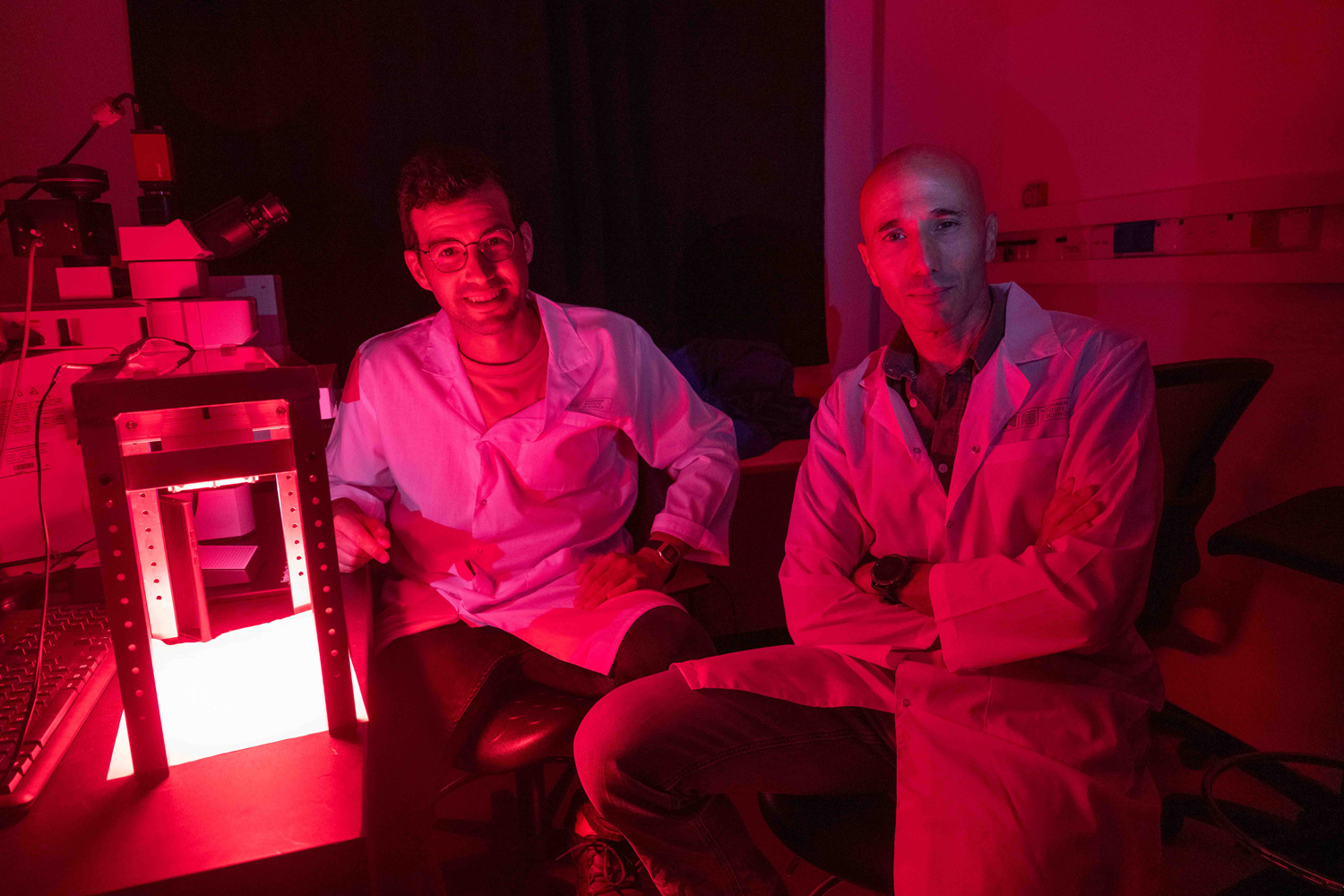
Weizmann neuroscientists have introduced an innovative technology that enables them to explore how oxytocin—the “love hormone”—influences social behavior, emotional maturity, and maternal attachment in the young brain.
The attachment between an infant and a primary caregiver shapes the baby’s future social ties. Yet little is known about the biological mechanisms underlying childhood attachment, mainly because it is so difficult to study the young brain in natural conditions.
Now, Prof. Ofer Yizhar and his team have developed a new, noninvasive method that enables the silencing of specific neurons deep within the brains of mouse pups without disrupting their natural behavior. Using this approach, the team investigated the role of oxytocin, a protein released from neurons that can intensify emotions ranging from love and amiability to anxiety and aggression. The findings, published in Science, show that oxytocin shapes the social behavior of pups and may underlie emotional differences between males and females that emerge early in life.
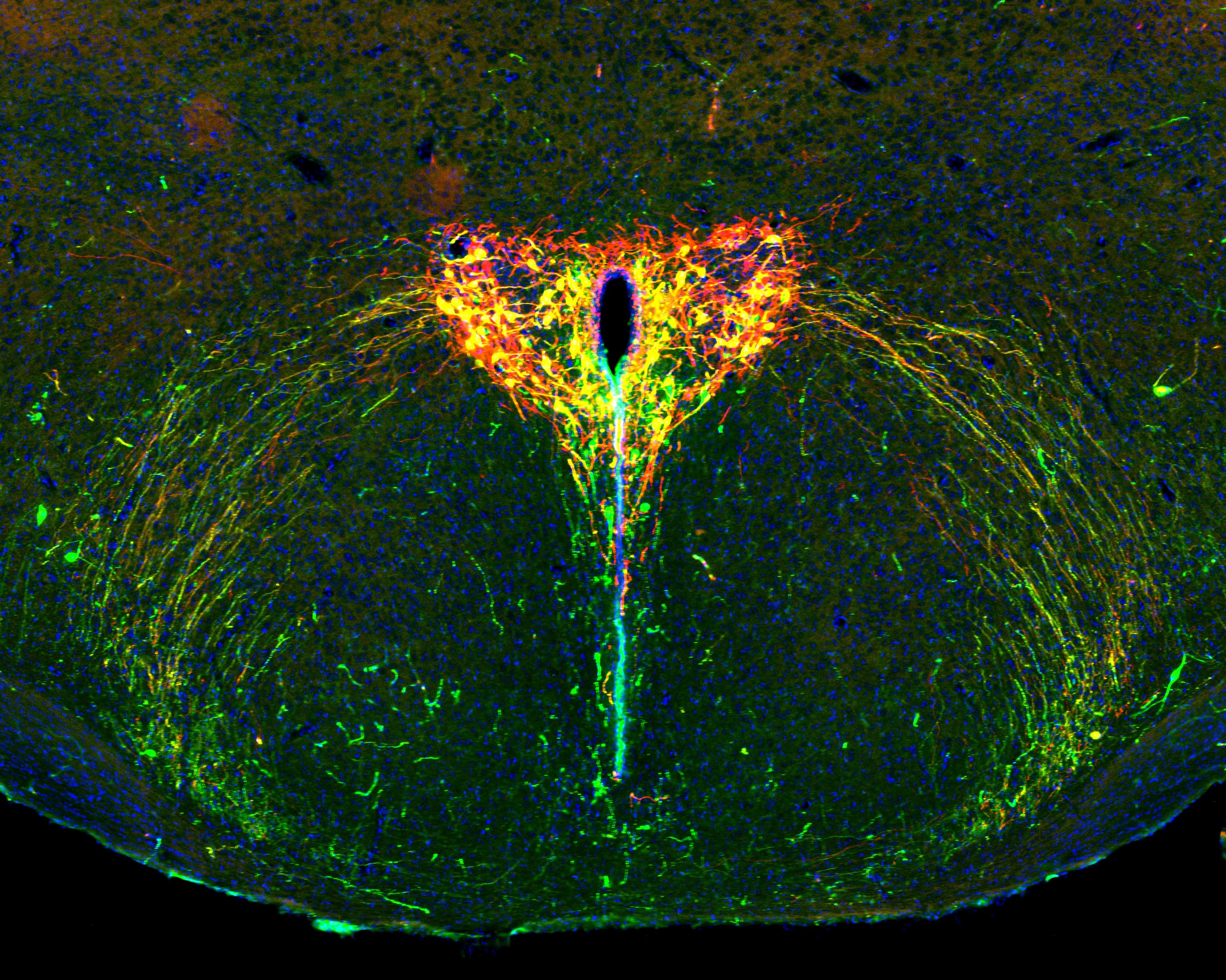
Young mammalian brains, including those of human children, are especially sensitive to oxytocin. Some studies have even linked oxytocin deficiency to autism. However, without sufficiently precise tools to examine neural activity deep within the developing brain, many aspects of oxytocin’s role in early life have remained a mystery.
The Yizhar group is renowned for its pioneering work in the field of optogenetics, a technology that uses light to control the activity of individual cells. Dr. Daniel Zelmanoff, a physician-scientist in Prof. Yizhar’s lab, devised a method whereby he infects targeted mouse pup neurons with an otherwise harmless engineered virus that introduces a gene encoding a light-sensitive protein; when exposed to light, the protein “turns off” the neuron. Remarkably, the protein is so light-sensitive that the researchers could silence selected neurons simply by shining red light on the pups’ heads.
The researchers focused on oxytocin’s role during the temporary separation of a mouse pup from its mother and their reunion a few hours later, a situation familiar to every parent of a young child. The scientists observed increased oxytocin activity in the pup’s brain during separation, which returned to normal after maternal reunion. Pups with an active oxytocin system gradually adapted to being alone in an unfamiliar environment. In contrast, pups with light-silenced systems did not adapt to being alone. These findings suggest that oxytocin isn’t just the “love hormone”—it’s also a loneliness cure.
Furthermore, the researchers found that activation of the oxytocin system during separation not only strengthened the mouse pups in the moment, but also determined how they behaved when their mothers returned. These pups emitted more ultrasonic calls than usual, and the frequency of the calls increased as they got closer to their mothers.
Finally, the team found that female pups with an active oxytocin system emitted many more ultrasonic calls when reunited with their mothers than females with silenced oxytocin systems, whereas the calls of male pups were unaffected by the status of their oxytocin systems. This is the first sex difference observed in oxytocin system activity at such an early stage of development, and it may offer a clue as to why males and females differ long before puberty.
Prof. Ofer Yizhar is supported by the Laura and Anthony Beck and Family Fund for Research in Neuroscience Related to Youth at Risk; Magnus Konow in honour of his mother Olga Konow Rappaport; and the Zuckerman Center for Research on Learning, Memory, and Cognition. Prof. Yizhar is the incumbent of the Joseph and Wolf Lebovic Charitable Foundation Chair for Research in Neuroscience. His group is supported by the Achar Research Fellow Chair and Laboratory in Electrophysiology.