The Group's Research Projects include the following:
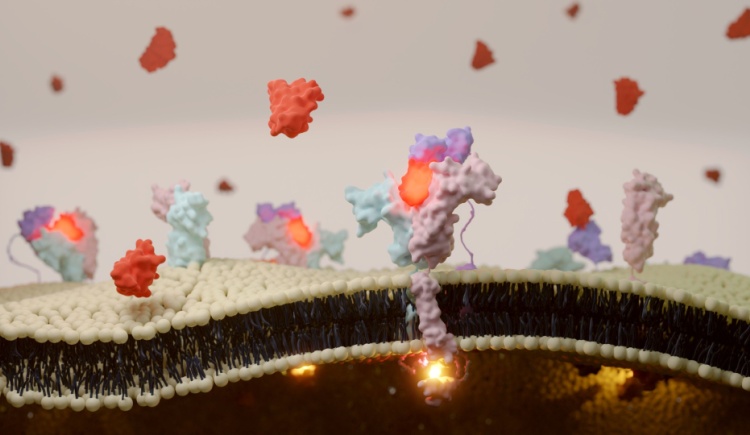
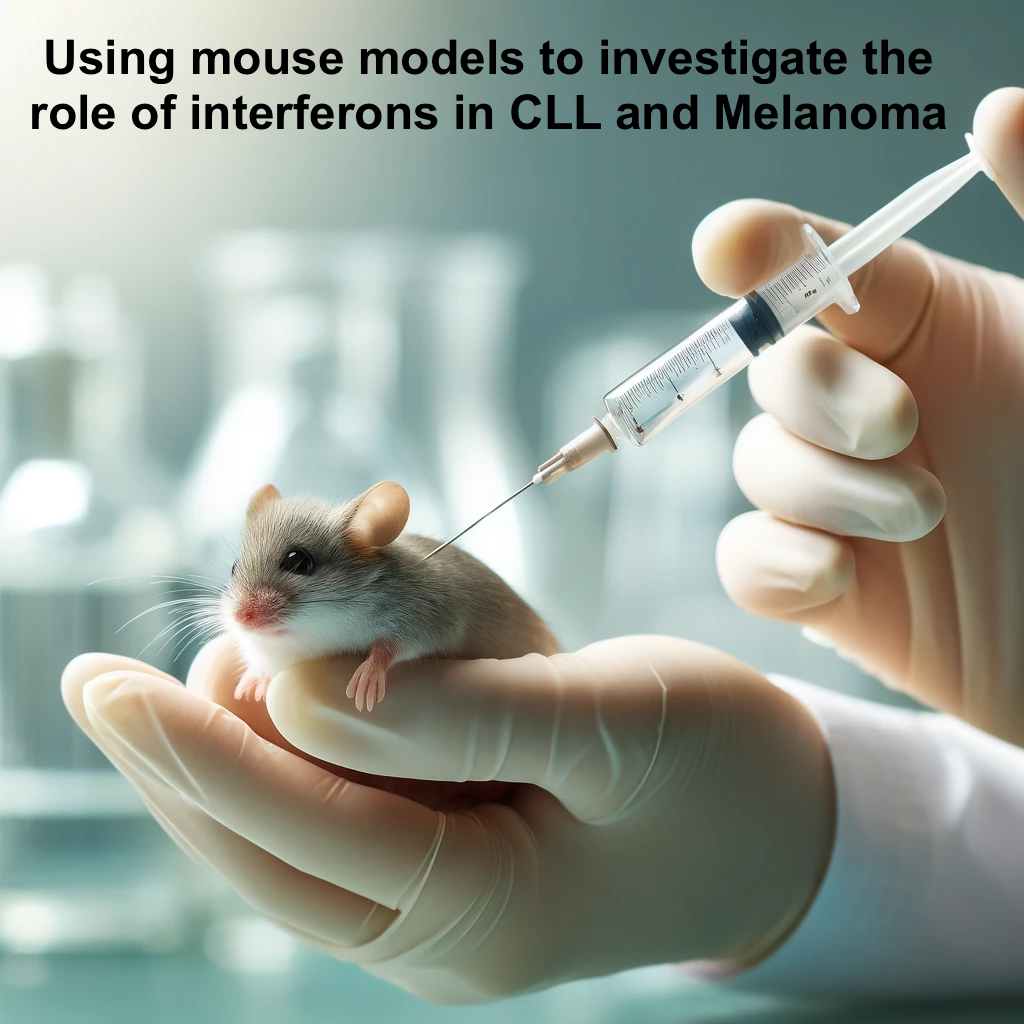
In this research, we aim to decipher the relation between biophysical parameters of protein-protein interactions and biological activity. We were intrigued by the complex network of a large number of interferon subtypes binding the same two cell surface receptors, but seemingly causing differential activation. We assume that this differential activation is related to distinct modes of receptor binding, which can be investigated using purified proteins in vitro. Therefore, we developed methods to express, purify, mutate and measure the interaction between the different pieces of the puzzle in vitro. This work resulted both in a structural and functional model of the system. Major highlights of our research include the determination of the three dimensional structure of the interferon-receptor complex, understanding the relations between structure and biological function and the design of the most potent interferons currently know which are now tested for their efficacy in animal models. Yet, the interferon system is complex and still far from being understood, which is part of our plan for the future.
Click here for a detailed description of our work in this area. |
The process of protein-protein interactions can be divided into two kinetic, physically different processes. The first is the association process, where two proteins located far away have to find each other in a short time and form a complex. This process is second order, and depends on the concentration of the two reactants. The second process is of the dissociation of the two proteins, to form monomers. This process is independent on the protein concentration, and thus is of first order. Both processes were thoroughly investigated in our laboratory. In the following part, is a description of what we learned concerning the biophysical basis of the binding process, and how it was applied for protein design of faster and tighter binding protein complexes using the computer program PARE. Using, between others, the designed mutations we investigated how the binding reaction proceeds in crowded environments and lately also in living cells. Surprisingly, we discovered that binding is hardy affected by crowding, whether by synthetic polymers or by the dense environment in the cell. This can be attributed to the occluded volume effect of crowders, which counter act the slowing in diffusion.
Click here for a detailed description of our work in this area. |
Joel Sussman, Israel Silman, Yigal Burstein, and Gideon Schreiber are currently leading the structural proteomics effort at the Weizmann Institute.
The aim of the new Israel Structural Proteomics Center (ISPC) is to conduct structural analyses of a large number of proteins in parallel, and to combine the expertise of researchers from different fields. The Center is expected to significantly advance basic knowledge in this vast realm of inquiry, which could lead to important biomedical applications. As part of this effort, Gideon Schreiber is responsible for the protein expression part of the project, as well as being a member pf the steering committee. |
We were exploring structure and sequence information available in the database to obtain a better understanding of protein-protein interactions in general. Our main goals include: the development of an algorithm which will be able to identify protein binding sites on the surface of unbound proteins; using this information to create our own energy function, termed Hunter, use Hunter to design protein-protein interfaces de-novo and analyze the importance of fast; and electrostatically assisted association between proteins in the proteome.
Click here for a detailed description of our work in this area. |
Protein complexes are stabilized by non-covalent interactions similar to those, which stabilize the folded conformation of a protein. Simple mutagenesis studies have failed to reveal the nature of the complex interactions in the interface. Here we describe a new method, based on multiple-mutant cycles, developed to decipher the complex, and cooperative nature of non-covalent interactions, which result in the formation of stable protein complexes. Using this approach we learned that interfaces are build in a modular way, with the interactions within each module being cooperative, but additive between modules. This insight was used by us to design an interface with a new module plugged in, which resulted in the generation of specificity between the designed binding partners.
Click here for a detailed description of our work in this area. |