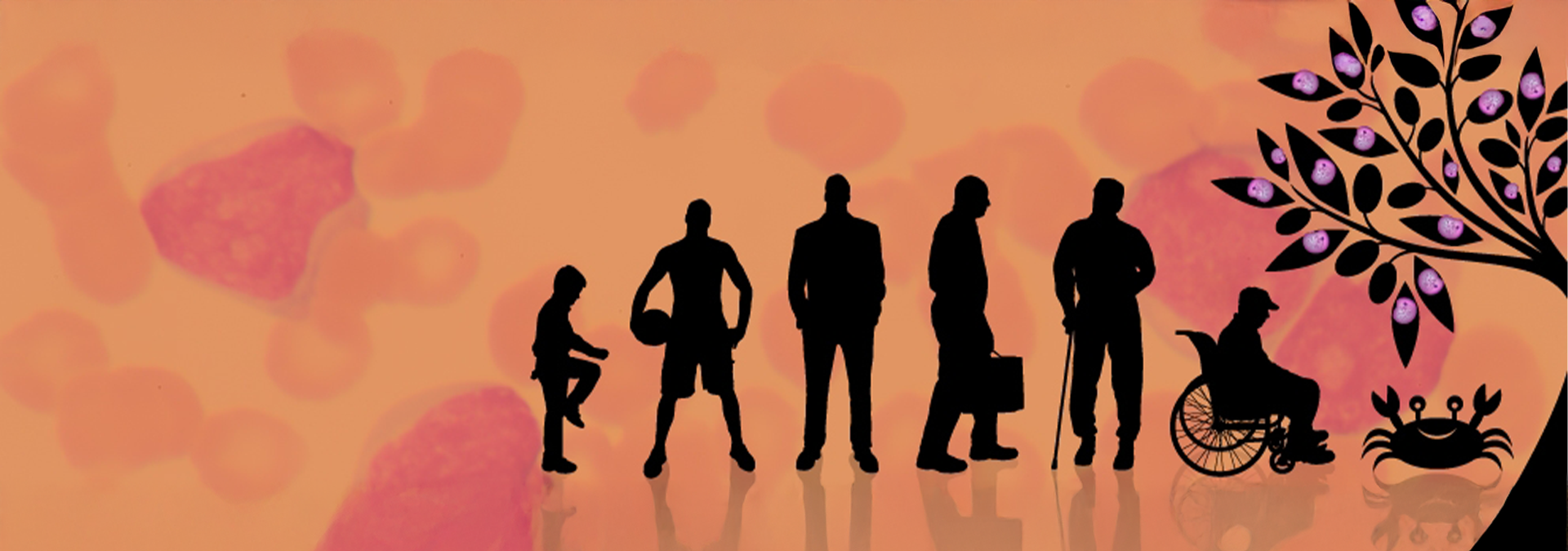
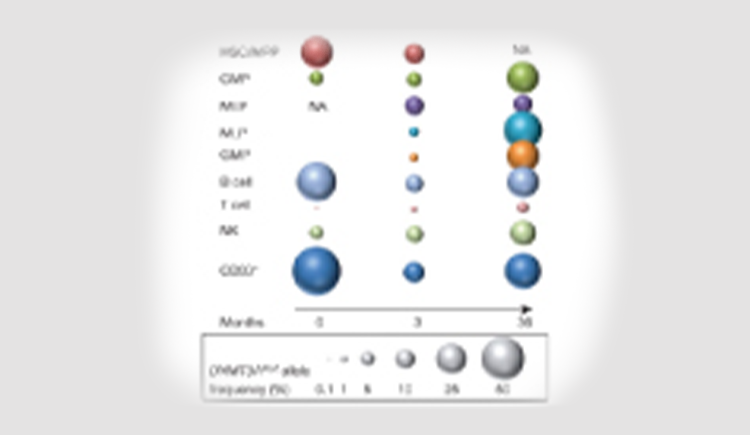
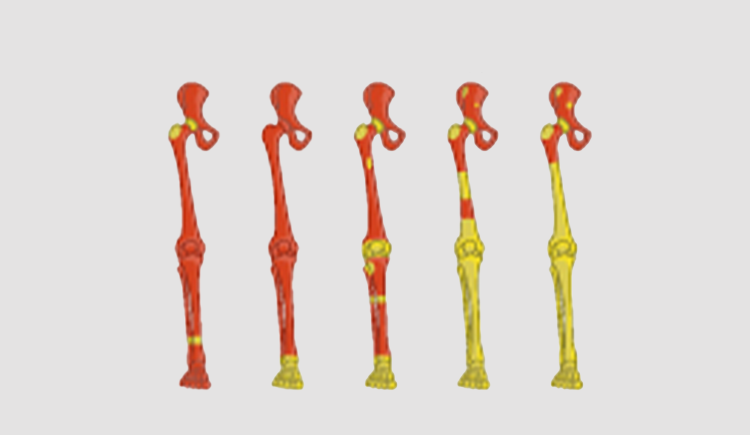
The aging of the human hematopoietic system is typically correlated with: 1) clonal hematopoiesis 2) myeloid malignancies 3) reduced T and B cell clonal diversity 4) reduced myeloid cells function 5) red to yellow marrow transition. Understanding the evolutionary principals driving these phenotypes is the first step in early diagnosis and treatment of hematopoiesis malfunction. Hematopoiesis failure in humans is a long process of somatic selection. Somatic evolution creates new clones exploring the fitness space. Without changes in the somatic environment new clones will loose to the young hematopoietic system which have been optimized over millions of years of germline evolution. Under changing environment, the fittest clones will gradually take over and in time due to antagonistic pleiotropy will lead to a disease. Our lab is a multidisciplinary lab composed of hematologists, evolutionary biologists and computationalsystem biologists all trying to understand the rules of human hematopoietic aging.
Bacharach T., Duek A. & Shlush L. I.
(2026)
Haematologica.
111,
5,
p. 1578-1583
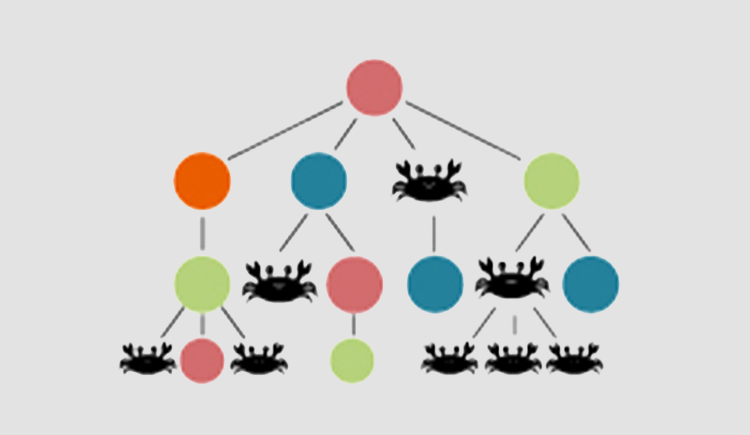
Clonal hematopoiesis is driven by the age-associated expansion of hematopoietic stem and progenitor cells that harbor somatic driver mutations; however, the mechanisms underlying the long-term persistence of these cells remain incompletely understood. This review frames clonal hematopoiesis through the lens of inclusive fitness, proposing that mutant pre-leukemic hematopoietic stem and progenitor cells enhance their evolutionary success not only through intrinsic self-renewal advantages, but also via indirect effects mediated by their differentiated progeny. We synthesize evidence showing that mutant immune cells promote inflammatory microenvironments that selectively impair wild-type hematopoietic stem cells while reinforcing mutant self-renewal, establishing self-sustaining feedback loops that shape clonal dynamics and systemic disease risk.
Rondeau V., Bansal S., Buttigieg M. M., Zeng A. G., Chan D. Y., Chan-Seng-Yue M., Jin L., McLeod J., Kates M., Donato E., Stelmach P., Vlasschaert C., Yang Y., Gupta A., Genta S., Sanz-Garcia E., Shlush L., Ribeiro M., Butler M. O., Abelson S., Minden M. D., Saibil S. D., Chan S. M., Rauh M. J., Trumpp A., Dick J. E. & Vanner R. J.
(2026)
Cancer Research.
86,
4,
p. 845-857
Somatic mutations inactivating Tet methylcytosine dioxygenase 2 (TET2) are among the most common drivers of clonal hematopoiesis (CH). TET2 inactivation is associated with monocyte-derived inflammation and improved chimeric antigen receptor T-cell function, suggesting that it might also affect immunotherapy response. In this study, we found that hematopoietic Tet2 mutation in mouse models enhanced the immune checkpoint blockade (ICB) response, which required the combined presence of phagocytes, CD4+, and CD8+ T cells. The effect was lost with myeloid- or T-cell-restricted Tet2 inactivation or in mice with 20% Tet2-mutant hematopoiesis. Mechanistically, in Tet2-mutant tumor-infiltrating leukocytes, ICB preferentially restricted cell states linked to tumor progression while inducing antitumor states. Tet2-mutant monocytes activated costimulatory programs, whereas Tet2-mutant T cells showed enhanced T-cell memory signatures, alongside decreased exhaustion and regulatory phenotypes. Clinically, tumors from patients with colorectal cancer and melanoma with TET2-mutant CH showed enhanced immune infiltration, inflammation, and T-cell activation. In patients with melanoma treated with ICB, TET2-mutant CH was associated with six-fold greater odds of clinical benefit. Collectively, this work demonstrates that hematopoietic TET2 inactivation primes leukocytes for antitumor states associated with immunotherapy response and provides a potential biomarker for personalized therapy. SIGNIFICANCE: TET2 mutations promote antitumor leukocyte states that can potentiate the efficacy of immunotherapy with checkpoint blockade. See related commentary by Yuan and Guryanova, p. 825.