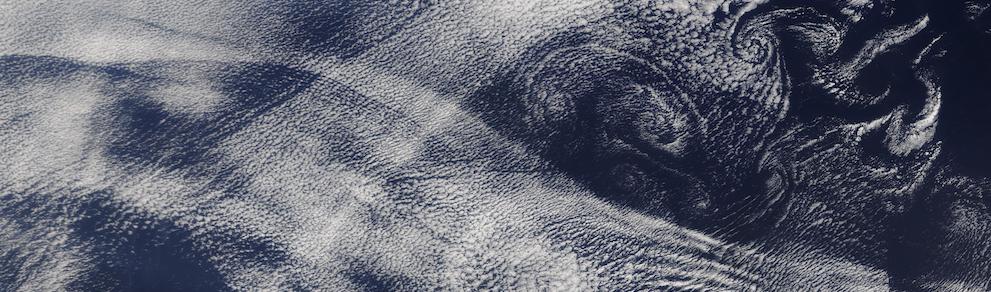
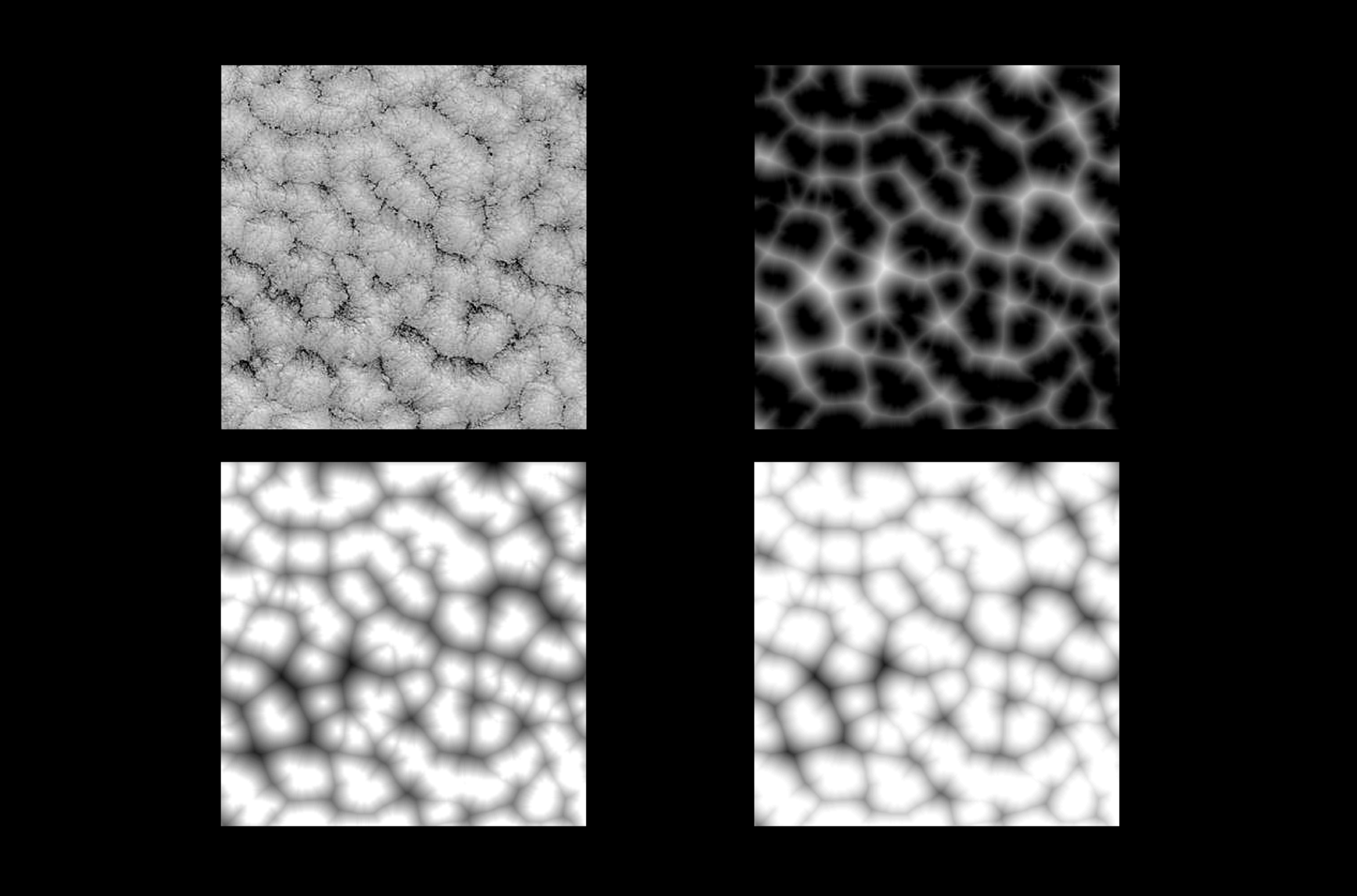
We explore the physics of clouds and precipitation, ocean-atmosphere interactions, and nonlinear dynamics, all within the context of climate.
Our research approaches include theoretical exploration of nonlinear differential equations, numerical simulations of clouds and cloud fields, satellite data analysis, field measurements, and theoretical work on remote sensing and radiative transfer.
Our group develops new approaches in fluid dynamics, complex systems, electromagnetic radiation, cloud microphysics, computer vision, and statistics.
Ben Ami Y., Altaratz O., Yair Y. & Koren I.
(2026)
Atmospheric Measurement Techniques.
19,
2,
p. 617-627
Lightning flashes play a key role in the global electrical circuit, serving as markers of deep convection and indicators of climate variability. However, this field of research remains challenging due to the wide range of physical processes and spatiotemporal scales involved. To address this challenge, this study utilizes the Lightning Differential Space (LDS), which maps lightning stroke intervals onto a parameter space defined by their temporal and spatial derivatives. Using data from the Earth Networks Total Lightning Network (ENTLN), we analyze the Number Distribution LDS clustering patterns across specific seasons in three climatically distinct regions: a tropical rainforest region (Amazon), a subtropical marine environment (Eastern Mediterranean Sea), and a mid-latitude continental region (Great Plains in the U.S.). The LDS reveals a robust clustering topography composed of \u201callowed\u201d and \u201cforbidden\u201d interval ranges, which are consistent across regions, while shifts in cluster position and properties reflect the underlying regional meteorological conditions. As an extension of the LDS framework, we introduce the Current Ratio LDS, a new diagnostic for identifying flash initiation by mapping the ratio of peak currents between successive strokes into the LDS coordinate space. This space reveals a spatiotemporal structure that enables a clearer distinction between local and regional scales. It also reveals a distinct cluster, suggesting a possible teleconnection between remote strokes, spanning tens to hundreds of kilometers. Together, the Number Distribution LDS and the novel Current Ratio LDS provide a scalable, data-driven framework for analyzing and interpreting large datasets of CG lightning activity. This approach strengthens the ability to characterize multiscale lightning behavior, offers a framework for evaluating model representations of stroke and flash processes, and provides a basis for developing diagnostics relevant to operational monitoring and forecasting of lightning activity.
Ben-Ami Y., Hirsch E., Altaratz O. & Koren I.
(2025)
Geophysical Research Letters.
52,
24,
e2025GL118.
The Bodélé Depression is the world's most intense dust source. One proposed explanation is wind amplification through an upwind mountain pass, the \u201cwind-lens\u201d effect, reflecting a Venturi-type acceleration. Using over 20 years of ERA5 reanalysis 10 m winds at the pass entrance and exit, together with Moderate Resolution Imaging Spectroradiometer Aerosol Optical Depth at the Bodélé, we show that winds nearly double as they traverse the pass. Two distinct dust-emission regimes emerge, separated by an exit-wind speed of ∼8 m/s. Under weaker winds, dust loading is low and largely independent of speed, while stronger winds produce sharply increasing dust and more aligned entranceexit flow. These regimes coincide with seasonal shifts: weak, variable summer winds contrast with a stronger, directionally aligned winter regime when dust events are frequent. The strongest emissions occur when exit winds cluster near 48° and entrance winds have a northern component, reflecting optimal alignment with the corridor.
Schmale J., Flores J. M., Law K. S., Raut J., O'brien J., Vardi A., Koren I., Ravetta F., Bekki S., Pazmino A., Ardyna M., Geoffroy M., Lovejoy C., Nicolaus M., Babin M., Bowler C. & Karp-Boss L.
(2025)
Elementa.
13,
1,
00030.
The central Arctic is experiencing warming up to four times faster than the global average. This Arctic amplification is accompanied by large deviations in climate projections, making anticipation of high-impact, near-term regional biodiversity and climate change difficult. Several atmospheric processes contribute simultaneously to Arctic amplification and biodiversity change yet remain largely unstudied, not least because of the difficulty to access the central Arctic Ocean and conduct year-round studies. This article introduces the near-to mid-term objectives of the Tara Polar Station scoping group on "atmosphere-biosphere interactions," with a focus on identifying and quantifying the origin and genetic composition of local and long-range transported biogenic particles that can impact biodiversity and cloud formation, the role of the stratified boundary layer on vertical fluxes of cloud seeds, bioaerosols and nutrients, and the impact of clouds on atmospheric light transmission. The Tara Polar Station is a fortified research vessel built to drift in the Arctic sea ice throughout the next 20 years in ten Tara Polaris expeditions, each lasting one and a half years. The platform allows for year-round interdisciplinary studies targeted at understanding the central Arctic Ocean ecosystem functioning, biodiversity, and climate change at the ocean-ice-atmosphere nexus. This scoping group will deploy novel and automated instruments for in situ, real-time vertical and remote sensing observations of aerosols, clouds, and radiation. The link between the biosphere and atmosphere will be investigated specifically through bioand chemo-molecular sampling of air, clouds, ice, and water. We expect the early Tara Polaris expeditions to deliver insights that can be implemented into models for improved scenarios of Arctic change, in particular for the next few decades when we expect a regime shift in summer sea-ice presence.