The Schurr Lab
Computational & Neural Basis
of Human Cognition
of Human Cognition
Research
How do people learn from interactions with the environment? How do their decisions change as a function of practice? In cognitive neuroscience, we often look for a single answer - one model to rule them all and explain how people perform a task. But in a system as complex as the human brain, different people often use different strategies to achieve the same goal.
We believe that individual variability is not noise, but signal. We seek to identify the repertoire of strategies people use to solve a problem, with an emphasis on the computational and neural trade-offs that drive strategies.
Bridging the Levels
To bridge the gap between computational algorithms and biological implementation, we combine a diverse set of tools:
- Behavioral Tasks: We design and run behavioral experiments online and in the lab, specifically related to learning, memory and decision-making.
- Computational Modeling: We build and test formal models to infer the computational parameters that drive people’s behavior.
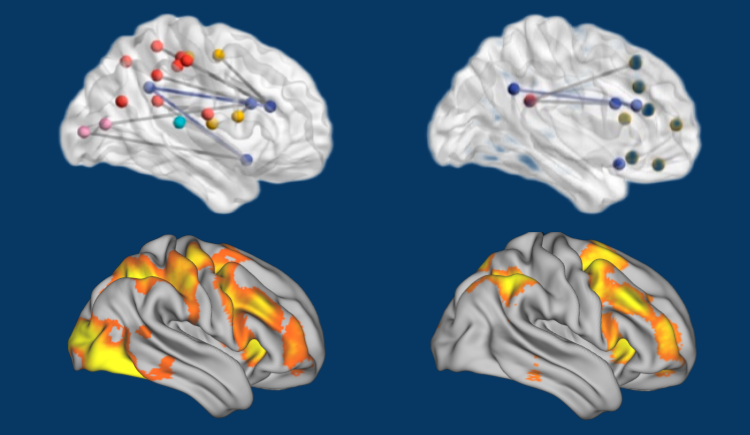
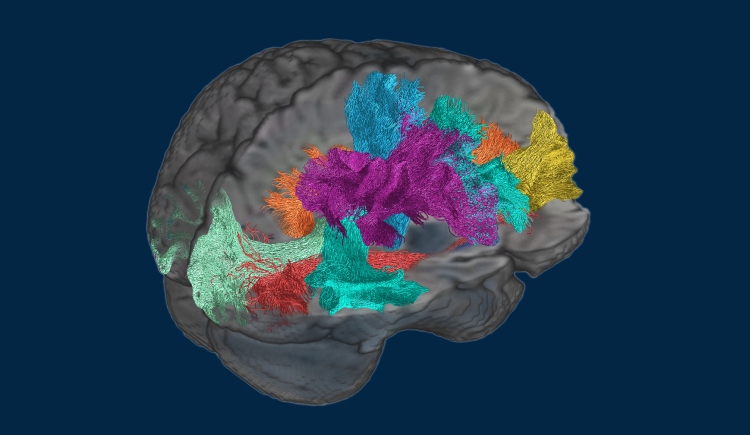
- Advanced Neuroimaging: To investigate how the brain's physical architecture constrains cognition we use BOLD fMRI to track the neural activity, diffusion MRI to map the white matter tracts and quantitative T1 & T2 mapping to measure tissue microstructure.
- Physiological Measurements: We use eye-tracking and other physiological markers to capture the hidden dynamics of cognition.
Research page