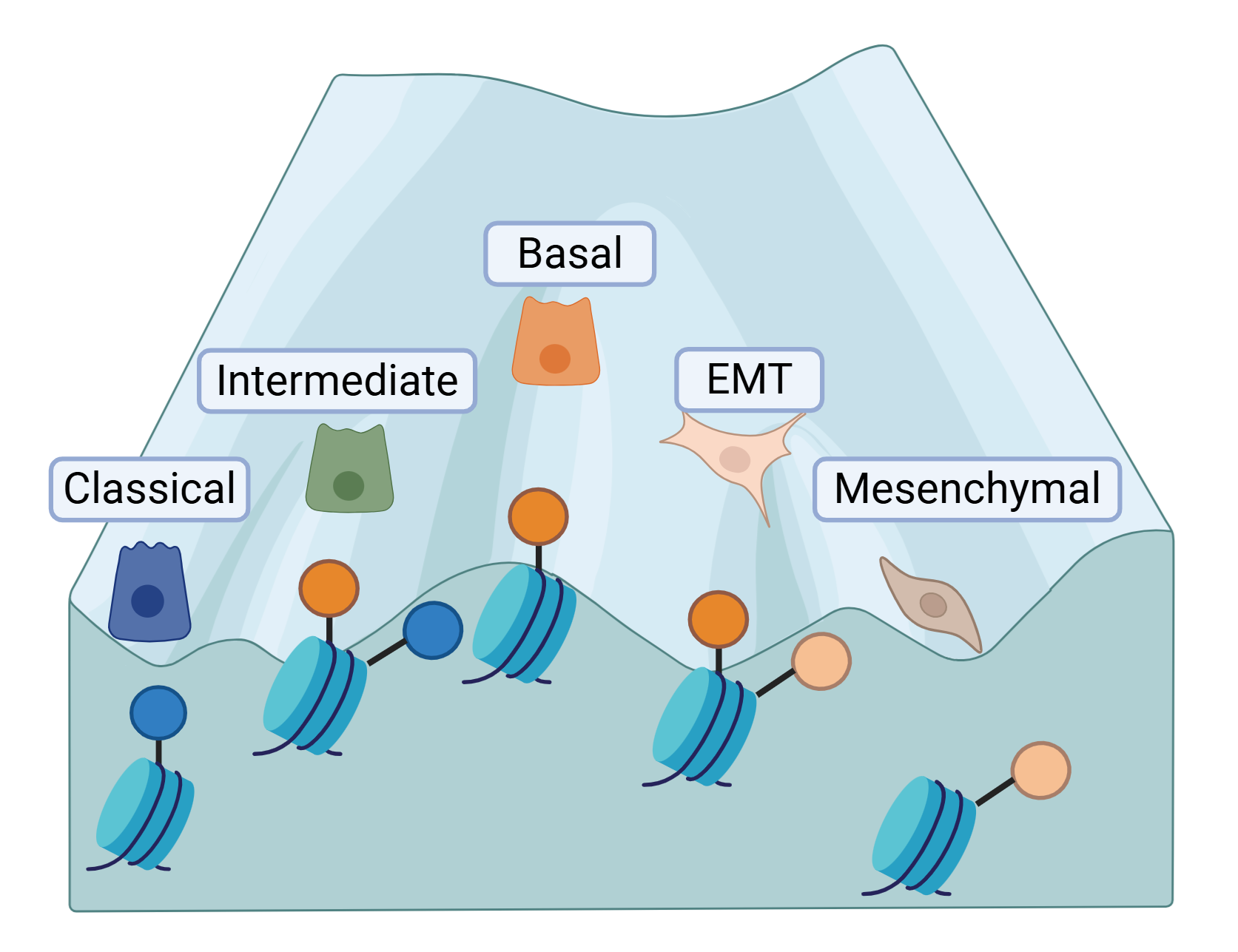
Our research focuses on the epigenetic state of pancreatic cancer tumors and their surrounding microenvironment. We ask whether these tumors are intrinsically epigenetically heterogeneous across key cellular compartments, specifically cancer cells, immune cells, and cancer-associated fibroblasts (CAFs), and on understanding how these populations undergo treatment adaptations. We further investigate changes in histone modifications and chromatin states across these compartments, and strive to identify cell populations that persist, expand, or emerge following therapy, asking whether those populations that withstand treatment are epigenetically distinct. Our goal is to uncover the epigenetic patterns that can be selectively targeted, in combination with standard therapeutic approaches.
In parallel, we aim to harness EPINUC, a technology developed in our lab that detects epigenetic modifications and protein biomarkers in plasma, for improving diagnostics and monitoring of pancreatic cancer patients. As therapy-responsive cell populations undergo death, they release distinct molecular signatures into the bloodstream. EPINUC has the potential to provide a non-invasive readout of both epigenetic and proteomic changes in the tumor environment. We are tailoring EPINUC specifically for pancreatic cancer to improve the evaluation of treatment effectiveness and the development of resistance, with the ultimate goal of providing a method for robust early diagnosis of pancreatic cancer, a critical clinical need in the field.