Research

CERES

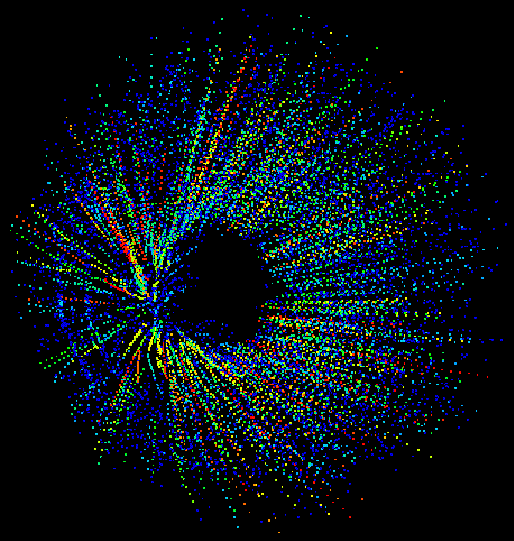
My group was among the founders of the CERES experiment that pioneered the measurement of electron pairs at the CERN SPS at the center-of-mass energy in the nucleon-nucleon system of √sNN = 17.6 GeV. CERES discovered a strong enhancement of low-mass electron pairs first in S+Au collisions and later also in Pb+Au collisions. No enhancement was observed in p+p collisions (approximated by p+Be collisions) or in p+Au collisions. The enhancement is linked to the in-medium modification of the rho meson spectral function and to chiral symmetry restoration. 

Read more
PHENIX

We extended the measurement of electron pairs to the much higher energies of RHIC, at √sNN = 200 GeV, using the PHENIX detector. With its two-arm geometry, this measurement is particularly challenging. Our group lead the development, design and construction of a state-of-the-art Hadron Blind Detector that significantly improved the rejection of the overwhelming combinatorial background and allowed a reliable measurement of electron pairs.

Read more

NICA

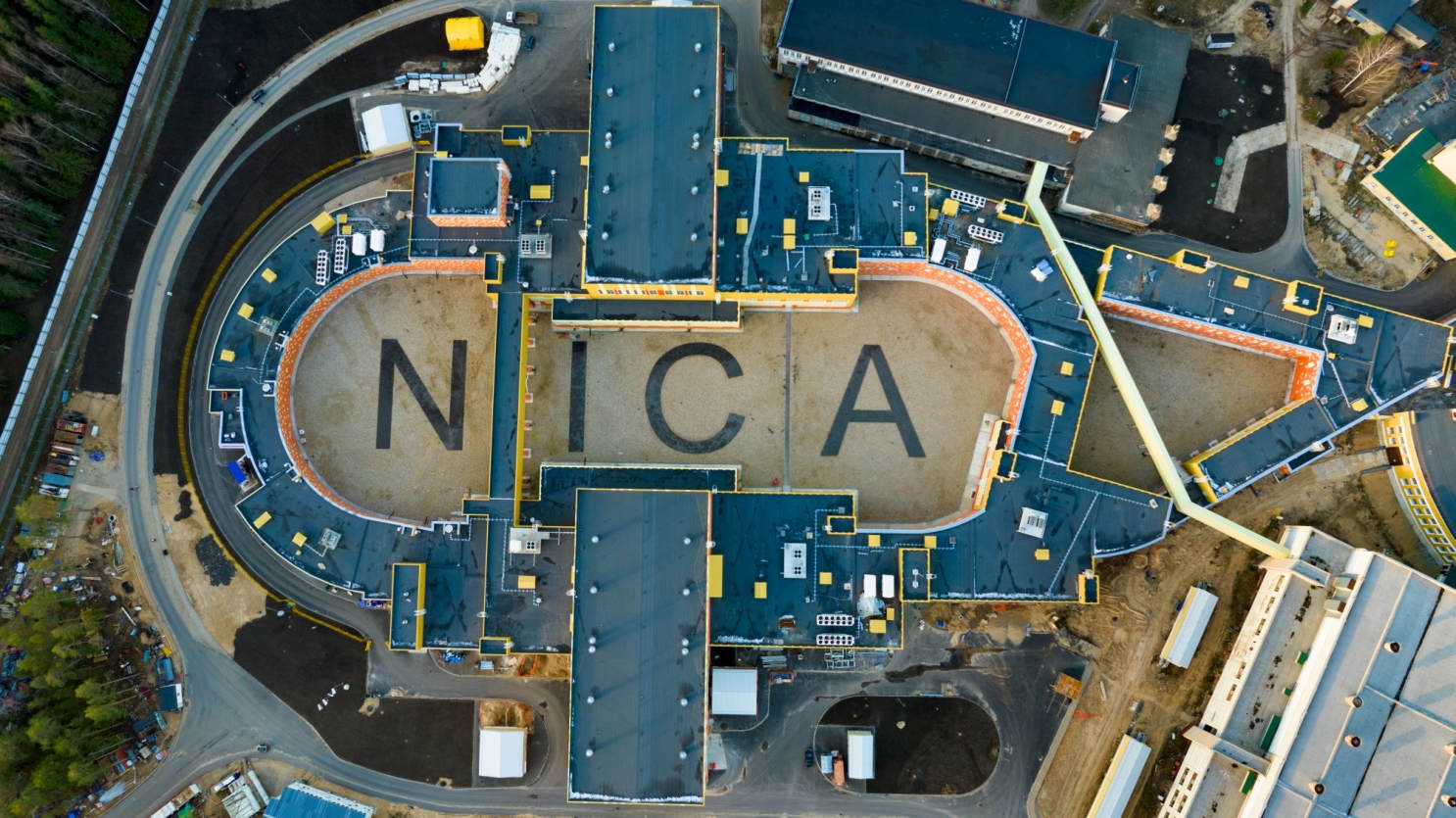
My current interest is in the extension of dilepton measurements into the low energy frontier, √sNN = 2-11 GeV, accessible at the NICA facility under construction at JINR. NICA’s mission is to study the QCD phase diagram in the high-baryon density regime, to determine the onset and the nature of the phase transition between deconfined and hadronic matter, to determine the onset of chiral symmetry restoration and to search for the conjectured critical end point in the QCD phase diagram. Dileptons are expected to play a crucial role in these studies. The Multi-Purpose Detector, MPD, designed to operate at the NICA collider, is very well suited for the measurement of dielectrons. 

Read more