Our group explores how minerals, sediments, and isotopes capture and preserve signals of Earth's past environments. We combine lab synthesis, isotope geochemistry, and field sampling to answer big questions using tiny materials.
Galili N., Bernasconi S. M., Nissan A., Alcolombri U., Aquila G., Di Bella M., Blattmann T. M., Haghipour N., Italiano F., Jaggi M., Kaplan-Ashiri I., Lee K. S., Lechte M. A., Magnabosco C., Porter S. M., Rudmin M., Spencer R. G., Stocker R., Wang Z., Wohlwend S. & Hemingway J. D.
(2025)
Nature.
644,
8078,
p. 945-951
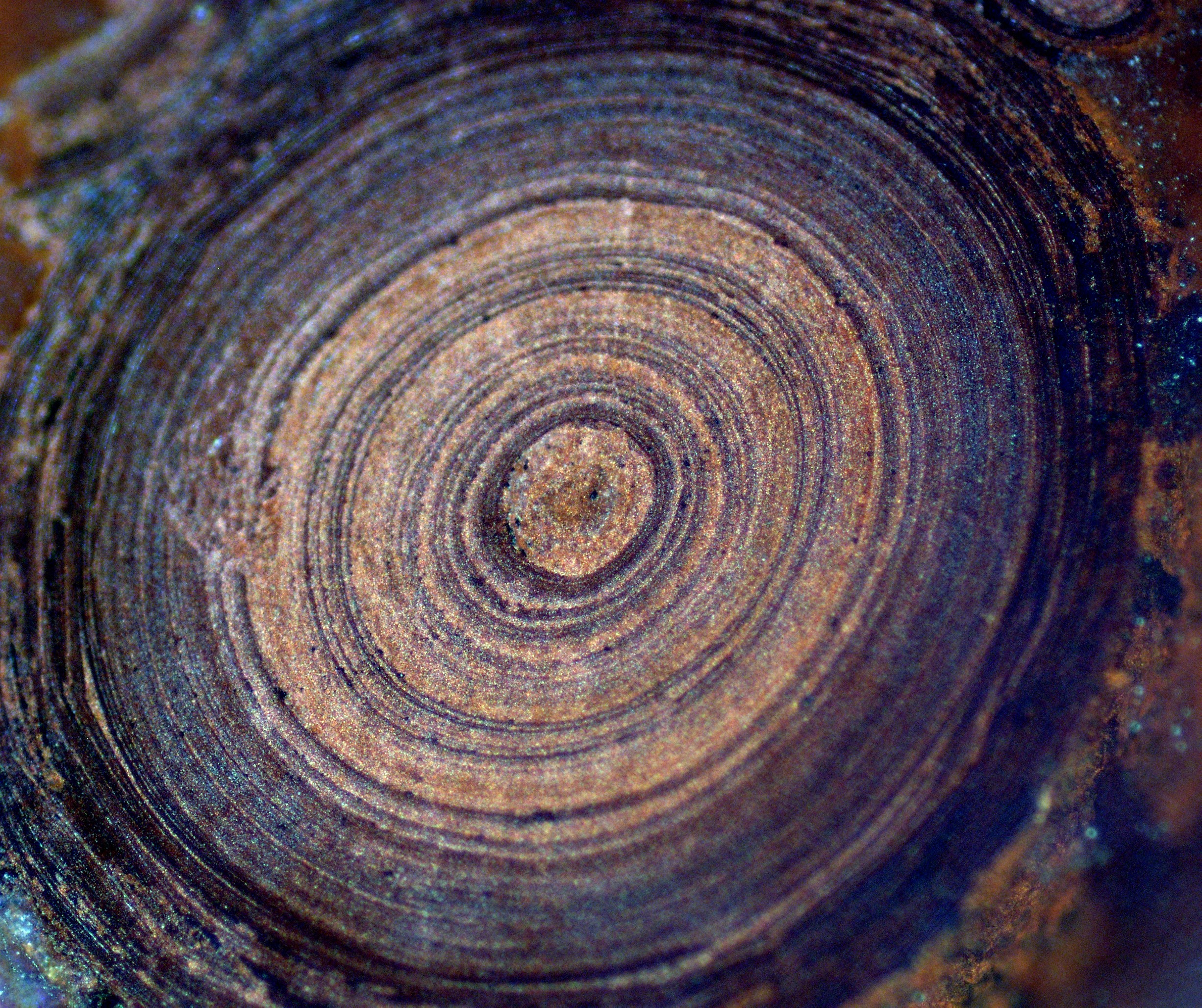
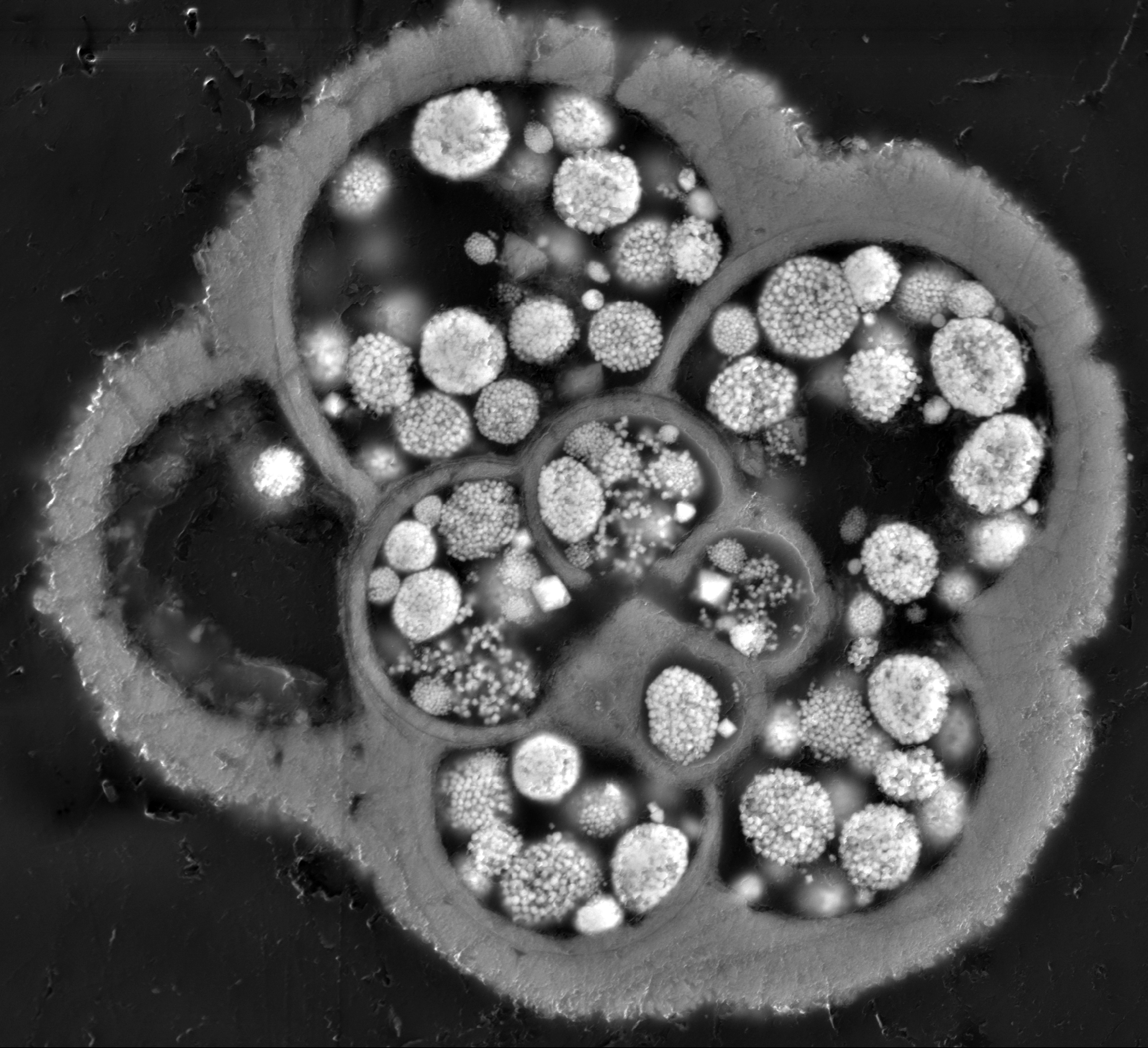
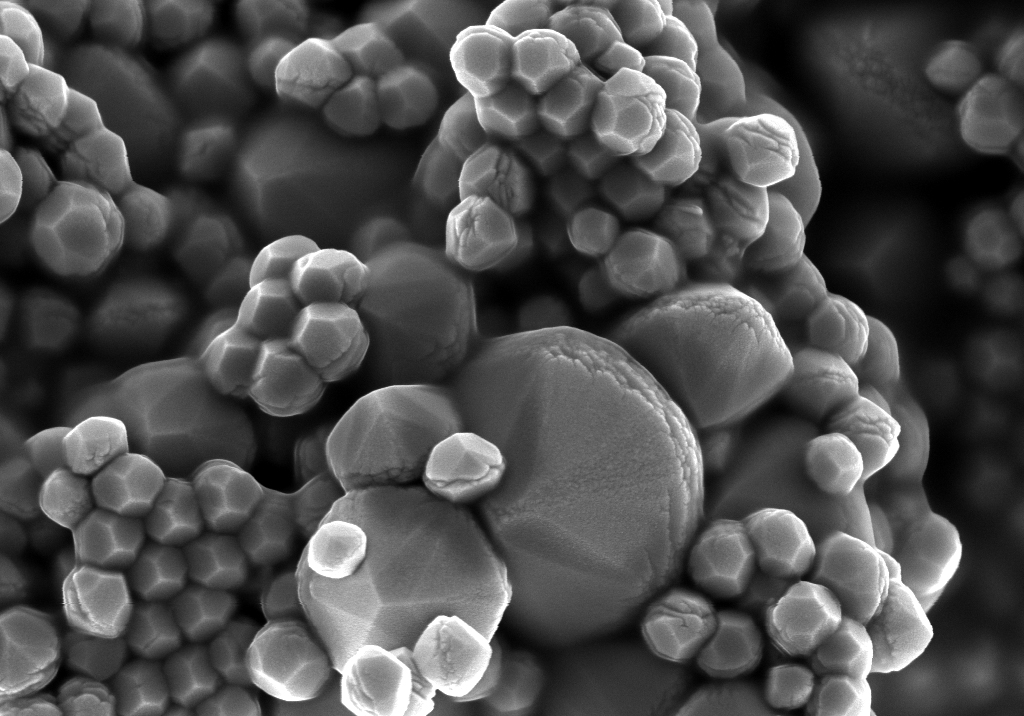
Dissolved organic carbon (DOC) is the largest reduced carbon reservoir in modern oceans1,2. Its dynamics regulate marine communities and atmospheric CO2 levels3,4, whereas 13C compositions track ecosystem structure and autotrophic metabolism5. However, the geologic history of marine DOC remains largely unconstrained6,7, limiting our ability to mechanistically reconstruct coupled ecological and biogeochemical evolution. Here we develop and validate a direct proxy for past DOC signatures using co-precipitated organic carbon in iron ooids. We apply this to 26 marine iron ooid-containing formations deposited over the past 1,650 million years to generate a data-based reconstruction of marine DOC signals since the Palaeoproterozoic. Our predicted DOC concentrations were near modern levels in the Palaeoproterozoic, then decreased by 90−99% in the Neoproterozoic before sharply rising in the Cambrian. We interpret these dynamics to reflect three distinct states. The occurrence of mostly small, single-celled organisms combined with severely hypoxic deep oceans, followed by larger, more complex organisms and little change in ocean oxygenation and finally continued organism growth and a transition to fully oxygenated oceans8,9. Furthermore, modern DOC is 13C-enriched relative to the Proterozoic, possibly because of changing autotrophic carbon-isotope fractionation driven by biological innovation. Our findings reflect connections between the carbon cycle, ocean oxygenation and the evolution of complex life.
Galili N., Blattmann T. M., Somlyay A., Gallarotti N., Eglinton T. I. & Hemingway J. D.
(2025)
Applied Spectroscopy.
79,
7,
p. 1120-1128
Cavity ring-down spectroscopy (CRDS) is rapidly becoming an invaluable tool to measure hydrogen (δ²H) and oxygen (δ18O) isotopic compositions in water, yet the long-term accuracy and precision of this technique remain relatively underreported. Here, we critically evaluate one-year performance of CRDS δ²H and δ18O measurements at ETH Zurich, focusing on high throughput (~200 samples per week) while maintaining required precision and accuracy for diverse scientific investigations. We detail a comprehensive methodological and calibration strategy to optimize CRDS reliability for continuous, high-throughput analysis using Picarros \u201cExpress\u201d mode, an area not extensively explored previously. Using this strategy, we demonstrate that CRDS achieves long-term precision better than ±0.5 for δ18O and ±1.0 for δ²H (±1σ) on three United States Geological Survey (USGS) reference materials treated as unknowns.18 Specifically, reported results for each reference material over this one-year period are: (i) USGS W-67444: δ2H = −399.32±0.96, δ18O = −51.07±0.45(n=30), (ii) USGS W-67400:δ2H = 2.55±0.49, δ18O =−1.85±0.13(n=140), and (iii) USGS-50: δ2H = 33.68±0.91, δ18O = 5.03±0.04 (n=21). We also address challenges such as aligning our analytical uncertainties with the narrower uncertainties of International Atomic Energy Agency reference materials, and mitigating inherent CRDS issues like memory and matrix effects when analyzing environmental samples. Our review provides a practical framework for CRDS applications in hydrology, paleoclimatology, and biogeochemistry, underscoring the importance of continuous evaluation and methodological refinement to ensure accuracy and precision in δ²H and δ18O analyses.18
Galili N., Somlyay A., Aquila G., Wijker R., Gautschi P., Wacker L. & Hemingway J. D.
(2025)
Analytical Chemistry.
97,
13,
p. 7002-7009
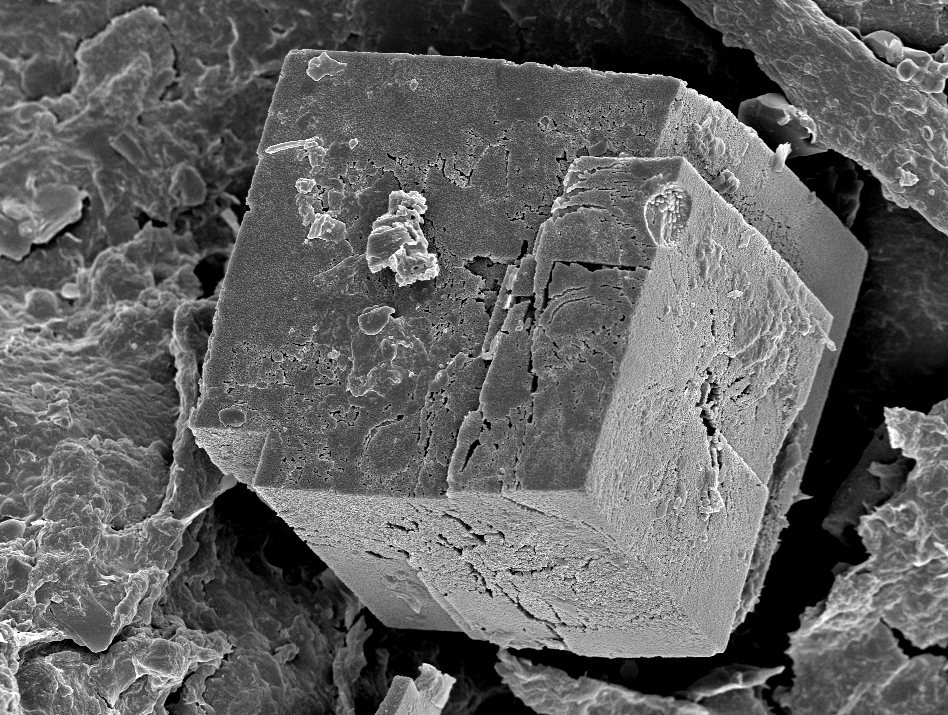
We introduce a novel high-precision method for oxygen-isotope analysis of iron (oxyhydr)oxides using high-temperature conversion isotope ratio mass spectrometry (HTC-IRMS). In this approach, a finely ground mixture of iron (oxyhydr)oxide and graphite is heated at 1450 °C in a helium flow environment, converting oxygen to CO gas with nearly 100% yield. Continuous-flow IRMS analysis of the liberated CO yields a precision of ±0.15 (1σ, n = 28) and shows excellent agreement with (and improved precision over) traditional fluorination methods. This practical and safe technique expands access to oxygen-isotope measurements of iron oxides, thereby enhancing their utility in Earth and environmental sciences.