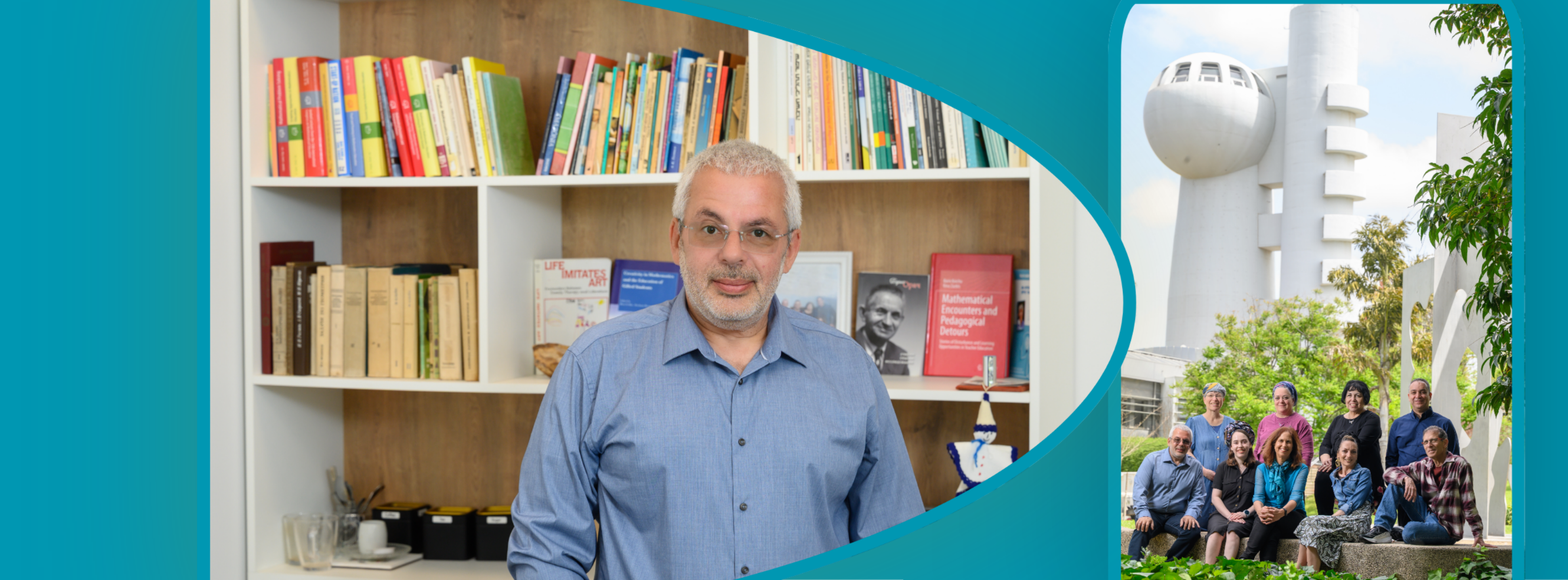
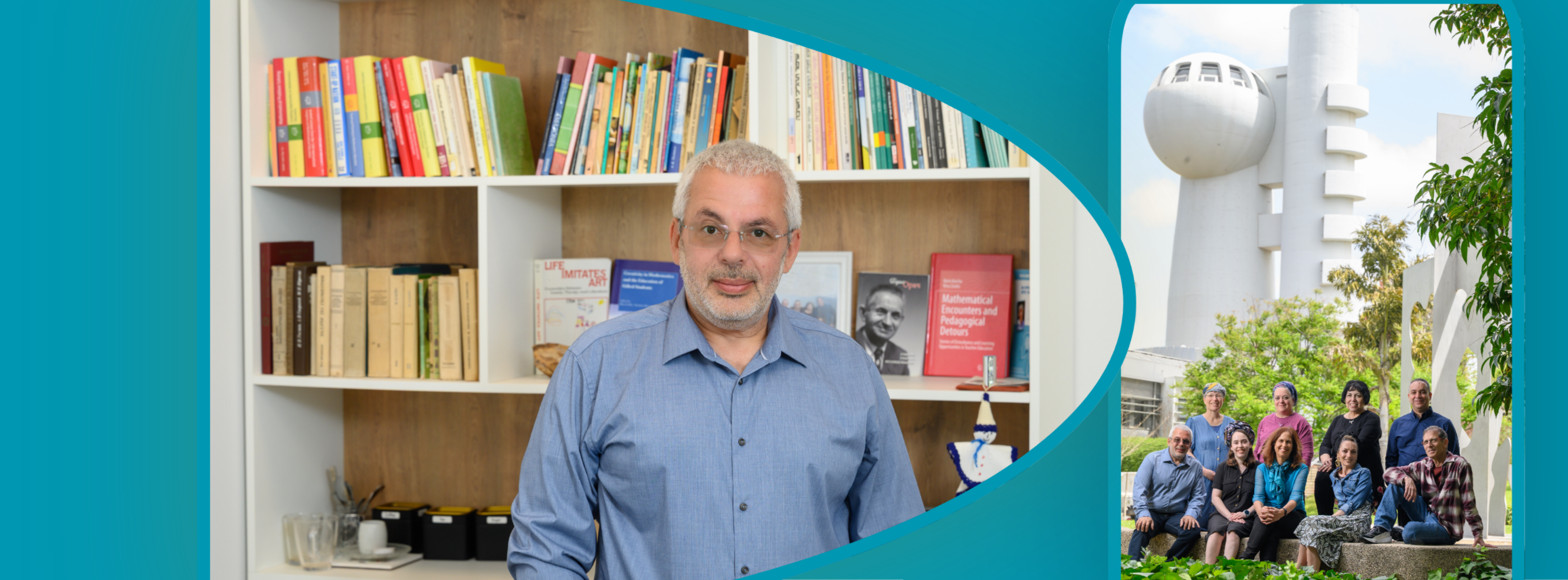
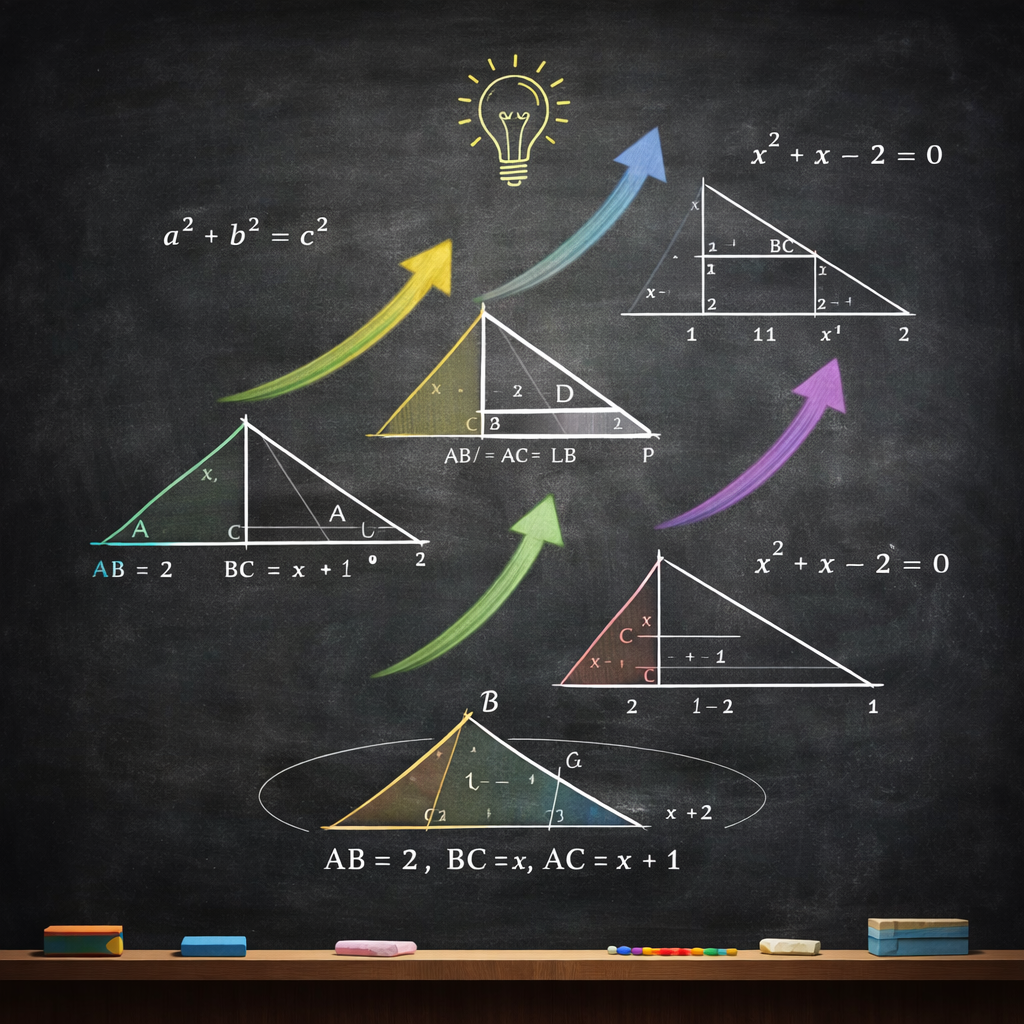
My research is in the area of teaching and learning mathematics through problem solving and problem posing. I am interested in a variety of instructional contexts, from middle school to university. Part of my research is devoted to exploring the mechanisms of problem solving and problem posing in choice-affluent learning environments, such as a dialogical mathematics classroom or an online problem-solving forum. Another part of my research focuses on exploring the potential of teacher-researcher partnerships for jointly investigating teaching and learning mathematics through problem solving.
Weingarden M., Karsenty R. & Koichu B.
(2026)
Journal of Mathematical Behavior.
81,
101300.
Creating effective learning environments in heterogeneous mathematics classrooms remains a persistent challenge. This exploratory study examines how realistic representations can support learners across achievement levels. Through a two-part investigation, the study first conducts an a priori analysis of two representation-oriented activities to articulate the roles of realistic representations and then explores how teachers view such roles as supporting low- and high-achieving students. The initial analysis identifies four roles of realistic representations: motivating , initiating , connecting , and applying each mediating differently between everyday and mathematical discourses. The subsequent examination through case studies of two teachers implementing these activities in their classrooms shows that one teacher recognized motivational benefits for low-achieving students, whereas the other highlighted their value in encouraging connection-making for high-achieving students. We discuss how explicating the multifaceted roles of realistic representations can help teachers and teacher educators design more inclusive mathematics instruction.
Kohen Z., Keller N. & Koichu B.
(2026)
Technology, Knowledge and Learning.
Metacognition and self-assessment (SA) play a significant role in teachers' professional learning. However, little is known about the interrelationship between these two constructs among teachers, particularly in their role as learners in technology-based contexts. The study goal is to characterize the interplay between metacognitive and SA skills of in-service mathematics teachers who systematically take part in online problem-solving forums (PSFs) as learners. Employing a qualitative approach, the study focuses on two groups of secondary school mathematics teachers (10 participants total) who took part in a 2-year academic professional learning program that included a geometry course. As one of the course requirements, the teachers worked in groups of five to solve three challenging geometry problems. The course instructor provided metacognitive guidance as needed throughout the process. The main data consisted of six PSF threads (three for each group), with posts in the threads serving as the analysis units. Each post directly related to the problem-solving process was assigned a code based on components of metacognition or SA. Findings suggest that although the course instructor's interventions faded over time, all PSFs were rich with metacognitive and SA assertions. This study elaborates on the complex relationship between metacognition and SA, with each construct mutually influencing and enhancing the other. The findings suggest that while metacognition and SA can operate as dynamically interacting processes, they also have the capacity to converge. The study further underscores the significance of online PSFs, indicating their potential as a setting for supporting teachers metacognitive and SA skills.
Felmer P. & Koichu B.
(2026)
Mathematical Curiosity
: Conceptualizations and Multiple Perspectives
.
Karp A., Cai J. & Leikin R.(eds.).
Cham: .
p. 263-288
In this chapter we explore undergraduate students narratives on mathematical curiosity and its relation to problem solving. The narratives were collected through interviews, in which the students were asked about curiosity in proximity to their problem-solving experiences. By means of an AI-assisted analysis we deduced a definition of mathematical curiosity for each of the nine students in the sample and then organized them in two clusters. Through thematic analysis, we identified six common themes from students narratives and explored the themes by clusters. By contrasting the curiosity definitions and the common themes, we obtained relations between students narratives and theoretical conceptions of curiosity. Besides identification of the clusters and the themes, a novel result arises from the study, demonstrating that curiosity may emerge at the looking-back stage of problem solving, as students declared that doubts and unanswered questions sometimes triggered for them activity-related curiosity. We conclude with consequences for teaching undergraduate mathematics while holding curiosity development in mind.