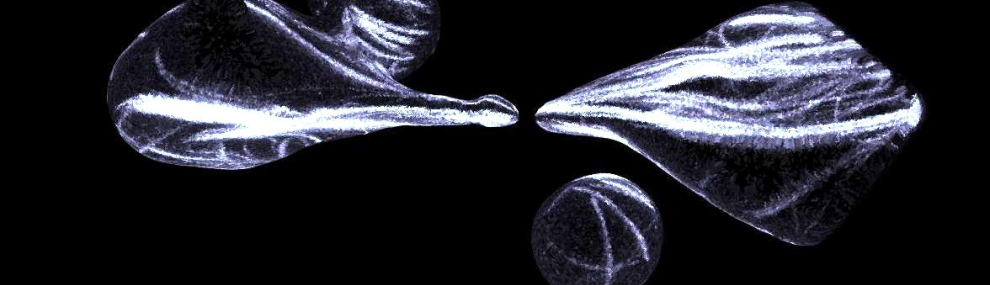

Inside cells, many molecules gather into tiny droplets called membraneless organelles. These droplets form through liquid-liquid phase separation, much like oil droplets forming in water. Even without a surrounding membrane, RNAs and proteins can cluster into micron-sized, liquid-like droplets such as nucleoli, germ granules, and tau-rich condensates. When this process goes wrong, droplets can harden or misform, which is linked to loss of protein function and neurodegenerative diseases like Alzheimer’s.
Our guiding question is: how are these droplets shaped and regulated by the cytoskeleton and mechanical forces? We study tau condensates together with active cytoskeletal networks to see how stresses and flows deform, move, or reorganize them. In parallel, we use DNA nanotechnology to build multi-armed DNA molecules that can undergo liquid-liquid phase separation on demand. This enables us to systematically investigate how mechanics and activity impact biomolecular condensates.