Date: 29 June, 2026

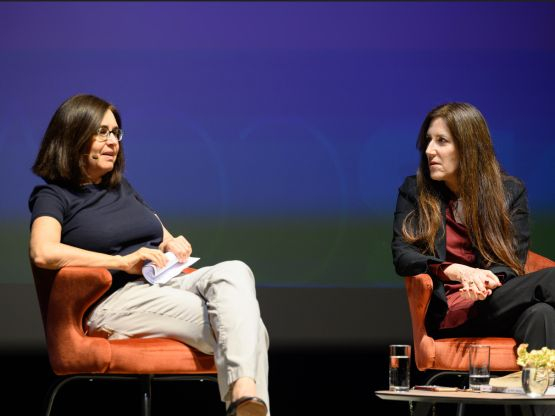
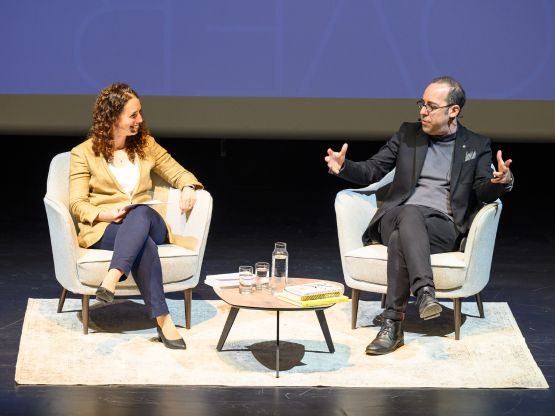
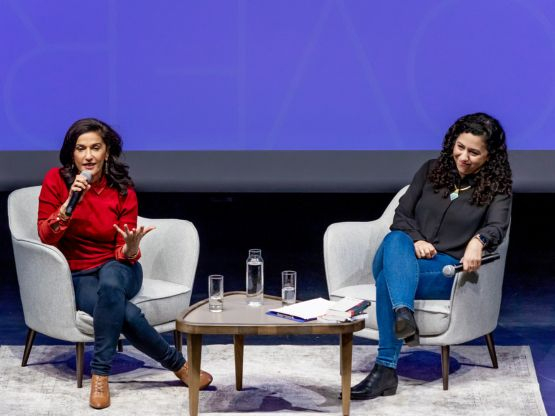
Illusion: The Placebo Effect and Illusions as an Active Ingredient, a meeting with Prof. Asya Rolls

The third meeting in a series - dialogues with researchers who have written essays on various aspects of illusion in their fields of research, as appeared in the 2026 edition of ‘Poetry of Science’, a periodical published once a year concurrently with the Weizmann Institute’s annual Ofer Lider prize for encouraging creative writing among scientists award ceremony. The editor of ‘Poetry of Science’ is Idan Barir, a translator of poetry and prose from Portuguese, Arabic, English, and Turkish.


“The neural networks involved in positive expectations, those that incite a sense of hope, satisfaction, and motivation, are not limited to the mental realm. They influence the entire body, activate the immune system, and stimulate healing processes. Placebos, in this sense, serve as a portal to understanding the power of the brain to shape a physiological reality – how thought or faith can stimulate actual biological mechanisms.” (Prof. Asya Rolls)


The placebo effect is a phenomenon in which a patient receives a sham treatment, but the brain and the immune system are stimulated into performing an actual healing process. 


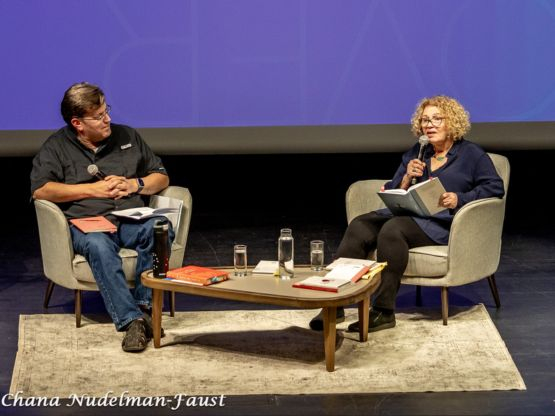
Prof. Asya Rolls in a dialogue with Idan Barir, on the potential of understanding the relationship between body and soul, the extent to which physical reality can be based on illusions created in the brain, and the role of faith and hope in the healing process.
Prof. Asya Rolls – Researcher at the School for Neurobiology, Biochemistry, and Biophysics at Tel Aviv University’s Life Sciences Faculty.


Sponsored by the Berginsky Center for the Interface between Science and Humanities


Photography and editing by Ziv Shilo

Read more Read more
Date: 25 May, 2026

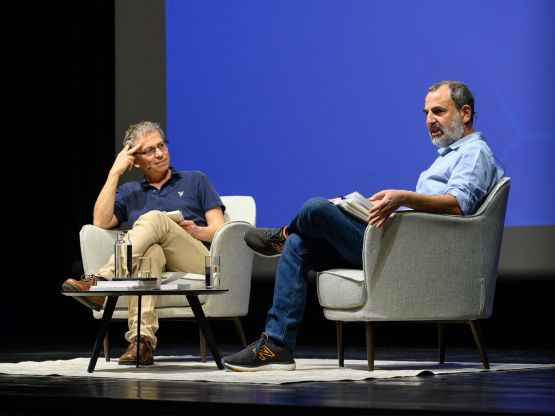
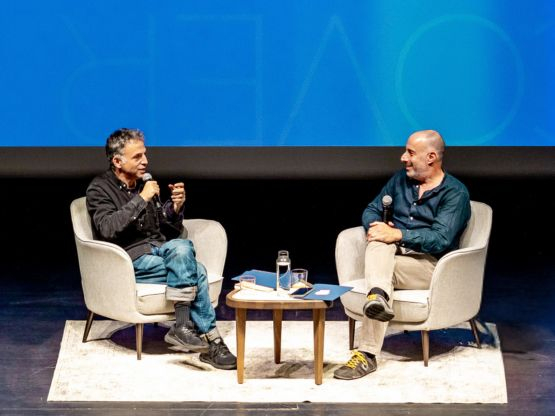
Illusions: To Know and Know Not | Idan Barir & Prof. Shauli Lev-Ran

The second meeting in a series – dialogues with researchers who have written essays on various aspects of illusion in their fields of research, as appeared in the 2026 edition of ‘Poetry of Science’, a periodical published once a year concurrently with the Weizmann Institute’s annual Ofer Lider prize for encouraging creative writing among scientists award ceremony. The editor of ‘Poetry of Science’ is Idan Barir, a translator of poetry and prose from Portuguese, Arabic, English, and Turkish.


“Alongside science’s demand for precision, society’s need for resolutions, nationalist movements and identity politics, with media polarizing opinions, and language whittling away to exclamation points, a hushed renaissance of incertitude is emerging. Challenging certainty and blurring the boundaries between “fact” and “fiction”, this psychedelic renaissance reminds us of the value of wonder and astonishment, but especially the willingness to entertain the unknown.” (Prof. Shauli Lev-Ran)


The use of psychoactive substances - hallucinogens, hallucinogenic mushrooms, and additional ingredients - has, in recent years, returned to the world of science and medical treatment in what has been designated as the “Psychedelic Renaissance”. Science recognizes the medicinal properties of psychedelic materials, but it is not always prepared to accept the undefined and unquantifiable aspects of its treatments. Prof. Shauli Lev-Ran in a dialogue with Idan Barir on hallucinations and reality within the context of this psychedelic renaissance - both as an established and historically cogent cultural phenomenon and as a considerable (even though yet unsatisfied) reawakening in research and treatment.


Prof. Shauli Lev-Ran – Psychiatrist and addiction treatment specialist, Researcher of psychiatric effects of psychoactive substances, Associate Professor at the Psychiatric Department of Tel Aviv University’s Faculty for Medical & Health Science’s School for Medicine, Fellow at The Center for Addiction and Mental Health, Toronto, Canada, Co-founder and Academic Director, Israel Center on Addiction.


sponsored by the Braginsky Center for the Interface between Science and Humanities
Free admission (based on availability)
Read more Read more
Date: 16 February, 2026

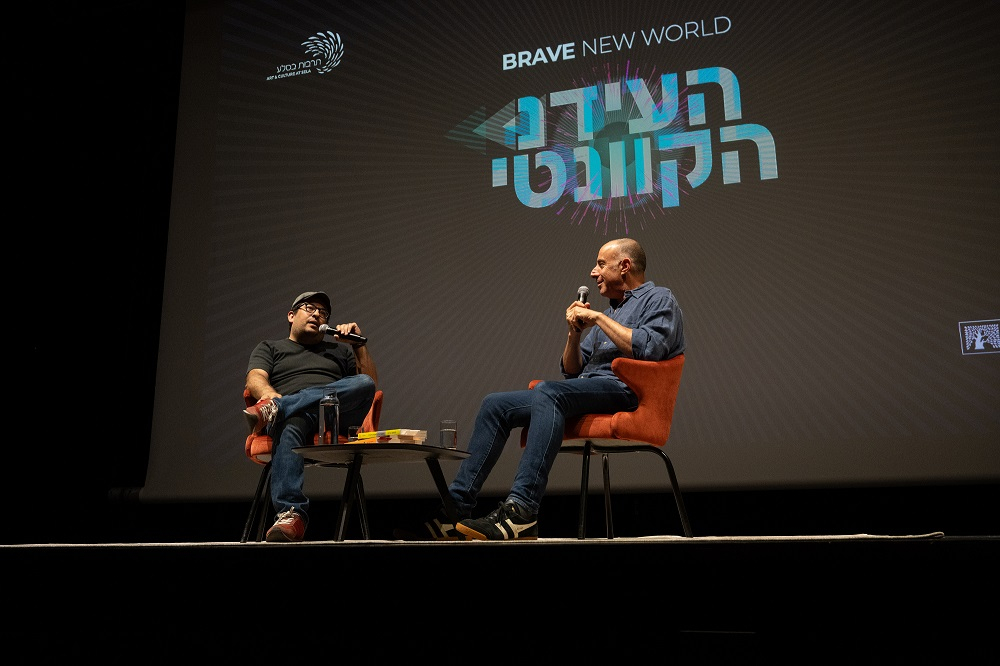
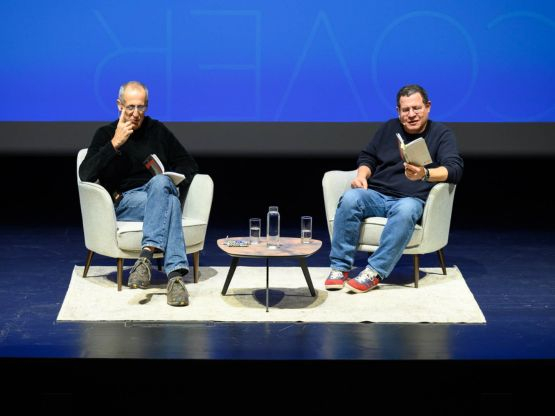
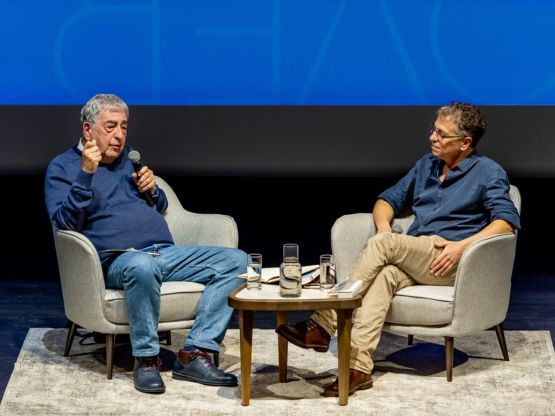
Illusion: Travels to the Past as Deceptive Illusion | Idan Barir & Prof. Avner Wishnitzer

The first meeting in a new series – dialogues with researchers who have written essays on various aspects of illusion in their fields of research, as appeared in the 2026 edition of ‘Poetry of Science’, a periodical published once a year concurrently with the Weizmann Institute’s annual Ofer Lider prize for encouraging creative writing among scientists award ceremony. The editor of ‘Poetry of Science’ is Idan Barir, a translator of poetry and prose from Portuguese, Arabic, English, and Turkish.


"All history is contemporary history, according to  Italian historian Benedetto Croce. Any representation of the past (including those inescapable academic history research papers) is shaped by the reality within which it is created; it reflects prevalent beliefs, ideologies, hidden assumptions, writing strategies, and more. The difference between Travels to the Past and history in its academic sense is that historians are expected to be aware of the contemporary nature of their writings.” (Avner Wishnitzer)


Public discourse often raises the possibility of simultaneously returning to a glorious past and the greatness of a nation. Prof. Avner Wishnitzer and Idan Barir discuss the credibility, the validity, and the glory of that past, and the question of whether this past, which can ostensibly be visited or returned to, is indeed the one that historians refer to in their historical research.


Prof. Avner Wishnitzer – Historian, author, translator, Head of the Middle Eastern and African History Department at Tel Aviv University, and co-chair (with Prof. On Barak) of the Laboratory for the Histories of Climate Change at Tel Aviv University's Zvi Yavetz School of Historical Studies

The series is sponsored by the Braginsky Center for the Interface between Science and Humanities.

Photography and editing by Ziv Shilo


Read more Read more
Date: 04 March, 2024

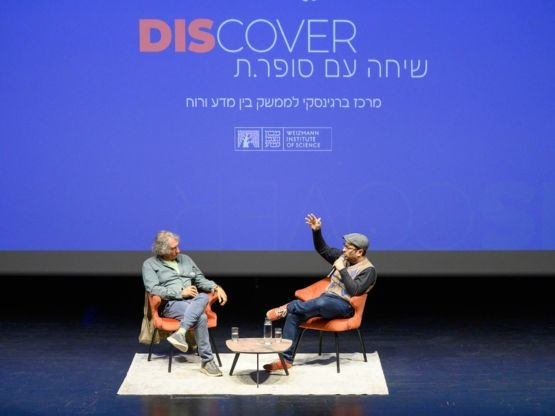
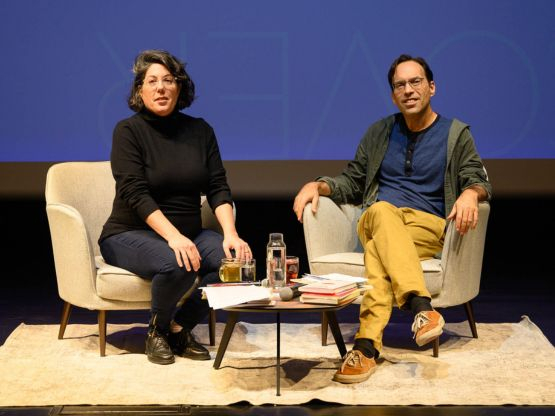
Dis-Cover | Dr. Leeat Keren & Roy Chen

As part of our series of dialogues between writers and scientists, we will host Roy Chen –author, translator and the Gesher Theater’s in-house playwright – who received the 2023 Agnon prize for his latest book 'Great Uproar', and who also received the Rosenblum award for Performing Arts, The Prime Minister’s Prize for Hebrew Literary Works and the Yitzhak Navon Ministry of Culture and Sports Award for the Preservation and Cultivation of Israeli Cultures.

His latest book, 'Great Uproar' is currently being translated into Italian and Russian. His previous book, 'Souls', received high acclaim and is currently being translated into English. His plays include: 'Someone Like me', 'Floating Island', 'In the Tunnel', 'Alice', 'Anybody Here', 'the Odyssey', 'The Treasure Under the Bridge'. His play 'The Dropout' has been recently performed at the Beit Lesin Theater. His plays and adaptations have been performed around the world (the play 'Someone Like Me' was performed last January in Milano in Italian). He translates from Russian, English and French. His most recent translations include: Chekhov’s 'The Seagull' (Ho! Series 21, HaKibbutz HaMeuhad) and A.A. Milne’s 'Winnie-the-Pooh' (Keter Books).


Chen will join us for a dialogue with Dr. Leeat Keren from the Dept. of Molecular Cell Biology about ideas, research, discovery and the link between the mind and the soul. 


The audience is invited to participate. Under the auspices of the Braginsky Center for the interface between science and the Humanities


Photography and editing by Ziv Shilo

Read more Read more
Date: 23 January, 2023

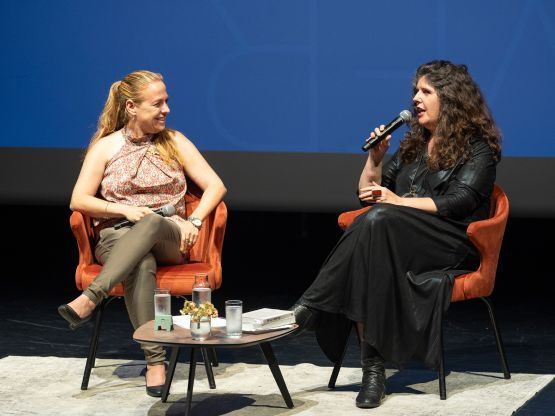
Dis-Cover | Dr. Meital Oren-Suissa & Dorit Rabinyan

The third in the series of dialogues between literati and scientists with Dorit Rabinyan, an author and screenwriter.  Her book ‘Persian Brides’ won her the Winner Award for Young Authors; her second book ‘Our Weddings’ was also very successful both in Israel and worldwide, and in London the book won the Charles Orde Wingate Award.  Her books have been translated into about 30 languages. Her last book ‘Hedgerow’ was at the center of a public scandal due to its being cancelled from the curriculum of the Ministry of Education.

Rabinyan has been awarded the Prime Minister’s Award for Hebrew writers, the Akum (Society of Authors, Composers and Music Publishers in Israel) award for the encouragement of creativity, and the Bernstein Award for Literature.


Rabinyan is invited to a dialogue with Dr. Meital Oren-Suissa, a researcher in the Brain Research Department of the Weizmann Institute of Science.  In her research, she focuses on the connection between genetic sex and the structure and function of the nervous system, in both ill and healthy states.
The discussion will be about the laboratory of literature, creation and creativity in science, about what was discovered and what had to be peeled off or removed, to find and invent and the place of gender identity in all of this.


The audience is invited to participate and the event will be held under the auspices of the Braginsky Center for the Interface between Science and the Humanities.
 

Photography and editing by Ziv Shilo

Read more Read more