
Study mechanisms that lead to bacterial memory
We observed that bacteria can “remember” past conditions, maintaining distinct functional states across generations. We aim to uncover the mechanisms that create this cellular memory and those that reset it. By understanding how bacterial states are stabilized, inherited, and eventually lost, we aim to explain how phenotypic diversity emerges during infection and how it dynamically adapts to changing environments.
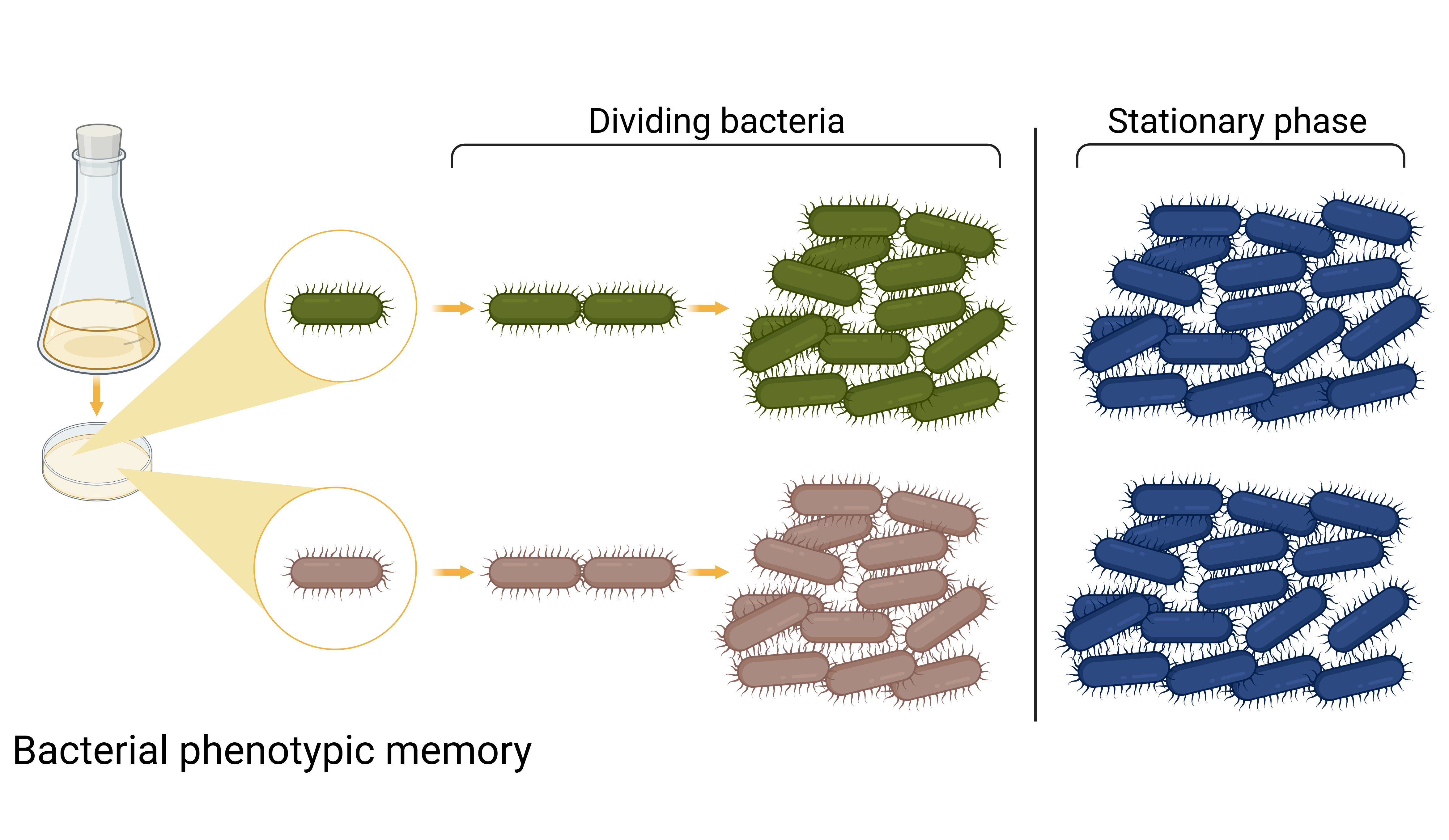
In our efforts to understand how cellular memory is reset in EPEC subpopulations, we identified the virulence regulator PerABC as a key component governing memory loss. We found that PerABC levels decrease upon entry into stationary phase, coinciding with a transition from a Virulent to an Avirulent subpopulation. Preventing this decline by maintaining PerABC expression abolished the reset of cellular memory.
Together, these findings indicate that regulated control of PerABC expression plays a central role in establishing and erasing bacterial memory in EPEC.