How do plants regulate gene expression to achieve tissue-specific patterns? Does the transcription machinery operate similarly in other eukaryotes, such as fungi and marine algae? What role does the evolution of regulatory sequences play in adaptation to new environments? These and related questions about the evolution of transcriptional regulation lie at the heart of our lab’s interests. To address these, we combine analysis of large genomic datasets with experimental molecular biology.
Voichek Y., Hristova G., Mollá-Morales A., Weigel D. & Nordborg M.
(2024)
Nature Genetics.
56,
10,
p. 2238-2246
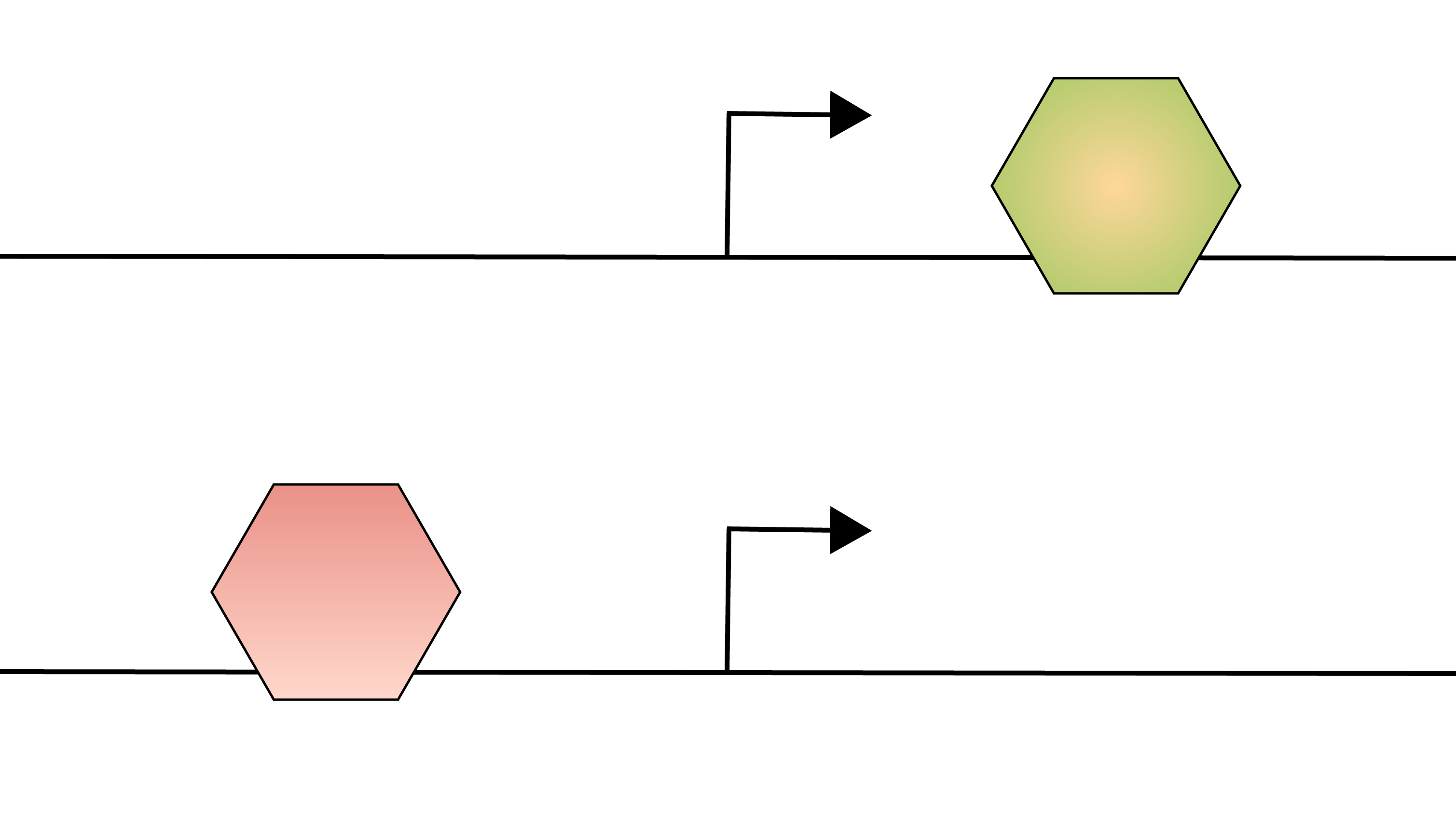
Much of what we know about eukaryotic transcription stems from animals and yeast; however, plants evolved separately for over a billion years, leaving ample time for divergence in transcriptional regulation. Here we set out to elucidate fundamental properties of cis-regulatory sequences in plants. Using massively parallel reporter assays across four plant species, we demonstrate the central role of sequences downstream of the transcription start site (TSS) in transcriptional regulation. Unlike animal enhancers that are position independent, plant regulatory elements depend on their position, as altering their location relative to the TSS significantly affects transcription. We highlight the importance of the region downstream of the TSS in regulating transcription by identifying a DNA motif that is conserved across vascular plants and is sufficient to enhance gene expression in a dose-dependent manner. The identification of a large number of position-dependent enhancers points to fundamental differences in gene regulation between plants and animals.
Voichek Y. & Weigel D.
(2020)
Nature Genetics.
52,
5,
p. 534-540
Structural variants and presence/absence polymorphisms are common in plant genomes, yet they are routinely overlooked in genome-wide association studies (GWAS). Here, we expand the type of genetic variants detected in GWAS to include major deletions, insertions and rearrangements. We first use raw sequencing data directly to derive short sequences, k-mers, that mark a broad range of polymorphisms independently of a reference genome. We then link k-mers associated with phenotypes to specific genomic regions. Using this approach, we reanalyzed 2,000 traits in Arabidopsis thaliana, tomato and maize populations. Associations identified with k-mers recapitulate those found with SNPs, but with stronger statistical support. Importantly, we discovered new associations with structural variants and with regions missing from reference genomes. Our results demonstrate the power of performing GWAS before linking sequence reads to specific genomic regions, which allows the detection of a wider range of genetic variants responsible for phenotypic variation.
Genome replication introduces a stepwise increase in the DNA template available for transcription. Genes replicated early in S phase experience this increase before latereplicating genes, raising the question of how expression levels are affected by DNA replication. We show that in budding yeast, messenger RNA (mRNA) synthesis rate is buffered against changes in gene dosage during S phase. This expression homeostasis depends on acetylation of H3 on its internal K56 site by Rtt109/Asf1. Deleting these factors, mutating H3K56 or up-regulating its deacetylation, increases gene expression in S phase in proportion to gene replication timing. Therefore, H3K56 acetylation on newly deposited histones reduces transcription efficiency from replicated DNA, complementing its role in guarding genome stability. Our study provides molecular insight into the mechanism maintaining expression homeostasis during DNA replication.