

Research Activities

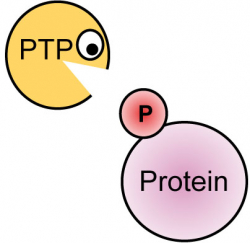
We are interested in understanding the molecular basis by which key physiological processes are regulated. Many of our studies focus on protein phosphorylation and dephosphorylation.


Regulation of Body Weight and Glucose Homeostasis

Diabetes and obesity are key components of the metabolic syndrome, an assortment of symptoms that is associated with modern sedentary life style. Individuals who suffer from this syndrome are at increased risk for life-threatening diseases, such as coronary heart disease, stroke, and cancer. The prevalence of the metabolic syndrome is increasing worldwide, making is essential to understand the molecular bases for its component symptoms. In so doing we gain a better understanding of normal and pathological processes, and uncover new directions for treating diseases associated with the syndrome.

Our studies have shown that protein tyrosine phosphatase epsilon (PTPe) is an important player in regulating both body weight and glucose homeostasis. PTPe down-regulates leptin receptor signaling in the hypothalamus, and in doing so affects leptin sensitivity and body weight. At the molecular level, PTPe dephosphorylates and down-regulates the activity of the JAK2 kinase downstream of the leptin receptor. PTPe can do this following phosphorylation at its own C-terminal tyrosine Y695, which occurs after activation of the leptin receptor. In agreement, mice lacking PTPe are protected from weight gain that is induced by several physiological situations, including a high-fat diet. Female PTPe-deficient mice are leptin-hypersensitive and exhibit reduced concentrations of leptin in circulation, consistent with lack of PTPe resulting in increased leptin receptor signaling in the hypothalamus. PTPe is therefore part of a mechanism that down-regulates leptin receptor signaling after it has been triggered. Lack of PTPe results in higher activity of the leptin receptor that leads to reduced body weight. 
Our studies also show that PTPe is part of the molecular mechanism that reduces leptin sensitivity in obese individuals.


Mice lacking PTPe also exhibit improved control of glucose metabolism, and reduce circulating glucose levels back to normal faster than control mice when injected with a bolus of glucose. Molecular studies, in particular in muscle, indicate that PTPe down-regulates insulin receptor signaling; lack of PTPe increases insulin receptor signaling in muscle and in liver, resulting in increased response to insulin.

We are currently studying the molecular and cellular mechanisms that regulate these activities of PTPe. We are also examining how whole-body stress conditions, such as altered oxidative stress, affect these parameters.


• Rousso-Noori L, Knobler H, Levy-Apter E, Kuperman Y, Neufeld-Cohen A, Keshet Y, Akepati VR, Klinghoffer RA, Chen A. and Elson A.
 Protein tyrosine phosphatase epsilon affects body weight by downregulating leptin signaling in a phosphorylation-dependent manner. Cell Metabolism. 13(5), 562-572, (2011).

• Aga-Mizrachi, S., Brutman-Barazani, T., Jacob, A.I., Bak, A., Elson, A. and Sampson, S.R. Cytosolic protein tyrosine phosphatase-ε (cytPTPe) is a negative regulator of insulin signaling in skeletal muscle. Endocrinology 149 (2), 605-614, 2008.


Regulation of Bone Resorption by Osteoclasts

Once bone is formed, bone matrix constantly undergoes local synthesis and resorption. Turnover of bone matrix is important for maintaining the proper amount, structure, and physical properties of bone. Bone matrix is synthesized by osteoblasts, and is degraded by the hematopoietically-derived osteoclasts. Osteoclasts are critical cells since they help regulate bone structure, are often targeted by diseases that affect bone (osteoporosis, metastatic cancer); these cells also provide a very convenient entry point from which to treat bone diseases. Cell signaling processes that include tyrosine phosphorylation events play critical roles in regulating production and function of osteoclasts.

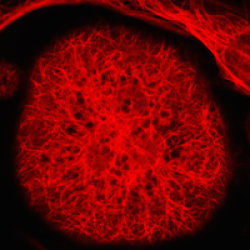
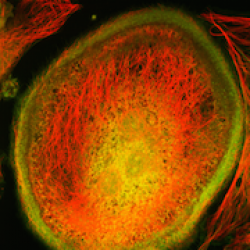
We have shown that PTPe supports the adhesion and activity of osteoclasts. Lack of PTPe causes structural defects in podosomes, the subcellular structures by which osteoclasts adhere to bone. At the molecular level, osteoclast contact with bone matrix activates signaling by the integrin receptor molecules, the mechano-sensory receptors of the cell. Activation of integrin signaling in osteoclasts induces phosphorylation of PTPe at its C-terminal Y638, and this allows PTPe to dephosphorylate the Src tyrosine kinase at Y527, thus activating Src. Proper Src kinase activity is essential for osteoclasts to adhere to and degrade bone properly. Lack of PTPe reduces Src activity in osteoclasts and hence harms the function of these cells, both in culture and in vivo. 


Current studies focus on understanding at the molecular level how PTPe activity is regulated in osteoclasts. We are also searching for additional PTPs that regulate osteoclast production and differentiation.

• Granot-Attas, S., Luxenburg, C., Finkelshtein, E. and Elson, A. 
PTP Epsilon regulates integrin-mediated podosome stability in osteoclasts by activating Src. Mol. Biol. Cell 20 (20), 4324-4334, 2009.


• Chiusaroli, R.*, Knobler, H.*, Luxenburg, C. *, Sanjay, A., Granot-Attas, S., Tiran, Z., Miyazaki, T., Harmelin, A., Baron, R. and Elson, A. 
Tyrosine phosphatase Epsilon is a positive regulator of osteoclast function: increased bone mass in female mice lacking PTPε. Mol. Biol. Cell, 15(1), 234-244, 2004.


• Granot-Attas, S. and Elson, A. 
Protein tyrosine phosphatases in osteoclasts: differentiation, adhesion, and bone resorption.

Eur. J. Cell Biol. 87, 470-490, 2008 (invited review).


Regulation of mammary epithelial cell transformation

PTPe is expressed specifically in mammary epithelial cell tumors induced in transgenic mice by Neu overexpression. Genetically eliminating PTPe expression in these mice does not prevent tumor appearance, but tumor cells grown in culture form these tumors appear less-transformed by criteria of morphology, division rate, and tumor growth when inoculated into nude mice.


The molecular basis for this effect is linked to the role of PTPe in activating the Src tyrosine kinase, a known collaborator of Neu in cell transformation. PTPe dephosphorylates Src at its inhibitory Y527, thus activating the kinase. In mammary tumors of mice that genetically lack PTPe, Src is hyper-phosphorylated at Y527 and is less active. Interestingly, phosphorylation of PTPe at its own C-terminal Y695 significantly increases its ability to dephosphorylate and activate Src. We have since shown that C-terminal phosphorylation of PTPe is critical for PTPe to perform additional activities, including enabling PTPe to inhibit leptin receptor signaling (see above).


• Elson. A. and Leder, P. Protein tyrosine phosphatase ε: an isoform specifically expressed in mammary tumors    initiated by v-Ha-ras or neu. J. Biol. Chem. 270 (44),26116-26122, 1995.


• Elson, A. Protein tyrosine phosphatase Epsilon increases the risk of mammary hyperplasia and mammary tumors in transgenic mice.
Oncogene 18 (52) 7535-7542, 1999.


• Gil-Henn, H. and Elson, A. Tyrosine phosphatase epsilon activates Src and supports the transformed phenotype of Neu-induced mammary tumor cells.
J. Biol. Chem. 278 (18), 15579-15586, 2003.


• Granot-Attas, S. and Elson, A
Protein tyrosine phosphatase epsilon activates Yes and Fyn in Neu-induced mammary tumor cells.
Exp. Cell Res. 294 (1), 236-243, 2004.


• Berman-Golan, D. and Elson, A. Neu-mediated phosphorylation of protein tyrosine phosphatase Epsilon is critical for activation of Src in mammary tumor cells.
Oncogene 26 (49), 7028-7037, 2007.


• Kraut-Cohen, J., Muller, W.J., and Elson, A. Protein tyrosine phosphatase ε regulates Shc signaling in a kinase-specific manner: increasing coherence in tyrosine phosphatase signaling.
J. Biol. Chem. 282 (8), 4612-4621, 2008.


Updated: 29/03/2013 10:40:47    Contact E-mail: Ari.Elson@weizmann.ac.il