Date:
9.12.24
Monday
Hour: 18:30

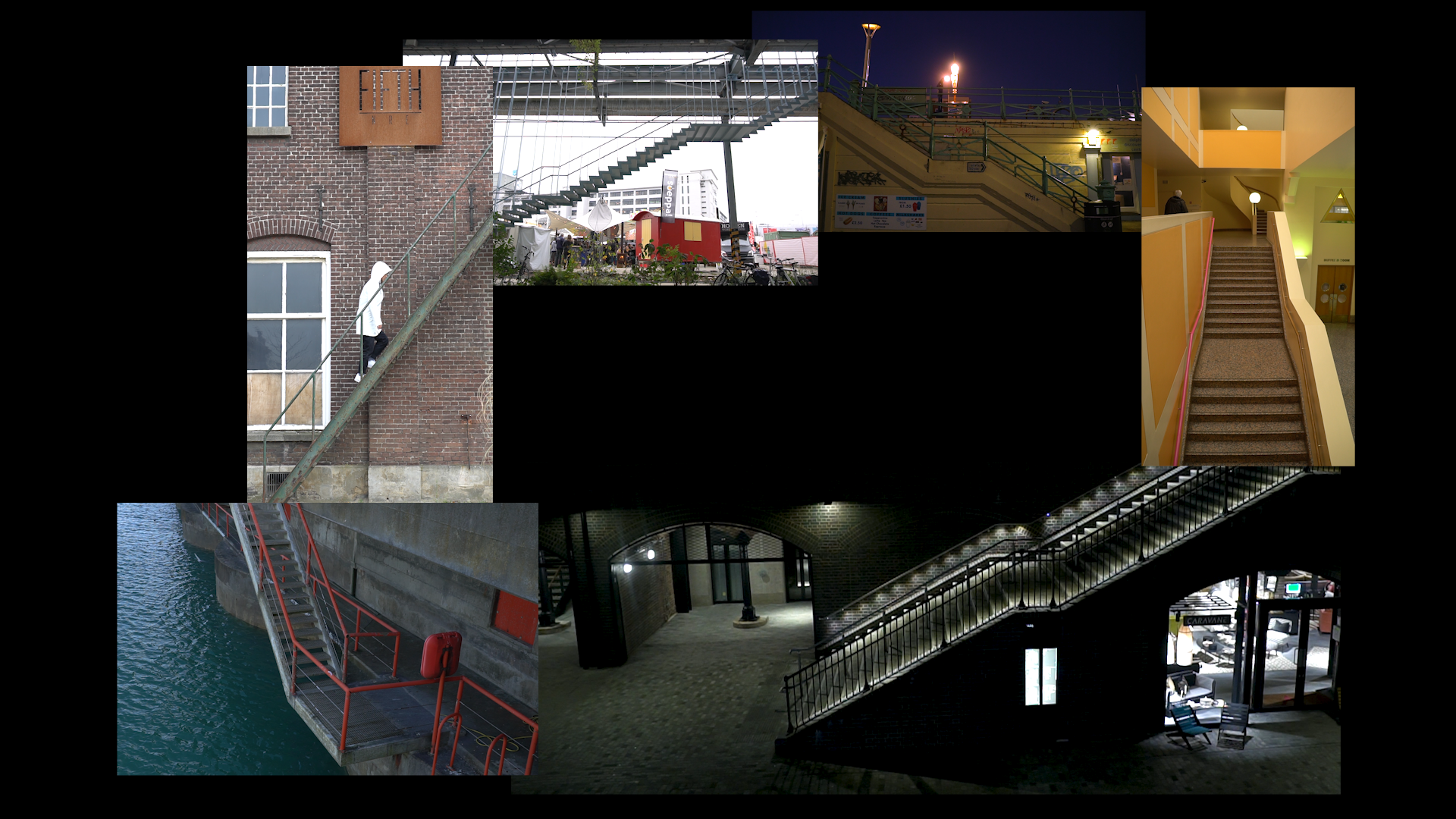
The Hackuarium: Strange Loops | Neta Moses

The 'Hackuarium,' the digital art and poetry lab situated in the lobby of the Michael Sela Auditorium, begins this year's exhibition program with a video work by media artist and computer scientist, Neta Moses.
Based in Jerusalem, Moses is a celebrated graduate of the multidisciplinary program in computer science and screen arts at the Hebrew University of Jerusalem and the Bezalel Academy of Art and Design. She is currently at a long-term artist residency at the Artists' Studios in Jerusalem while also contributing to neuro-research of decision-making processes at Tel Aviv University.
Netta’s works include video installations, performance, short films and lecture performances. She has gained recognition in exhibitions and film festivals both in Israel and internationally. Her short film “How To Be Alone” won the Experimental Cinema and Video Art competition at the Jerusalem Film Festival (2021). 
She was awarded the CLEVER scholarship for creative leadership from the EU, and the scholarship for excellence in video-art studies from the America-Israel Cultural Foundation. Her solo exhibition “Tears Become Rain” was recently on show this year at the Artists’ Studio gallery in Jerusalem.
The launch event will feature a joint viewing and conversation between the artist and the project curator, poet Alex Ben-Ari. 
Duration: approximately 45 minutes. 
Admission is free.
 

More Events

Events More

Date:
25.5
Monday
Hour: 20:00

Illusions: To Know and Know Not, a meeting with Prof. Shauli Lev-Ran

The second meeting in a series – dialogues with researchers who have written essays on various aspects of illusion in their fields of research, as appeared in the 2026 edition of ‘Poetry of Science’, a periodical published once a year concurrently with the Weizmann Institute’s annual Ofer Lider prize for encouraging creative writing among scientists award ceremony. The editor of ‘Poetry of Science’ is Idan Barir, a translator of poetry and prose from Portuguese, Arabic, English, and Turkish.


Alongside science’s demand for precision, society’s need for resolutions, nationalist movements and identity politics, with media polarizing opinions, and language whittling away to exclamation points, a hushed renaissance of incertitude is emerging. Challenging certainty and blurring the boundaries between “fact” and “fiction”, this psychedelic renaissance reminds us of the value of wonder and astonishment, but especially the willingness to entertain the unknown.” (Prof. Shauli Lev-Ran)


The use of psychoactive substances - hallucinogens, hallucinogenic mushrooms, and additional ingredients - has, in recent years, returned to the world of science and medical treatment in what has been designated as the “Psychedelic Renaissance”. Science recognizes the medicinal properties of psychedelic materials, but it is not always prepared to accept the undefined and unquantifiable aspects of its treatments. Prof. Shauli Lev-Ran in a dialogue with Idan Barir on hallucinations and reality within the context of this psychedelic renaissance - both as an established and historically cogent cultural phenomenon and as a considerable (even though yet unsatisfied) reawakening in research and treatment.


Prof. Shauli Lev-Ran – Psychiatrist and addiction treatment specialist, Researcher of psychiatric effects of psychoactive substances, Associate Professor at the Psychiatric Department of Tel Aviv University’s Faculty for Medical & Health Science’s School for Medicine, Fellow at The Center for Addiction and Mental Health, Toronto, Canada, Co-founder and Academic Director, Israel Center on Addiction.


sponsored by the Braginsky Center for the Interface between Science and Humanities
Free admission (based on availability)


Schedule:
16/2 Travels to the Past as Deceptive Illusion, with Prof. Avner Wishnitzer
29/6 The Placebo Effect, with Prof. Asya Rolls


Read more Read more