Mechanisms of axon pruning
Following their initial establishment, neural circuits in both vertebrates and invertebrates remodel their connectivity, often via elimination - or pruning - of exuberant dendrites and axons. Defects in the normal progression of pruning have been associated with neurodevelopmental conditions such as autism and schizophrenia.
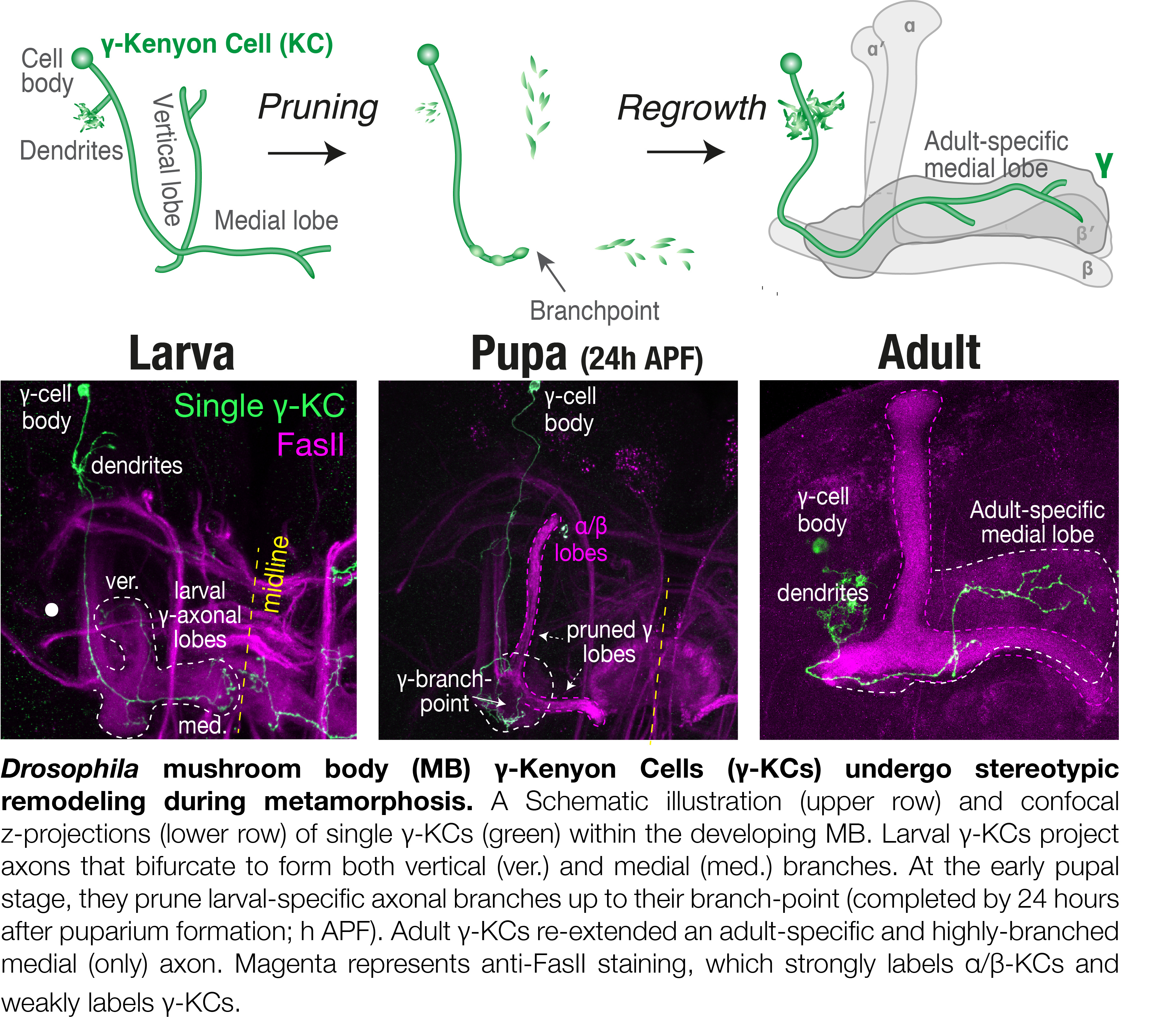
The Drosophila mushroom body (MB) is the ideal model system to explore the mechanisms underlying axon pruning: not only can we harness the awesome genetic power of the fly and its short life cycle, but we can also view and manipulate the stereotypic remodeling of MB γ-Kenyon Cells (γ-KCs) in vivo at up to single cell resolution.
In our lab we use cutting-edge genetic tools and high resolution imaging to explore how cell-intrinsic mechanisms (such as intracellular signaling, trafficking, cytoskeletal changes and organellar dynamics), as well as intercellular communication, shape axon pruning. In addition, we employ genomic analyses to characterize the transcriptional landscape of MB neurons and glia along neurodevelopment, and use tailored behavioral assays to assess the functional implications of defects in remodeling.