Research

Mechanisms of axon pruning

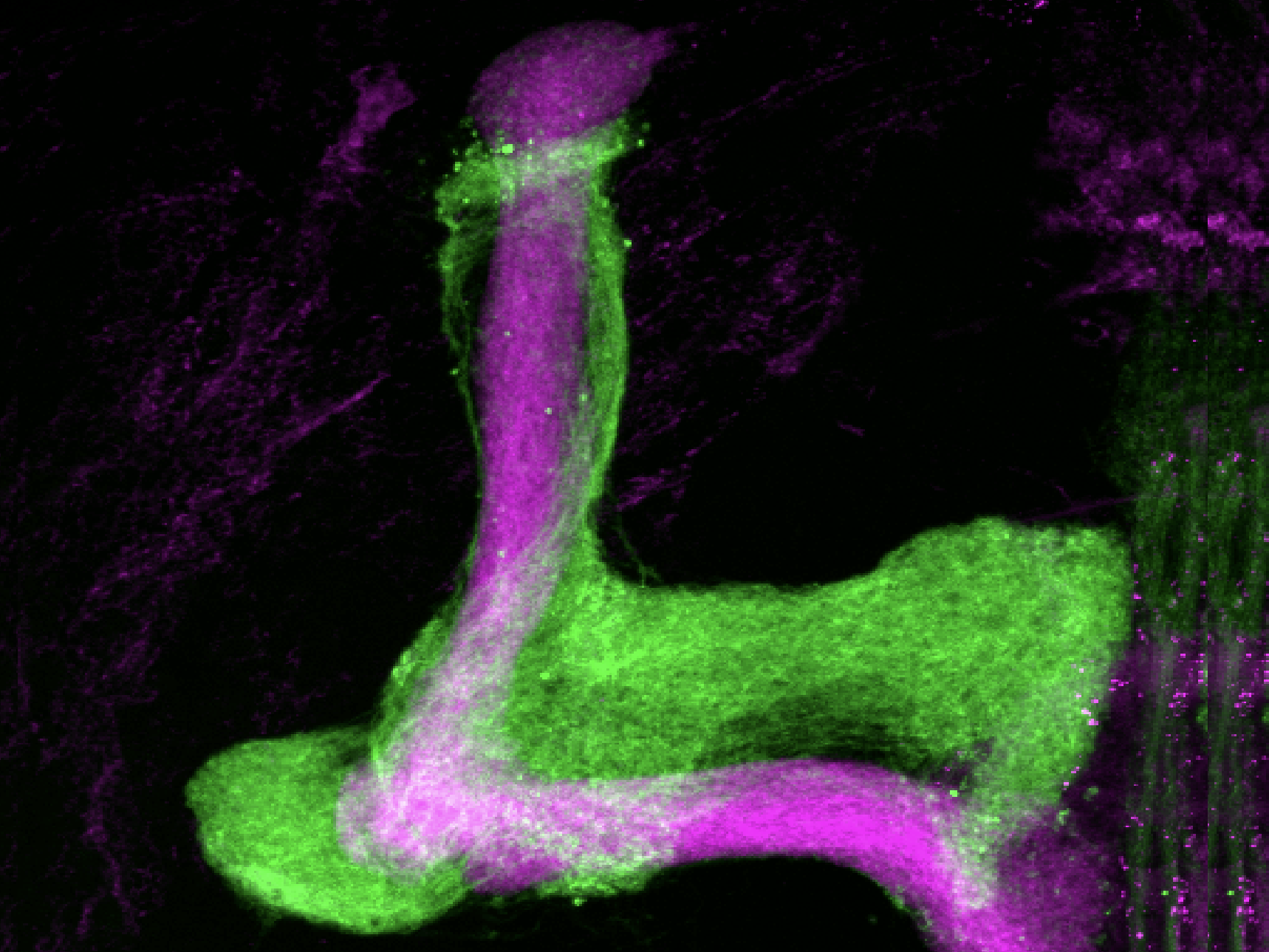
Following their initial establishment, neural circuits remodel their connectivity, often via pruning of exuberant axons - a process that mechanistically resembles dying-back neurodegeneration in disorders such as ALS. The Drosophila mushroom body (MB) is the ideal model system to study axon pruning, as we can visualize and manipulate the stereotypic remodeling of MB γ-Kenyon Cells (γ-KCs) in vivo at up to single cell resolution. We use cutting-edge neurogenetic tools, genomic approaches and tailored behavioral assays to dissect the mechanisms underlying pruning at the molecular, cellular and functional levels.

Read more

Axon regrowth and circuit assembly

Forming the precise wiring of neural circuits is a complex, multi-step process, whose underlying mechanisms remain elusive. Follwing pruning, Drosophila mushroom body (MB) γ-KCs regrow their axons through a genetically-controlled program distinct from initial outgrowth and reminiscent of injury-induced regeneration. As these axons extend, they synapse with distinct input and output partners, thereby forming discrete, functionally-relevant subcellular zones. With the available full-brain connectome, advanced neurogenetic tools and a wide array of behavioral assays, the MB is the perfect platform to uncover the principles that govern growth, wiring and target recognition in developing neural circuits. 

Read more

Glia-neuron interactions during circuit remodeling

Glia have emerged in recent years as key regulators of synapse pruning, during normal brain development as well as in pathological states such as schizophrenia and Alzheimer's disease. In the developing Drosophila mushroom body, astrocytes actively infiltrate the axonal bundle to facilitate its pruning, and later engulf the pruned debris. We use state-of-the-art genetic tools to simultaneously label and manipulate glia and neurons within the developing brain, in the aim of uncovering the molecular nature of their interactions during neuronal remodeling and circuit formation.

Read more