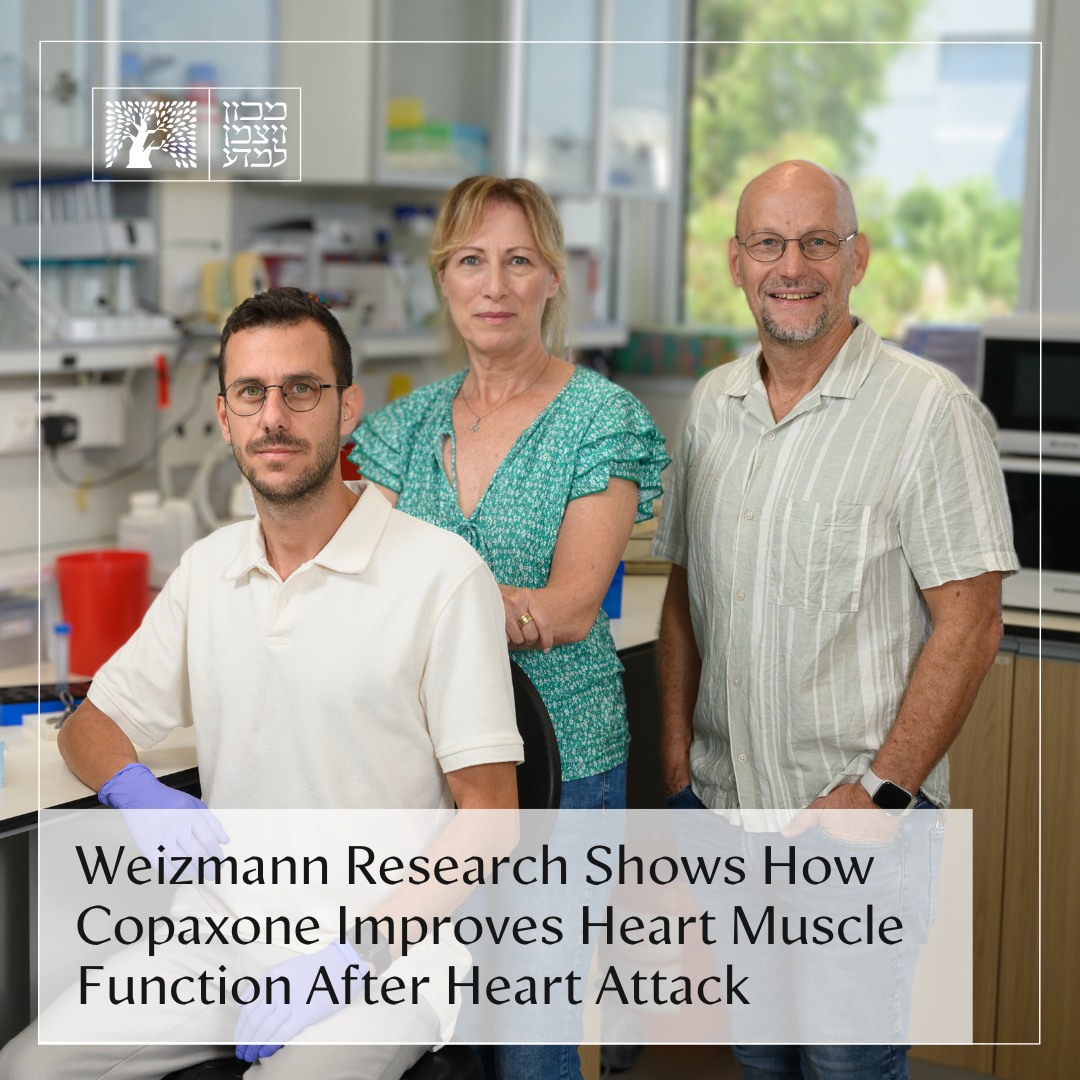
Copaxone was originally developed at the Weizmann Institute of Science in the 1960s to treat multiple sclerosis. Now, decades later, a research team led by Prof. Eldad Tzahor and Dr. Rachel Sarig has uncovered a surprising new benefit of this longstanding drug: its ability to protect the heart and improve its function after a heart attack.
Unlike other tissues that can regenerate, the heart has limited capacity to heal itself. After a heart attack, scar tissue forms, weakening the heart's function and potentially leading to chronic heart failure. In a study published today, the research team demonstrates that Copaxone can reduce scar tissue formation and enhance the heart’s ability to pump blood, both after a heart attack and in cases of chronic heart failure.
In collaboration with Hadassah Ein Kerem Hospital, Weizmann Institute scientists conducted a clinical study testing the effects of Copaxone on heart failure patients. Although the results have yet to be published, they are expected to show significant improvements in heart function, potentially offering new hope to patients worldwide