

The Beck family’s leadership in environmental sustainability
As active environmentalists, a passive home was just what Cathy Beck and Laurence Rubin wanted.
The Toronto couple’s son, Gregory Rubin, is an architect who several years ago set out to build his parents one of the most energy-saving and environmentally friendly homes in Canada. Today it is one of a small handful of so-called passive homes in the country. That’s no small feat for a cold climate where home heating is essential for at least six months a year. The house relies on solar and electric energy and building materials with special insulation properties, and features high ceilings and large windows that exploit the sun as a heat source—"never requiring too much heating or too much cooling,” notes Cathy. The garden, trees, and pool stay green and clean (and the pool temperature warm) thanks to specialized irrigation and other low-energy and reduced-water use techniques.
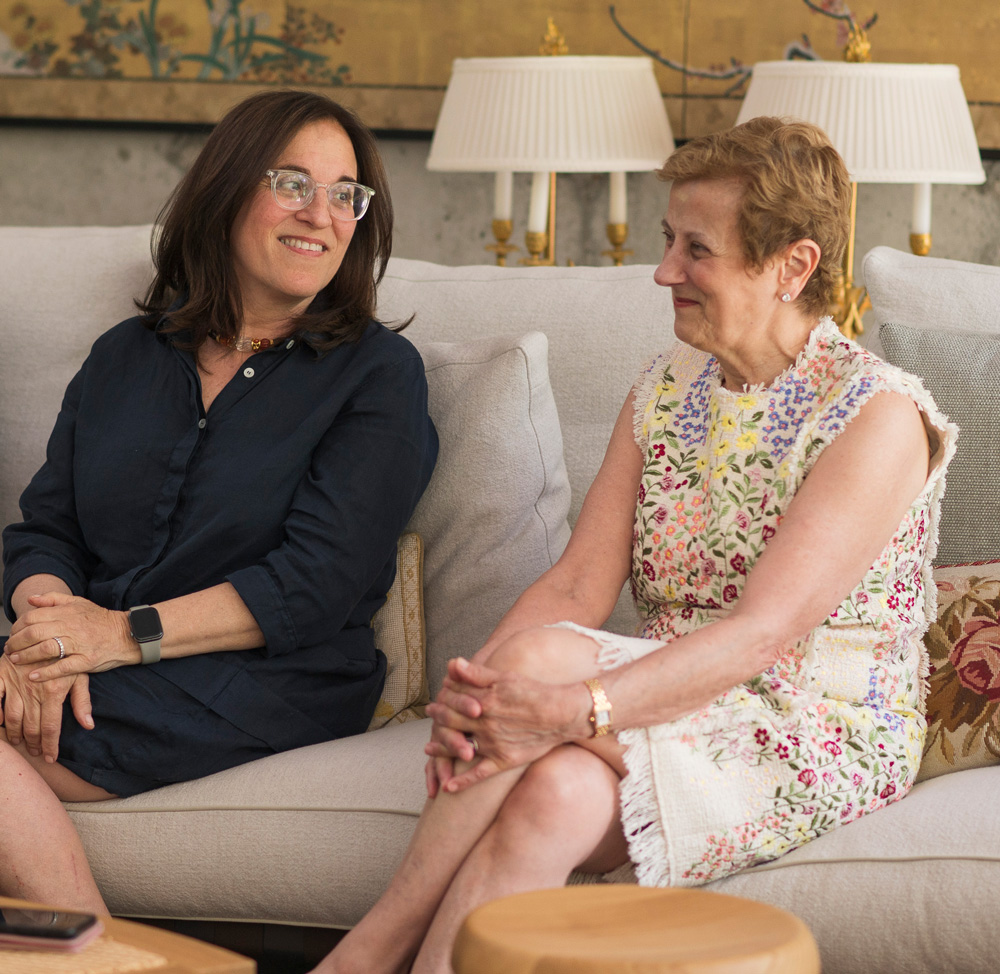
Gathered together in the Beck-Rubin home—surprisingly cool on a blisteringly hot summer’s day despite no air conditioning—Cathy and siblings Anthony and Liddy say they are proud to carry out the legacy that their late parents, Tom and Mary Beck, left behind. That is: a deep care for the natural world, in particular alternative energy, and the inclination to invest in its future, including through philanthropy.
Most recently, the Tom and Mary Beck Center for Renewable Energy was established thanks to an estate gift from Tom and Mary Beck. The center is one of seven within the Institute for Environmental Sustainability (IES) at the Weizmann Institute of Science, and the first named center. “This important new center reflects the Becks’ visionary leadership, as well as their generosity, in a field that matters to each and every one of us on the planet,” says Prof. Alon Chen, President of the Weizmann Institute of Science. “The Beck imprint on environmental research is visible everywhere at Weizmann, and we are now poised for major advances thanks to their foresight and giving.”
“Our parents were not only passionate about the environment, and in particular finding new energy sources, but they always led the way and had a way of engaging their friends and others to follow,” says Cathy. “So being the first would have felt natural to them, and is a fitting legacy.” A member of the Institute’s Executive Board, Cathy is former Chair of the International Board; she chaired Weizmann Canada from 2010-2016, when she spearheaded a dramatic expansion in the circle of Canadian friends.
“Weizmann was important to our parents, and we feel proud to continue in their footsteps,” says Liddy. “The Institute is a special place, and it is incumbent upon us to make sure that it continues to thrive. A donation to Weizmann is a vote of confidence in Israel, its future, and ours too. It is a way to ensure that we continue to do important and meaningful research that will benefit us now and in the future in ways that we may not even be able to imagine. There is much to discover, and we need to find innovative ways to improve our planet and our health and repair our world. The Weizmann Institute can do all of this.”
Lighting the way
During their lifetimes, Tom and Mary Beck had an outsized impact on energy research at Weizmann. They owned Noma Industries Ltd., a producer of electric lights and components and one of the largest producers of Christmas tree lights in North America, where Cathy worked for many years.
On their first trip to Israel in the 1960s, they were enthralled when they witnessed drip irrigation farming for the first time; when they asked their guide how they could learn more, he directed them to the Weizmann Institute. Mary was intrigued by agricultural research and Tom, who was trained as an engineer, in the physics of solar energy. Both understood the importance of alternative energy early on, long before it even came into the nomenclature. Through their own philanthropy and by galvanizing many of their Canadian friends to give to the same cause, the elder Becks helped trigger a revolution in alternative energy research in Israel.
“Our mother loved gardening, and through that, she became a champion of environmental issues,” says Anthony. “Through their advocacy for the environment, our parents hit on a particular chord—the value of preserving the natural world is a commonality that most people understand and get enthusiastic about. We have one planet, and we have to make it last: that’s the message. And I think that’s how they got many people involved—even people who might not have otherwise thought about giving to science.”
Tom and Mary Beck found common cause with Prof. Israel Dostrovsky, a chemist who served as President of the Institute in the 1970s who served in national roles in atomic energy research and policy. He was an early advocate for solar energy research and became head of a small research center for energy research in 1980. Few other Weizmann scientists were interested in the subject at the time. Soon after, the Becks helped transform that into the much larger Canadian Institute for the Energies and Applied Research, which includes the Tom and Mary Beck Solar Complex. (Years later, after scientists successfully proved the value of solar energy, the Complex became the Nancy and Stephen Grand Israel National Center for Personalized Medicine—a unique example of a scientific field having achieved so much success that it rendered its research lab passé.)
A 1988 dinner in Toronto that Tom and Mary hosted raised $8 million for the Weizmann Institute—an unprecedented sum at the time—and the Becks provided a quarter of it. That event launched Canada as a source of philanthropic funding for Weizmann, and helped lead to what is today a vibrant organization of friends, Weizmann Canada. Tom received an honorary doctorate from the Institute in 1991.
They also established the Mary and Tom Beck Canadian Center for Alternative Energy Research, which funds the Sustainability and Energy Research Initiative (SAERI). These initiatives provided the foundations for the alternative energy field at the Weizmann Institute, positioning the Institute as a world leader in solar energy research specifically, and created a snowball effect with a long stream of Canadian and other donors following suit to further bolster the field.
As the elder Becks became acquainted with other fields of science at Weizmann, their areas of giving expanded. Among other gifts, Mary established the Marianne Manoville Beck Laboratory for Research in Neurobiology in honor of her parents, Elisabeth and Miksa Manoville, headed by Prof. Ilan Lampl. After Tom and Mary passed on (Tom in 2016, Mary in 2108), their estate provided major funding for a major flagship project in materials science, which encompasses novel forms of materials for solar energy and “green” chemistry, with manifold applications in everyday life. The Tom and Mary Beck Center for Advanced and Intelligent Materials will be housed in the new state-of-the-art André Deloro Building for Advanced and Intelligent Materials.
From strength to strength
In recent years, as the climate crisis has worsened and environmental degradation has become increasingly worrisome, the Weizmann Institute determined to leverage its expertise in a range of environmental fields and to make a quantum leap forward. The resulting flagship project, the IES, is advancing research in food security, biodiversity, environment and health, sustainable materials, climate research and marine research, in addition to the new Beck Center for Renewable Energy.
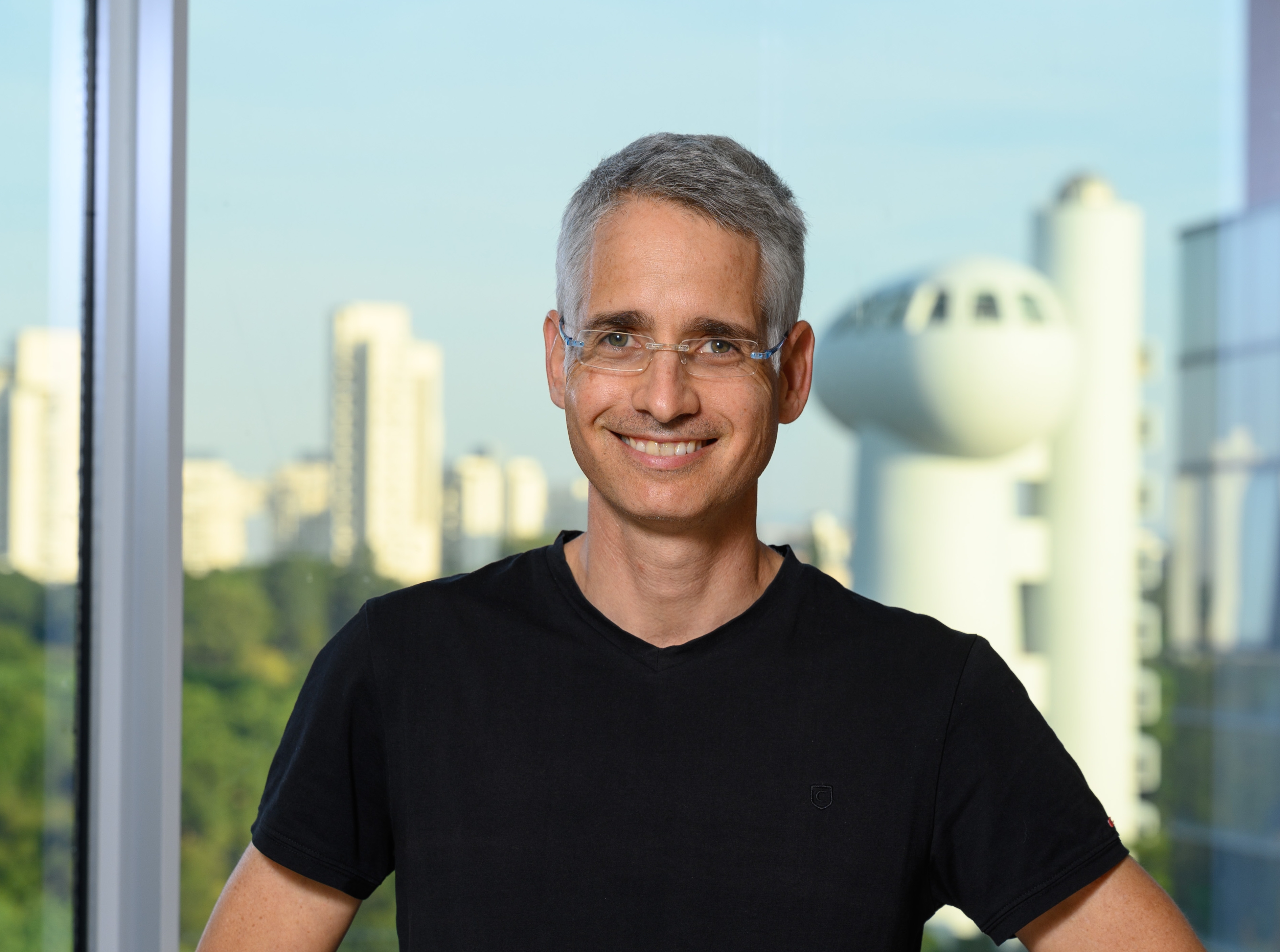
“The Beck family’s unwavering support for sustainability research at the Weizmann Institute has been transformative, and has served as a cornerstone for the emergence, development, and growth of this field across several decades,” says Prof. Ron Milo, head of the IES, a member of the Department of Plant and Environmental Sciences, and Scientific Director of SAERI. SAERI, which funds postdoctoral fellowships and thereby fosters a new generation of experts in alternative energy.
“The Becks practice what they preach—their extraordinary new home, which is an investment in the planet, is just one example. Their visionary leadership, personal engagement and philanthropy, and steadfast commitment to advancing sustainability related research laid the foundations for what is today a critical mass of research in the field, which allowed us to start this flagship project. The family’s establishment Beck Center for Renewable Energy was yet another example of the Becks leading by example. Without their constant support and dedication, many of the research achievements in the field would not have been possible.”
A unique feature of the IES is the emphasis on identifying early-stage discoveries that are ripe for the intellectual property pipeline and potential commercialization. This process is enabled by Bina, a Weizmann academic unit that raises awareness among Weizmann labs of marketplace needs and funds early-stage ideas.
“It is difficult to overstate the value of the Beck family contribution to energy research,” says Emeritus Prof. David Cahen of the Department of Molecular Chemistry and Materials Science, who was the first director of the Beck Canadian Center for Alternative Energy Research and the first director of SAERI. “It is in large part thanks to their center that fundamental renewable energy could get funded, allowing large and diverse involvement in energy research on campus.”
Photo credit: Ryan Emberley