

Prof. Igal Talmi, a pillar of Israeli nuclear physics research at the Weizmann Institute of Science, passed away in February. Talmi helped lay the groundwork for advanced physics research in Israel and made key theoretical discoveries on atomic nuclei. He died just two days after he turned 101 and two weeks after the passing of his wife, Chana, at age 100.
Talmi belonged to a remarkable generation of physicists trained at the Hebrew University under the legendary physicist Prof. Yoel (Giulio) Racah (1909-1965). Together with colleagues including Prof. Amos De Shalit (1926-1969), he was part of a core group that laid the foundations of basic research in nuclear physics in Israel. In 1954, Talmi, De Shalit, and fellow Racah alumni helped establish Israel’s first Department of Nuclear Physics at the Weizmann Institute, which paved the way for the Institute's Faculty of Physics and its various fields of study.
Talmi was influenced by some of the field’s world leaders, including two Nobel Prize winners in physics, Prof. Wolfgang Pauli (1900-1958) at ETH Zurich (the Federal Institute of Technology), where he received his doctorate, and Prof. Eugene Wigner (1902-1995), in whose lab at Princeton University Igal conducted his postdoctoral research.
One of Talmi’s most significant contributions was refining the so-called shell model of the atomic nucleus, matching experimental results with mathematical calculations with striking accuracy, thereby providing the first clear validation of the model. Among other joint accomplishments, he and De Shalit published the book: Nuclear Shell Theory in 1963, which quickly became a classic in the field.
From butterflies to nuclear physics
Igal Talmi was born in Kyiv, Ukraine, to Moshe and Leah Smilanski, both Hebrew teachers. When the Soviet government shut down Hebrew-language schools in the 1920s, teachers from schools across the Soviet Union made aliyah to pre-state Israel. The couple, with their nine-month-old son Igal and his 10-year-old sister, made their way to Odessa, where they boarded a ship to British Mandate Palestine, arriving in Jaffa on November 2, 1925.
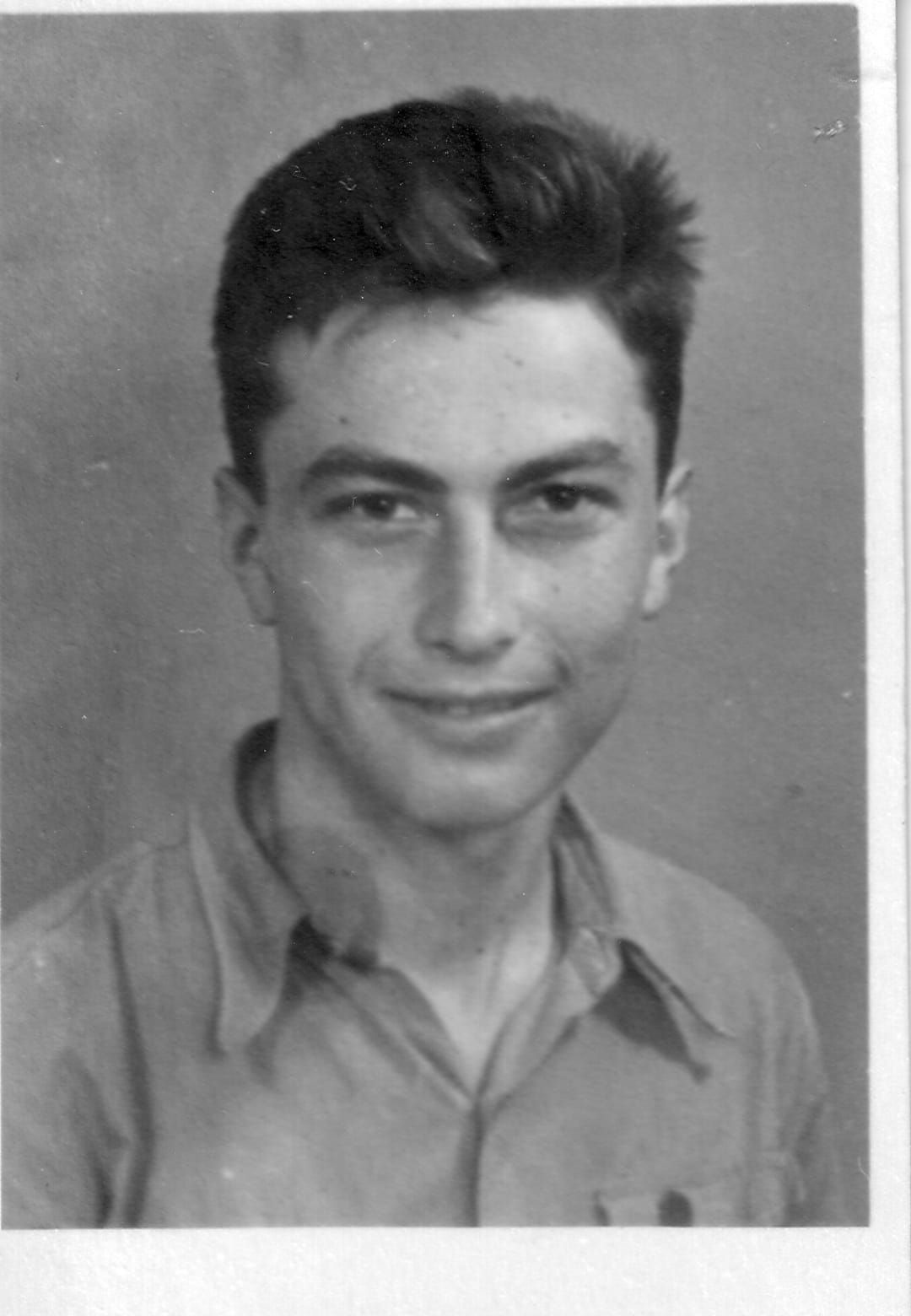
In an interview six months before his passing, Talmi said that the date always stuck in his mind because it was the anniversary of the Balfour Declaration in 1917. Arab workers in Jaffa Port, responsible for shuttling to shore immigrants coming in on ships, were on strike. The family was forced to stay on board overnight until they could be brought ashore. (The Weizmann Institute would be formally opened 24 years later to the day, on November 2, 1949).
After a short time in Tel Aviv, they settled in Kfar Yehezkel, a moshav (a pioneering agricultural community), in the northern Jezreel Valley at the foot of Mount Gilboa. They changed their name to Talmi, from the root telem, meaning “agricultural furrow,” symbolizing both cultivation and renewal. It was also an acronym for the first names of the family members. Moshe and Leah started an elementary school in Kfar Yehezkel, and Moshe served as its principal.
“My parents were teachers and didn't have a farm, so I didn't have to work on the family farm like other kids, which gave me free time to read,” including popular science publications about nature, recalled Talmi.
He befriended Tuvia Kushnir, who had been inspired by a teacher in Kibbutz Yagur who taught nature and geography. Kushnir took his friend with him on hikes in the Carmel Mountains. Together, they discovered flowers and collected butterflies, earning the nickname “butterfly hunters.” Talmi treasured this friendship, which was devoted to the wonder of the natural world. His early fascination with patterns in nature would later find expression in the hidden structures of the atomic nucleus. Kushnir was later killed in Israel’s War of Independence.
To attend higher grades in the adjacent kibbutz, Geva, Talmi and his friends crossed over a deep wadi separating the two communities. With few educational opportunities in the Jezreel Valley at the time, his parents planned to send him to the Herzliya Gymnasium in Tel Aviv, which his sister had attended while living with relatives. But the year was 1940 and World War II was raging. In July, just as he was about to leave for Tel Aviv, Haifa was bombed by Mussolini's Italy, killing 46 people and wounding dozens. His parents decided to keep him at home, where he began studying on his own.
Talmi first discovered the direction he would follow in an old physics textbook he unearthed. He learned about gravity, saying, “it captured my heart.” In other subjects, however, which were less interesting to him, his progress was not good enough, leading his parents to send him off to Tel Aviv to attend the Herzliya Gymnasium, despite concerns for his safety, where he enrolled at the end of 11th grade. He graduated from high school with a Palestine Matriculation certificate.
In 1942, at age 17, he joined the Palmach, the elite fighting unit of the Haganah, the central paramilitary organization of the Jewish community in Palestine during the British Mandate (and the precursor to the Israel Defense Forces). He was released for health reasons, then enrolled in the Hebrew University, where he began studying physics and mathematics in a combined bachelor’s and master’s program. He became a student of Prof. Racah and became friends with Racah’s other students, including De Shalit, Prof. Gvirol Goldring, Prof. Gideon Yekutieli (1926-1999), and Prof. Uri Haber-Schaim (1926-2020). All but Haber-Schaim, who became a professor at MIT, later joined Talmi in founding the Department of Nuclear Physics at Weizmann.
Talmi called his physics studies “an extraordinary experience that opened my eyes.” The textbooks were in German, Hebrew, English, and Russian. When he realized that some of the cheapest physics textbooks were in Russian, he taught himself the language one summer.
Racah developed atomic spectroscopy methods. “His dream was to compute the spectroscopy of all atoms in the periodic table,” said Talmi. Spectroscopy of atoms involves heating or exciting the atom, causing it to emit light at specific colors; these colors appear as lines in a spectrum, like a barcode unique to each element. But Talmi and some of his friends weren’t all that interested in the topic and wanted to do things that they considered more sophisticated, he said. Instead, he wanted to spend time in Prof. Pauli’s lab in Switzerland, where Racah had studied. But after the UN partition of November 29, 1947, it was clear that Israel was heading into war, and Talmi had to postpone his plans.
Ready to assist in the war effort, Talmi joined a fighting unit and later joined a Haganah unit called Hemed—the Hebrew acronym for Heyl HaMada, the Science Corps, which was tasked with developing armaments. Hemed’s headquarters was located in Rehovot, so that it would be close to the Agricultural Research Station. Other neighbors were the newly established Daniel Sieff Research Institute—the precursor to the Weizmann Institute—and the Hebrew University's Faculty of Agriculture.
Talmi and a handful of others in the Racah group continued to give lectures and seminars “to keep up the scientific life” in the tumultuous time leading up to Israel’s War of Independence, he recalled. They also knew that to improve their understanding of the field, they would need to study abroad. “We all had the feeling that experimental physics in the country lagged what was done elsewhere. Nuclear physics was new; cosmic radiation was then the only source of elementary particles,” he said.

Nuclear physics falls in the middle of the 20th century history of the evolution of physics field. First, scientists tried to understand the structure of matter, which became the study of the atom, or atomic physics—understanding electrons and their interactions with the nucleus within atoms. The next step was the study of the nucleus of the atom, known as nuclear physics, which Talmi and De Shalit focused on at a theoretical level, collaborating at times with experimentalists. Insights provided by the study of the nucleus were then followed by the study of particle physics, a deeper dive into the exploration of the fundamental particles such as quarks, leptons, and force carriers and the fundamental forces governing them.
Eager to expand their knowledge by pursuing studies at the best labs in the U.S. and Europe, a handful of Racah students turned to Prof. Aaron Katzir (1914-1972), as well as to the scientific director of the Weizmann Institute, Prof. Ernst Bergmann (1903-1975), both of whom had the ear of Prime Minister David Ben-Gurion (1886-1973). Ben-Gurion, who grasped the value of science and technology for the state in the making, agreed for the government to foot the bill for several Racah students, including Talmi, to receive advanced training overseas. Thus Talmi, whose focus was solely dedicated to basic research on nuclear theory, realized his dream of studying in Prof. Pauli's lab in Switzerland, where he earned his doctorate in 1951. De Shalit later joined him.
Igal and Chana then returned to Israel and ventured off to the United States, where he conducted his postdoctoral research at Princeton University with Wigner. He was joined there too by De Shalit, who also spent time at MIT. Wigner was a Hungarian-born physicist and mathematician who won the Nobel Prize in Physics in 1963 for his contributions to nuclear and elementary particle theory. Wigner was a friendly person, and they developed a close, fruitful relationship.

By the time Talmi had returned to Israel, the Weizmann Institute had been formally established. Meyer Weisgal, who was serving as Acting Director (in lieu of President) from 1952-1959, hired Talmi, De Shalit and other former Racah students as the first members of Israel’s first nuclear physics department, with De Shalit as its founding head. In 1957, at the initiative of Talmi and his colleagues, the Institute hosted an international conference in nuclear physics which was attended by Nobel Prize winners and other leaders in the field—attracting recognition to the Institute’s strengths in physics and putting the Institute onto the world stage of basic science more broadly.
Core strength: the physics of the atomic nucleus
Talmi was fascinated by atomic nuclei. The center of every atom—the nucleus—is made of protons and neutrons, which together are called nucleons. Even though the positively charged protons repel each other, nuclei usually stay together due to a powerful force that acts between all nucleons.
At first, scientists thought such a tightly packed group of particles would behave in a messy, chaotic way. But experiments in the 1930s revealed that nuclei with certain specific numbers of protons or neutrons were unusually stable. In 1948, a German-American physicist named Maria Goeppert Mayer (1906-1972) identified these special numbers and called them “magic numbers.” Mayer later shared the 1963 Nobel Prize with Wigner and J. Hans D. Jensen (1907-1973), for nuclear shell structure.

To explain this, physicists proposed that protons and neutrons move in organized energy levels, or “shells,” inside the nucleus—similar to how electrons are arranged in shells around an atom. Each shell can hold only a limited number of particles. When a shell is filled, the nucleus is stable—just like a full outer shell makes an atom stable, called its ground state.
How the particles inside the nucleus interact with each other remained an open question. Protons and neutrons inside a nucleus do not behave exactly like free particles in space; the crowded nuclear environment modifies their interactions. So physicists must rely on nuclear forces—simplified descriptions of how particles align tightly and interact inside the nucleus under the collective influence of many other nucleons. Even neutrons, which, when isolated, have no electric charge, act as if they have a small charge when inside the nucleus.
For years, physicists around the world tried to calculate these forces, but their predictions often didn’t match experimental measurements. Talmi looked for a special nucleus whose energy levels could directly reveal information about these forces.
In 1956, he made a key breakthrough by studying the nucleus of the chlorine atom: the calculations he produced to predict the shell’s energy levels matched the experiments remarkably well. This was the first time the shell model produced entirely consistent, reliable results without additional theoretical assumptions—giving scientists confidence that it really worked and could be used to understand the structure of atomic nuclei more broadly. The model thus became a powerful and widely used tool in nuclear physics.
Below is an image of Talmi with De Shalit oh the left and Racah on the right, in 1963, at the Weizmann Institute.

Forty years after his jointly authored book with De Shalit, Talmi published a second book: Simple Models of Complex Nuclei (1993), a deeper exploration of how elegant theoretical frameworks can illuminate complex physical systems.
In addition to working with De Shalit, who died at a young age, Talmi’s early colleagues in physics included American immigrant Prof. Zvi Lipkin (1930-2016), who also worked on nuclear theory, Prof. Yehuda Eisenberg (1927-2015). Prof. Emeritus Goldring celebrated his 100th birthday in February 2026.

In 1967, Talmi became Head of the Department of Nuclear Physics, taking over from Prof. Peter Hillman (1928-2013), and after the Institute reorganized from departments to faculties, Talmi became Dean of the Faculty of Physics in the 1970s. He became emeritus in 1995.
Talmi served on the Israel Atomic Energy Commission. He was one of the founding members of the Israel Academy of Sciences and Humanities from 1963 onward (and the most veteran member upon his death). He received numerous honors, including the Weizmann Prize, the Israel Prize in exact sciences, the Rothschild Prize, the Hans Bethe Prize of the American Physical Society, and the EMET Prize. He was a visiting professor at MIT, Yale, and Princeton, among other places.
Memories at 100
In the 1960s, Talmi was Institute Professor Haim Harari’s MSc thesis guide. In toasting his mentor at his 100th birthday party, Harari said that the contribution of Talmi his contemporaries “was enormous... There was also something uniquely Israeli about it, because they were the first generation of physicists to grow up and be educated in Israel and to train the next generation of experts in all directions.”
He continued, “These physicists left their mark in many other ways. For example, Igal and De Shalit pioneered a university culture in Israel in which one generation leads to the next. They did not simply start a field and remain in it until old age. They advanced the field until it was time to move forward, and then they led the advancement of the next generation. The greatness of this group was the ability to understand that one must move forward—toward applications, conclusions, and the next stages. This reflects broad scientific vision: not diving ever deeper into some narrow technical detail but moving in multiple directions.”
Prof. Harari, who served as President from 1988-2001 and founded the Davidson Institute of Science Education in 1999, also noted that Talmi and his colleagues “introduced scientific education into higher education in Israel and fostered the understanding that scientific education must be imparted to the entire population, not only to future scientists. The economy, security, health, and agriculture all depend on scientific education and scientific applications. The generation that Igal and his colleagues belong to—now a generation of centenarians—created this entire system: scientific research, educational democratization, generational advancement. Igal occupies a central place in that story.”
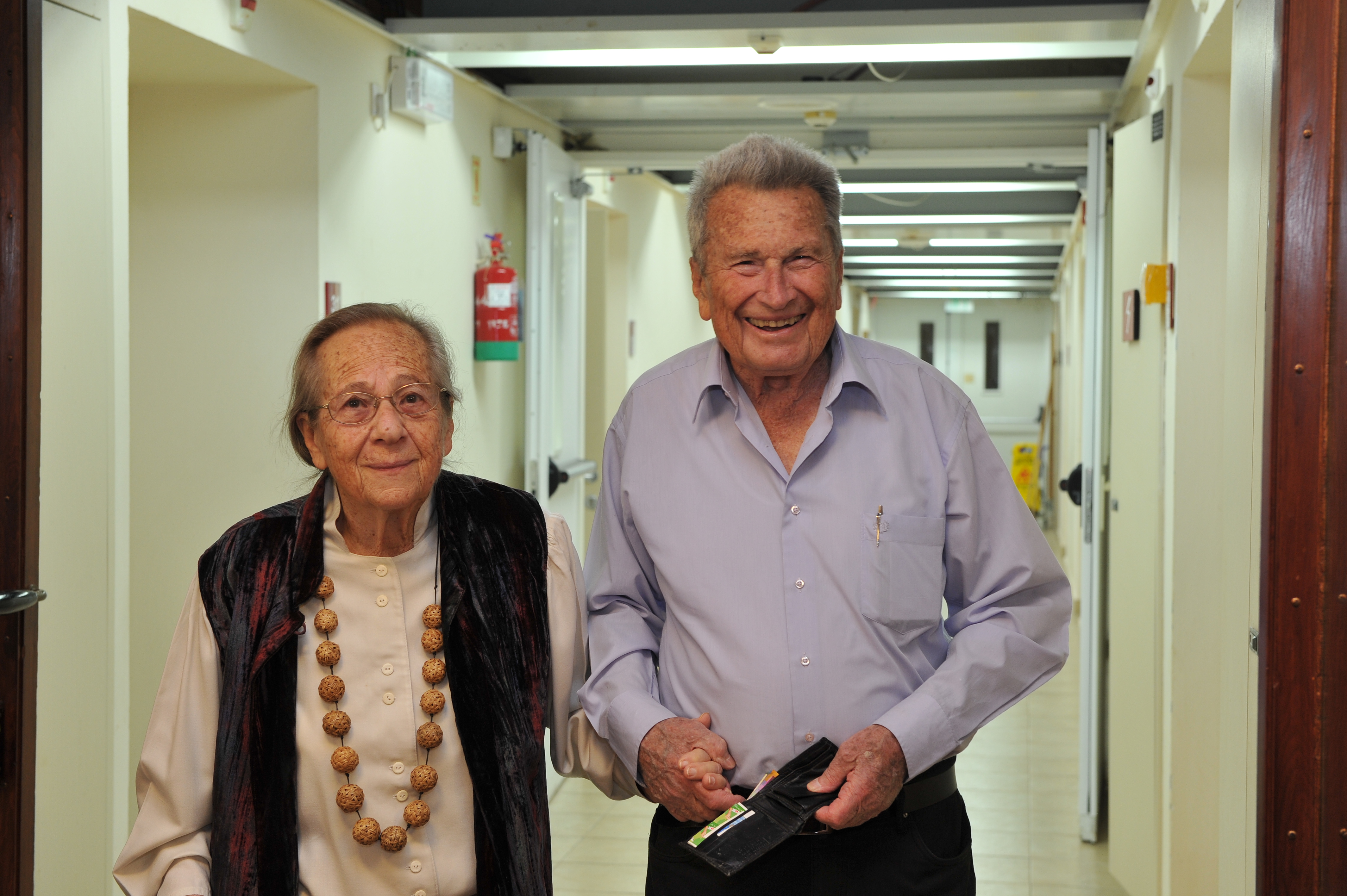
Talmi’s personal story, Harari adds, “is a miniature version of the narrative of the State of Israel—its beginnings, transformations, and achievements.”
Chana, who had a master’s degree in math and was a math teacher, played a central role in pioneering science education at the Weizmann Institute. In particular, she was a major force in advancing science education for high school teachers and was a member of the Department of Science Education.
Igal and Chana had two children. Their son, Prof. Yoav Talmi, is Deputy Head of the Department of Ear, Nose, and Throat at Sheba Tel HaShomer Medical Center (emeritus), and their daughter, Prof. Tamar Dayan, is a zoologist at Tel Aviv University and the founder and director of the Steinhardt Natural History Museum.
Igal and Chana are survived by Yoav and Tamar, six grandchildren, and six great-grandchildren.
