
Group
-

Lab manager for the group. Runs the analytical facilities, including the MC-ICPMS and the ion chromatograph, and keeps them producing data at the precision the projects need. Develops and refines the lab's chemical and analytical methods, and trains the group on them.
-

My research focuses on uncovering how the East Antarctic Ice Sheet responded to past periods of warming, so we can better understand how it may behave as the climate continues to warm. I study glaciomarine sediments and ice-rafted debris (IRD) from East Antarctica, using Pb–Sr–Nd isotopes, clay mineralogy, and mineral chemistry to trace the provenance of these sediments. By integrating these results with knowledge of East Antarctica’s subglacial geology, I aim to identify when and how the ice sheet retreated or advanced in the past. This work helps build a clearer picture of ice-sheet stability and its potential impact on future sea-level rise.
-
In March and April 2025, we conducted a field campaign at the Nitzanim site along the southeastern Mediterranean coast to directly investigate submarine groundwater discharge (SGD) and its role in shaping coastal nutrient and carbon system dynamics. Our work included sampling boreholes penetrating the coastal aquifer to capture fresh and brackish groundwater signatures, as well as several days of intensive nearshore sampling on the beach. Using piezometers, we collected seawater and sediment porewater to resolve mixing processes at the land–sea interface.
These field efforts support our broader goal of characterizing SGD endmembers and, through combined nutrient, isotope (δ¹³C, δ¹⁵N, δ¹⁸O), and carbonate system analyses, quantifying how groundwater discharge delivers and transforms nitrogen and carbon in coastal zones with implications for marine ecosystems and global budgets. -

My current research centers on high-resolution analysis of radiogenic isotopes from the Dead Sea core, recovered through the ICDP Dead Sea Deep Drilling Project, to reconstruct past climate variability in the Dead Sea region. Given the area's sensitivity to climatic shifts, understanding its paleoenvironmental record is crucial for interpreting broader climate patterns.
-

Works on how different depositional environments in ocean sediments set the magnesium isotope composition recorded there. Resolving that control is what allows the marine magnesium budget to be understood, and through it ocean chemistry both today and over geological history.
-

Builds the global SGD database that underpins the group's flux estimates, and measures rare earth elements and neodymium isotopes in coastal aquifers. The REE and Nd work constrains how much of the ocean's budget for these elements arrives through groundwater rather than rivers.
-

My research aims to reconstruct the Middle and Late Pleistocene (~220 thousand years) paleoclimate of the Levant region using geochemical methods. I focus on stable isotopes such as oxygen, carbon, and radiogenic uranium (234U/238U ratio) contained in the Dead Sea lacustrine carbonates (the Dead Sea Deep Drilling Project), adjacent stromatolites, tufas, and speleothems.
-
My research focuses on how water and dust sources to the Dead Sea watershed have shifted since the last deglaciation—the most recent reorganization in Earth’s climate system, by using geochemical tools such as U, Pb, Sr, and Nd isotopes. As the Dead Sea Basin straddles the Saharan desert and Mediterranean climate zones, my work also explores how these regional changes relate to broader climate systems, including the Eastern Mediterranean–North Atlantic system and the African monsoon. These insights may provide long-term context for understanding regional hydroclimate behavior in this densely populated and drought-sensitive region under a warming climate.
-

Worked on heterogeneity and tidally driven circulation in coastal aquifers for his master's. His PhD builds global estimates of solute fluxes to the ocean, combining hydrological models and geospatial databases with geochemical models.
-

In my research, I am developing a method to trace the water sources of trees using heavy isotopes such as uranium (U), strontium (Sr), lead (Pb), and neodymium (Nd). These isotopes serve as geochemical fingerprints, reflecting the local geology and distinguishing between different water sources. By analyzing tree tissues along with rock and soil profiles near common Mediterranean species, I aim to determine whether trees rely on rainwater, groundwater, or non-local sources.
-

-
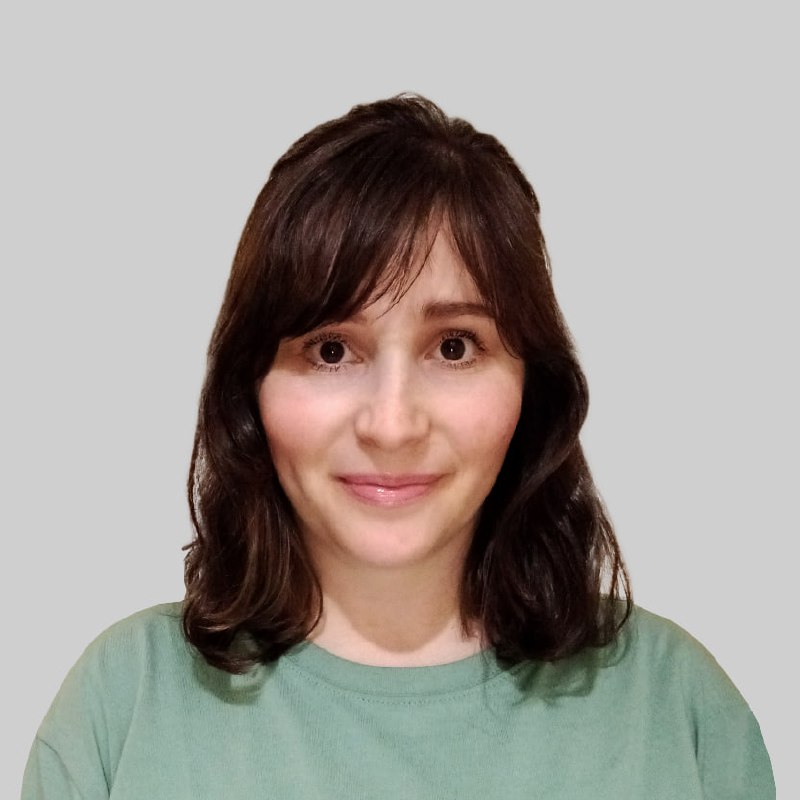
Elizaveta Ivanova Efimova
Email elizaveta.ivanova-efimova@weizmann.ac.ilLab, Field, and Research AssistantRuns the group's ICP-MS, ICP-OES, chloride titration and the REE and Nd column chemistry, and wrote several of the lab protocols. Works on the offshore groundwater and porewater samples from the IODP expedition off Martha's Vineyard.
Keren Yanuka-Golub
Postdoctoral Fellow
2019 - 2021
Noam Tsumi
MSc Research Student
2019 - 2022
Yehuda Levy
Postdoctoral Fellow
2020 - 2022
Galina Faerstein
Postdoctoral Fellow
2020 - 2024
Nurit Weber
Postdoctoral Fellow
2021 - 2023
Sapir Fadida
MSc Research Student
2023 - 2026
Sourav Ganguly
Postdoctoral Fellow
2023 - 2026