
Paleoclimate: Reconstructing Earth's Past to Predict Its Future
Paleoclimate studies offer invaluable insights into the potential impacts of climate change, providing a long-term perspective beyond modern observations and model predictions. By examining past climate states under a wide range of boundary conditions (e.g., radiation, atmospheric CO2), we can better understand the sensitivity and resilience of our climate system. Our group focuses on reconstructing past climate variations over glacial-interglacial cycles, primarily utilizing the geochemistry of terrestrial records such as lake deposits and loess.
Our research targets sensitive regions along the rainbelt and desert belt margins, where subtle shifts in global circulation cells and climate patterns are clearly recorded.
Projects
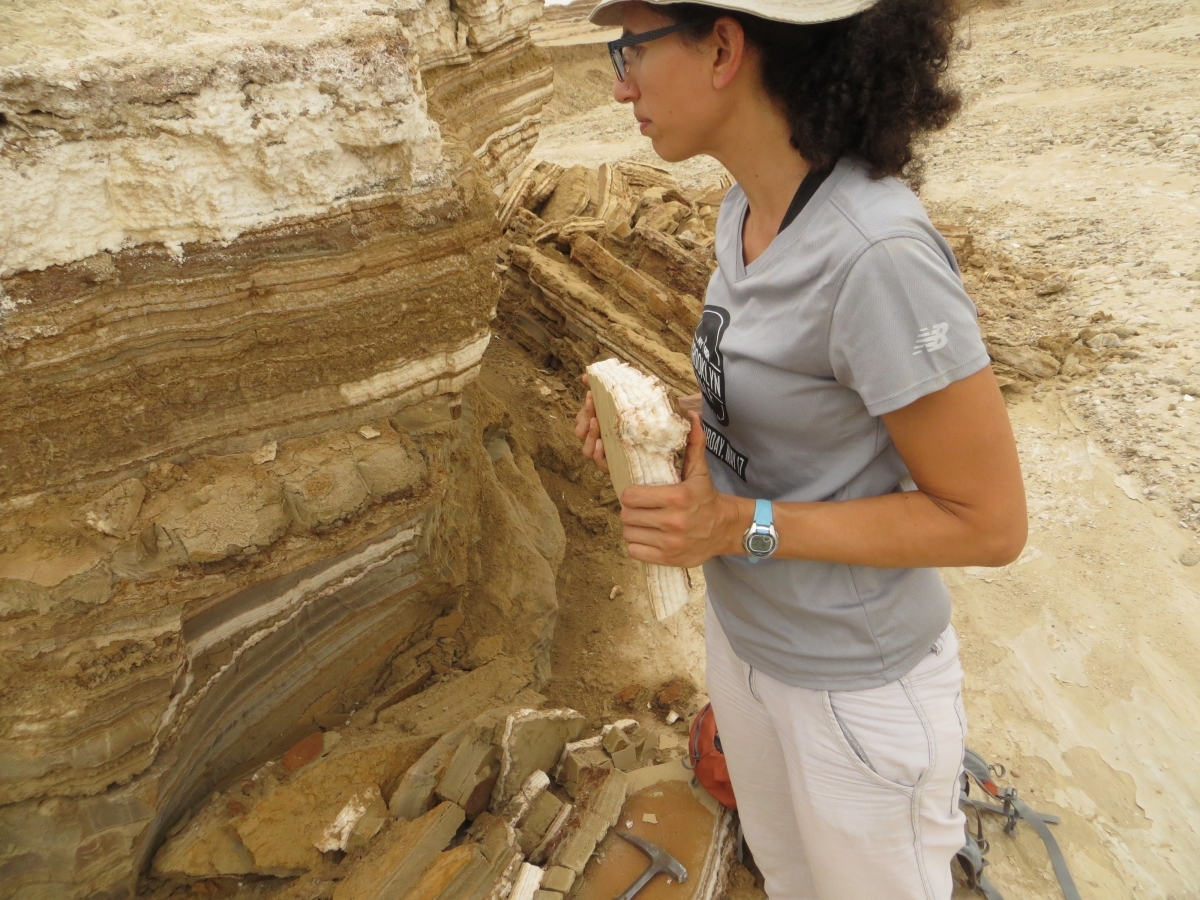
Reconstructing Past Rainfall and Rainfall Sources in the East Mediterranean during Arid Periods Based on the Dead Sea Deep Drilling Cores: The Dead Sea, strategically located at the intersection of Mediterranean and desert climates, provides a unique archive of past environmental changes. High-resolution analysis of the Dead Sea Deep Drilling Cores allows us to reconstruct climate during extremely arid periods in the East Mediterranean. By investigating salt layers and uranium isotopes, we can quantify lake-level changes and trace water sources, shedding light on the consequences of drying climates and high temperatures in this sensitive region.
Dust Sources to Europe During Cold Events: Understanding the origins of dust deposits during past cold periods is crucial for reconstructing atmospheric circulation dynamics under glacial conditions. We analyze a unique terrestrial section in the Czech Republic, correlated with ocean records, to reconstruct dust source changes over the past 200,000 years. By investigating the geochemistry of windblown deposits, we aim to map the shifts in dust sources during times of expansive ice sheets.