-
Prof. Ron Naaman
Spin selectivity in electrons transmission through chiral moleculesCollaboration with: Yossi Paltiel, Hebrew University David H. Waldeck, University of Pittsburghm USA Claudio Fontanessi, Modena University, Italy E. W. Meijer, Eindhoven, Netherland Michael Therien, Duke University, USA Moh El Naggar, USC, USA Jonas Fransson, Uppsala, Swedenelectron transfer in bio-moleculesspin selective electron transferspin dependent electrochemistryspintronics with chiral moleculesenantio-selective interactionSpin effect in water splitting
Homepage
-
Prof. David Mukamel
Systems with long-range interactionsCollaboration with: S. Ruffo A. CampaCollective phenomena in systems far from thermal equilibrium.Collaboration with: S. Majumdar G. Schehr M. Barma A. KunduCoarsening processes and slow dynamics.Systems with long range interactions
Homepage
-

Dr. David Mross
Fractional quantum Hall effectNon-Abelian states at filling factor 5/2Composite Fermi liquids and particle-hole symmetryEdge-states and disorder effectsQuantum magnetismQuantum spin liquids in frustrated magnetsUnconventional quantum phase transitionsDualitiesApplications of dualities in condensed matter physicsDerivation of new dualities through coupled-wire constructions
Homepage
-
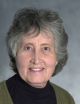
Prof. Edna Mozes
Systemic lupus erythematosus (SLE): Induction and development in various animal models.The role of various cell types (APC, T, B) and cytokines in the pathogenesis of autoimmune diseases.The status and role of T regulatory cells in autoimmune diseases.Specific immunomodulation of the autoimmune diseases, Systemic lupus erythematous and Sjogren Syndrome by a synthetic, tolerogenic peptide.Collaboration with: Prof. Zev Sthoeger, Kaplan Medical Center.Elucidation of the mechanisms (effects on main pathways, cell types, cytokines and other pathogenic molecules) by which the tolerogenic peptide ameliorates autoimmune disease manifestations in animal models and in patients with SLE and Sjogren Syndrome.Development of the tolerogenic peptide as a novel specific drug for the treatment of SLE and Sjogren Syndrome.
-
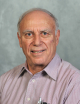
Prof. David Mirelman
Molecular pathogenesis of the human intestinal parasite <I>Entamoeba histolytica</I>.Collaboration with: Rivka BrachaMolecular biology and genome organization in the lower eukaryot <I>Entamoeba histolytica</I>.Selective inhibition of expression of virulence genes by Antisense RNA.Transcriptional epigenetic gene silencing mechanismsPathogenesis of AmoebiasisDevelopment of vaccine against <I>Entamoeba histolytica</I>.Mode of action and therapeutical potential of Allicin from GarlicCollaboration with: Aharon Rabinkov, Elena AppelUses of derivatives of Allicin against hypertension and obesityAntifungal delivery system which produces in situ toxic allicin moleculesA delivery system for the in-vivo killing of cancer cells by Allicin
Homepage
-
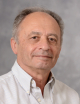
Prof. David Milstein
Organometallic chemistry and green catalysisBond activation by pincer-type complexesRational design of green and sustainable catalysis and synthetic methodology based on pincer-type metal complexesSustainable, green energy based on catalytic designHydrogen Storage. Design and development of novel Liquid Organic Hydrogen Carriers (LOHCs)Metal-Ligand CooperationOxidation of organic compounds using water as formal oxidant with H2 liberation
Homepage