


Center for Biodiversity and Ecosystems

About
With 8 billion humans on earth, humanity has had a direct impact on our planet. Research from the Weizmann Institute shows that 90% of mammal biomass can be attributed to livestock and human beings, and wild animals - such as bears, giraffes, elephants, and even whales, make up a tiny percentage of mammal life on our planet.
As we learn more about these major shifts in biodiversity and the connections among all living things, we understand more deeply how critical diversity is to the survival of life on earth. We also gain a clearer picture of where the problems lie and can begin to find the most effective solutions. Research at the Center for Biodiversity covers a range of issues, including quantifying the influence of human activity on nature, developing nature-based solutions to restore biodiversity across species, genome evolution and biodiversity, and more.
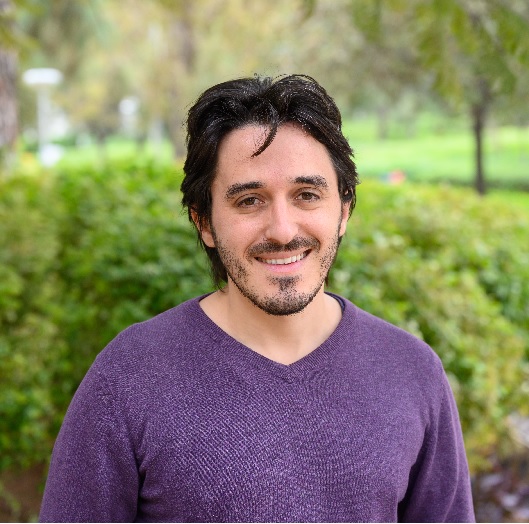
Prof. Ron Milo

Prof. Ron Milo harnesses the tools of systems biology to find solutions to the grand challenges of sustainability. Prof. Milo’s work focuses on improving humanity’s ability to produce food and fuel more efficiently by creating new ways to fixate carbon dioxide from the air, and he has led studies to quantify the global biomass to provide a fresh perspective on humanity’s impact on the planet and the future of biodiversity.
Prof. Milo is head of the Institute for Environmental Sustainability (IES) at Weizmann Institute (formerly the Sustainability and Energy Research Initiative and the Mary and Tom Beck Canadian Center for Alternative Energy Research), and is a member of the Executive Board at the Israel Society of Ecology and Environmental Sciences.
Research Highlights
- The Biomass of Livestock Dwarfs that of Wild Animals
-
Wild land mammals weigh less than 10 percent of the combined weight of humans and are outweighed by cattle and other domesticated mammals by a factor of 30.
The first global census of wild mammal biomass, conducted by Weizmann Institute of Science researchers and reported in PNAS, reveals the extent to which our natural world – along with its most iconic animals – is a vanishing one.
The new report shows that the biomass of wild mammals on land and at sea is dwarfed by the combined weight of cattle, pigs, sheep and other domesticated mammals. A team headed by Prof. Ron Milo found that the biomass of livestock has reached about 630 million tonnes – 30 times the weight of all wild terrestrial mammals (approximately 20 million tonnes) and 15 times that of wild marine mammals (40 million tonnes).
- Genome Evolution and Biodiversity
-
Examining evolution through hybridization and polyploidization
Interspecies hybrids and polyploids are prominent in the plant kingdom, and most eukaryotic species are the result of ancient hybridization followed by genome doubling (paleopolyploids) tens of millions of years ago. Other species, however, are young polyploids.
Researchers in the Plant and Environmental Sciences department are asking what the pros and cons of hybridity and polyploidy in evolution are, studying a complex organism such as wheat and a simpler unicellular system such as budding yeast.
- Underground Fungal Networks Transfer Carbon between Neighboring Trees
-
A secret alliance, concealed deep beneath the forest floor, has been unearthed
Intricate networks of fungi that connect the roots of different tree species with one another were discovered by Dr. Tamir Klein and former Phd student, Ido Rog, of the Plant and Environmental Sciences Department at Weizmann Institute. These networks enable the trees to exchange minerals, nutrients, water and carbon, while funneling carbon to the fungi in return.
Although symbiotic relationships between trees and fungi have been known for decades, this is the first time that different tree species have been observed cooperating with one another using an underground network of fungi in their natural setting. The findings add evidence to the trend that is forcing ecologists to shift their thinking about how carbon transfer gets controlled within the forest.
- The Mass of Human-Made Materials Now Equals the Planet’s Biomass
-
We are doubling the mass of the human-made, ‘anthropogenic’ part of the world every twenty years and the curve is not flattening.
Earth circa 2020: The mass of all human-produced materials – concrete, steel, asphalt, etc., has grown to equal the mass of all life on the planet – its biomass. According to a study at the Weizmann Institute of Science, we are right at this tipping point, and humans are currently adding new buildings, roads, vehicles and products at a rate that is doubling every 20 years, leading to a ‘concrete jungle’ that is predicted to reach over two teratonnes (i.e. two million million) – or more than double the mass of living things by 2040.
The study, published in Nature in 2020 and conducted by researchers in Prof. Ron Milo’s lab in the Plant and Environmental Sciences Department, shows that at the outset of the 20th century, human-produced ‘anthropogenic mass’ equaled approximately 3% of the planet’s total biomass.
Research Groups


IES Fellows






Prof. Ron Milo
Biodiversity enables the balance of ecosystems, and disrupting this balance can have vast, unpredictable effects on the quality of air, soil, water, vegetation, and animal life. Conservation is an integral component of our wellbeing and we are researching mechanisms and solutions for resilience and growth.
Prof. Ron Milo
Understanding how different species cope with environmental stress using the modern tools of genomics is an important aspect of future research. Some plant species have the potential to become new crops that are resistant to heat and drought, but must be genetically modified to become edible and productive. Studying, preserving, and harnessing biodiversity will be critical for a robust food production system.